



Alehoof – The Beer Weed

I’ve previously shared some backyard edible weeds that one can forage in hard times. But I recently discovered that yet another aromatic weed I’ve been yanking out of my yard beds with alacrity is actually not only edible but was historically used in beer-making.
Now that I have your attention…
I’m not a home brewer myself, but I do like good beer and I’m not a huge fan of heavy hops and IPAs. So this new knowledge interested me from an historical and homegrown perspective.
Whether you call it Alehoof, Creeping Charlie, Ground Ivy, Gill-on-the-Ground, or use its proper name Glechoma hederacea, this member of the mint family has been around for thousands of years and was brought to America by European settlers intent on continuing their old world traditions in their new lands.
Like all members of the mint family, Alehoof has a square stem. It has kidney to fan- shaped leaves with scalloped edges, and little tubular purple flowers in the spring. Also like the mint family it spreads like crazy and can be difficult to eradicate if it gets started where you don’t want it. It is a perennial which comes back year after year. So don’t count on a cold winter to get rid of it.

This spreading “nuisance” (depending on your point of view) is one of those herbs that ancient adherents claimed would cure everything from bronchitis to tinnitus — if you believe them. I don’t personally buy into the panacea magic, but the plant IS reportedly edible. (As always though, eat stuff at your own risk). You can’t hate something that could possibly keep you alive during the starving times and stave off scurvy – even if it is a pain in your garden beds.
What I found really interesting is that a couple of this weed’s folk names stem from its use in brewing beer.
Apparently back in the Saxon days of England (410-1066 CE) it was common for aromatic herbs to be used in beer-making, hops having not yet arrived on the scene. Such herb beers are/were apparently called gruits.
Gruit was also the word for the herbs used in the making of gruits. They were profitable plants (unlike today’s nuisance weed) and they were apparently taxed heavily in certain areas of old Europe.
Alehoof wasn’t the only herb involved. Some other frequent players included: Horehound, Rosemary, Yarrow, Heather, Elderflower and Spruce tips.
As time went on hops arrived as a flavoring and preservative. Using hops for brewing was cheaper than using gruit herbs (partly because it wasn’t taxed as heavily) but it also apparently helped in preservation and shelf life.
There was apparently some mix of religion and politics in there too as a lot of this change was happening around the time of the Protestant Reformation. I’ve read various things alleging that herbal ales were “too” intoxicating, which irritated the new Protestant reformers. Or that the Catholic Church held a monopoly on gruit herbs, which led some to go with hops out of protest. It’s all interesting, but you know how history goes – It all depends on who tells it.
Eventually, government got even more involved and brewing regulations such as the German Reinheitsgebot of 1516 were instituted. This specified that beer was ONLY to be made with water, barley, and hops. (Gruits being noticeably absent)
As a result, over the centuries the world gradually forgot about gruits and the lowly alehoof. But the recent resurgence of microbrewing is causing renewed interest in these ancient herbal brews and their esoteric ingredients.
If you think you might want to brew your own beer in the post-apocalyptic world, you might want to consider not pulling up all those yard weeds – especially the alehoof. You may even consider setting aside part of your herb garden to grow it on purpose. Or grow it in a hanging basket or large container to curb it instead.
Armed with such historical weedy herbs, when the Great Collapse happens if you brew gruit, and I ferment elderberry wine, then maybe we could set up a roadside tavern for coin. Sound like a plan?
Interesting Links:
https://www.oardc.ohio-state.edu/weedguide/single_weed.php?id=58
https://www.rxlist.com/ground_ivy/supplements.htm
https://www.themadfermentationist.com/2017/09/backyard-gruit-alehoof-and-yarrow.html
https://www.gardeningknowhow.com/plant-problems/weeds/is-creeping-charlie-edible.htm
The Ruger LCR 9mm – The Perfect 9mm Snub Nose?
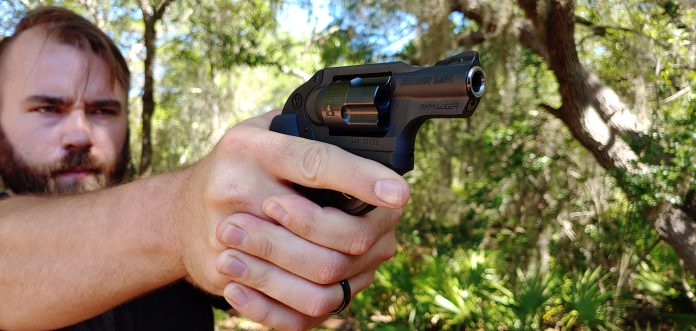
The wheel gun refuses to die, and why should it? Wheel guns are plenty of fun, offer you super powerful calibers, and when you shrink one into a J frame, you get a simple, easy to carry gun with 5 to 6 rounds of vermin dissuasion. There are lots of J frames or snub nose revolvers out there, and I personally think the best currently on the market is the Ruger LCR. Specifically the Ruger LCR 9mm.
Yep, I think the best snub nose on the market is a 9mm J-frame type. Hear me out before you break out the pitchforks.
What Makes the LCR So Great?
The LCR takes a page out of Glock’s playbook and adds a dose of polymer in the snub nose revolver. Why? Well, because polymer is lighter and more affordable than metal. When you build an air-weight-style revolver, you are stuck using expensive metals like titanium or scandium, which skyrockets the price.
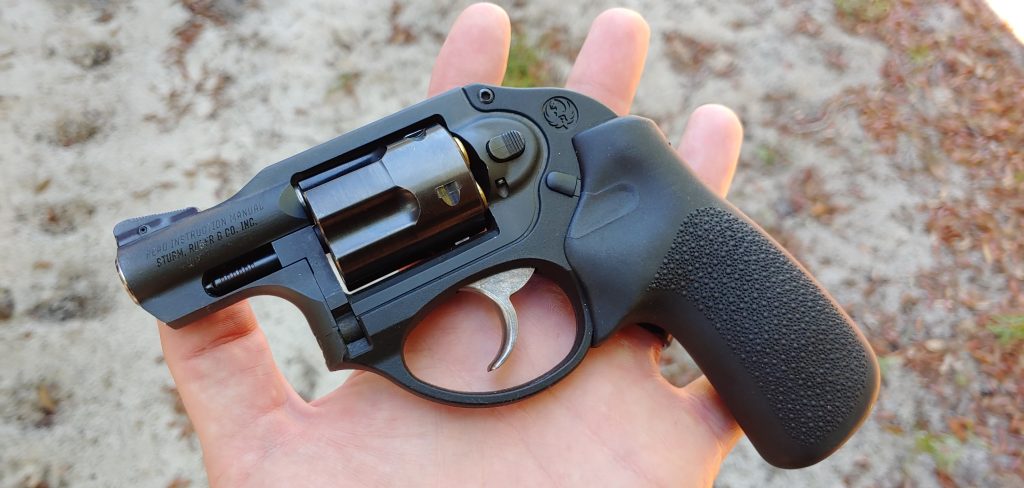
Well, polymer can do the same thing without driving the price up. To be completely fair, though, the scandium models can trim a little more weight. A scandium frame S&W weighs around 12 ounces, and the LCR 9mm weighs 17 ounces and some change.
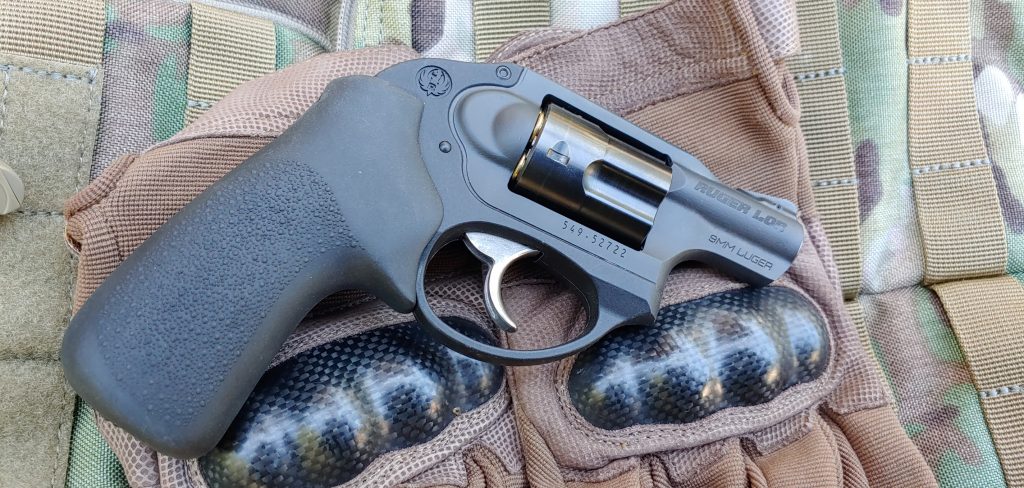
Your average S&W 640 weighs 22.1 ounces, so the Ruger LCR 9mm does trim some serious weight from your average revolver. The Ruger LCR utilizes a steel barrel insert and steel cylinder, as well as metal internals. The main difference is the reinforcement of polymer versus using more steel.
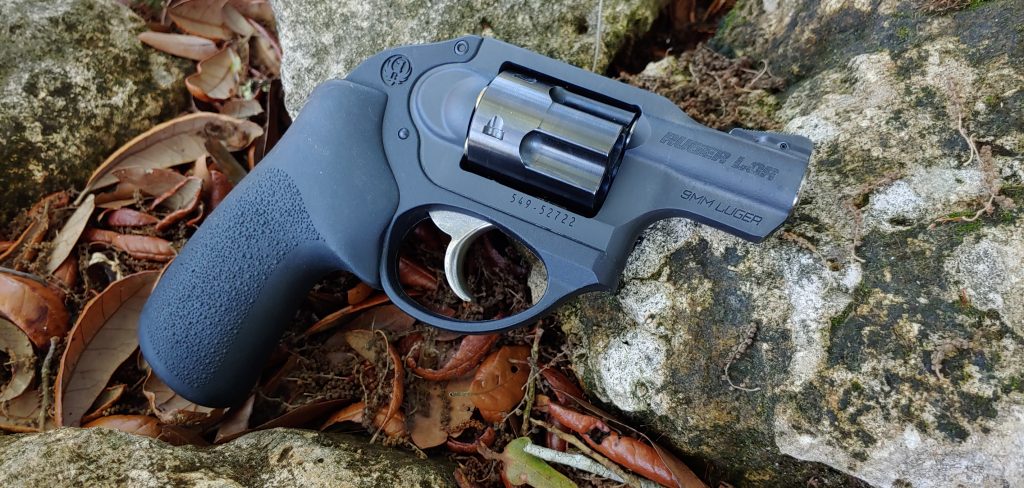
It’s also one of the more affordable revolvers on the market. The plain jane Ruger LCR in 38 Special might just be the cheapest mainline brand-name revolver on the market.
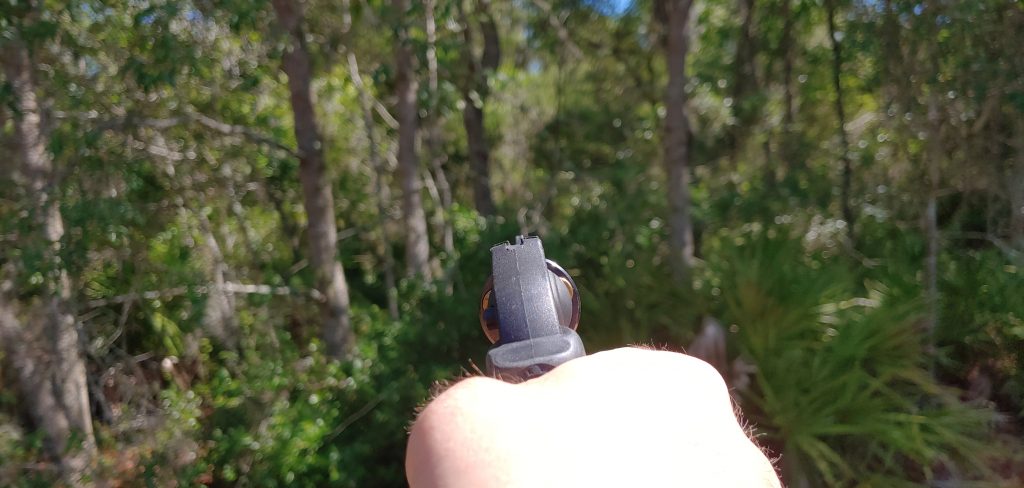
Holy crap did Ruger redefine what a double-action trigger could be in a revolver. Why it took this long to see a stock double-action trigger this crisp, I’ll never know. It rolls and flows with little effort. It’s a long trigger pull but super smooth and lightweight. Dry firing shows just how easy it is to keep the front sight from moving while shooting.
But in 9mm?
Yeah, I know. It’s not a traditional revolver caliber. It’s that got-darned millennial 9mm round created in 1902 by one of them pesky Germans. It’s not a traditional revolver round, but does that make it a poor revolver round?
Not to me.
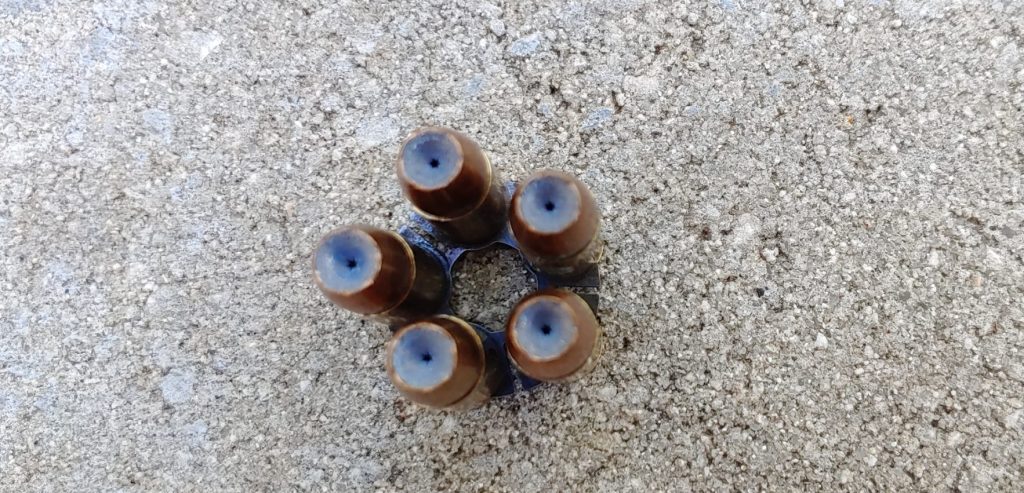
Modern self-defense revolvers utilize either the 38 Special round or the 357 Magnum load. 44 Special and 327 Federal Magnum are competent calibers but uncommon, to be fair. Both of those rounds cost significantly more than the 9mm. Right now, all ammo is expensive, but in general, 9mm is much cheaper than 38 Special and 357 Magnum.
9mm also offers you way more defensive ammunition options. You can get light recoiling 90-grain reduced loads, 115 grain, 124 Grain +P loads all the way to heavy 147 grain subsonic rounds. Lots and lots of options, way more than 38 Special and 357 Magnum.
9mm defensive loads provide more oomph and better ballistic results than regular 38 Special loads. It outperforms the old 38 Special substantially. 38 Special can generate 264 foot-pounds of force with a 147-grain projectile, but 9mm can put out 365 foot-pounds from a 124-grain projectile.
357 Magnum kicks 9mm’s butt ballistically, sure, but in the realm of snub-nose revolvers like the Ruger LCR, the 9mm makes sense. 357 Magnum from a snub nose creates some serious recoil for the end-user, on top of concussion and tons of muzzle flash. The 9mm delivers excellent performance without the flash, recoil, and concussion.
Handling the Ruger LCR
The Ruger LCR is a blast to shoot. The smooth trigger allows me to direct 9mm rounds wherever I want them. I can hit a 10-inch gong at 30 yards consistently, even with nothing more than the front sight.
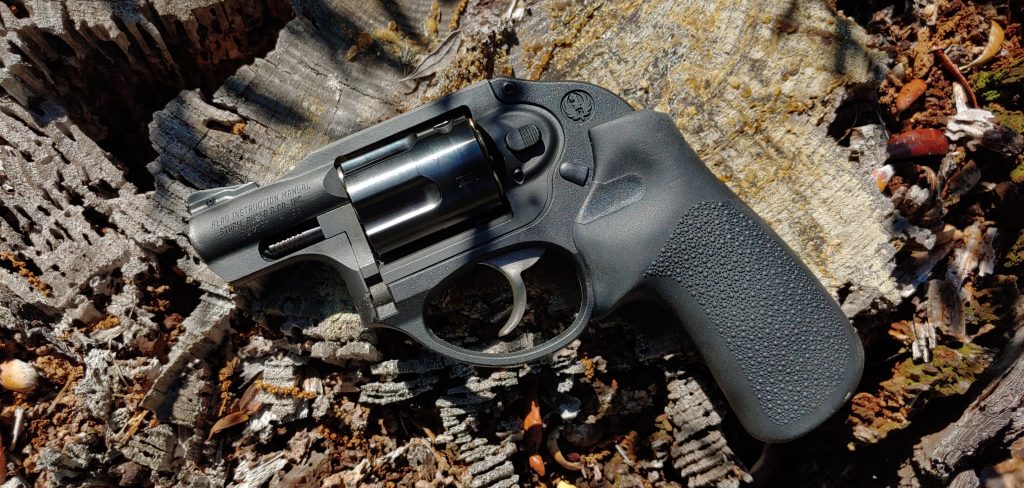
Controlling the weapon is easy, and I can make fast and accurate follow-up shots. With a good grip, the gun bucks only a bit, and I put two rounds into the heart and lung area in under 1.25 seconds from ten yards.
One thing I didn’t like was the small grips Ruger included with the LCR. I get why it makes the gun small, but small grips don’t agree with big hands. I swapped them for some Hogue’ boot’ grips and never looked back.
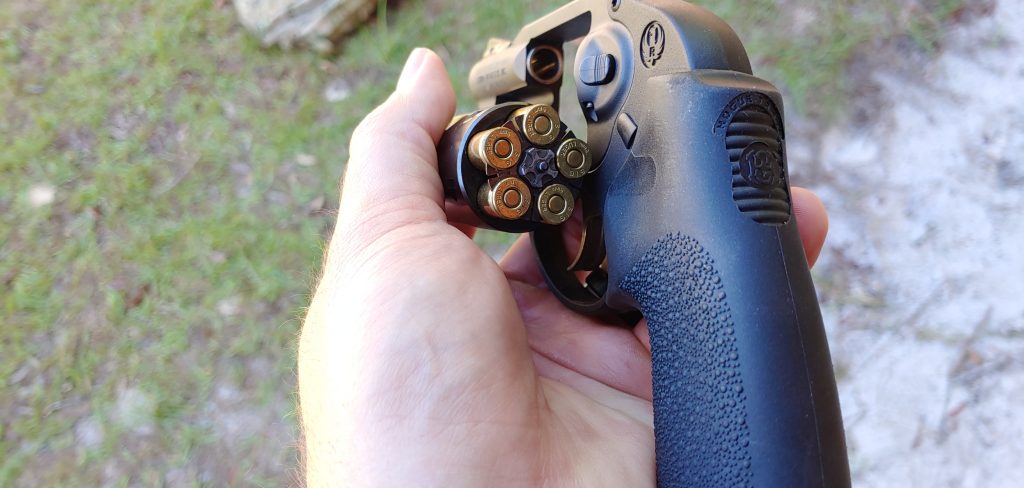
After I drop five rounds of 9mm into a target, I have no problems popping the cylinder open and dropping the five empties with one fluid motion. Popping another loaded moon clip in the Ruger LCR verges on being as fast as reloading a semi-auto pistol.
No Such Thing as a Free Lunch
In terms of reliability, you get a very slightly mixed bag. 9mm projectiles are not meant to be housed in a revolver’s cylinder. When they are tossed into revolvers, they get the full force of the gun’s recoil. This can result in a projectile jumping the crimp.
Revolver rounds feature a good strong crimp to withstand this force. 9mm rounds do not. This is not common and seems to only occur when you use heavier projectiles that generate more recoil. I’ve only had it happen once with a 147-grain JHP from Winchester. With 124 grain +P JHPs and 115-grain JHPs, it never occurred, and the same goes for any standard FMJ load.
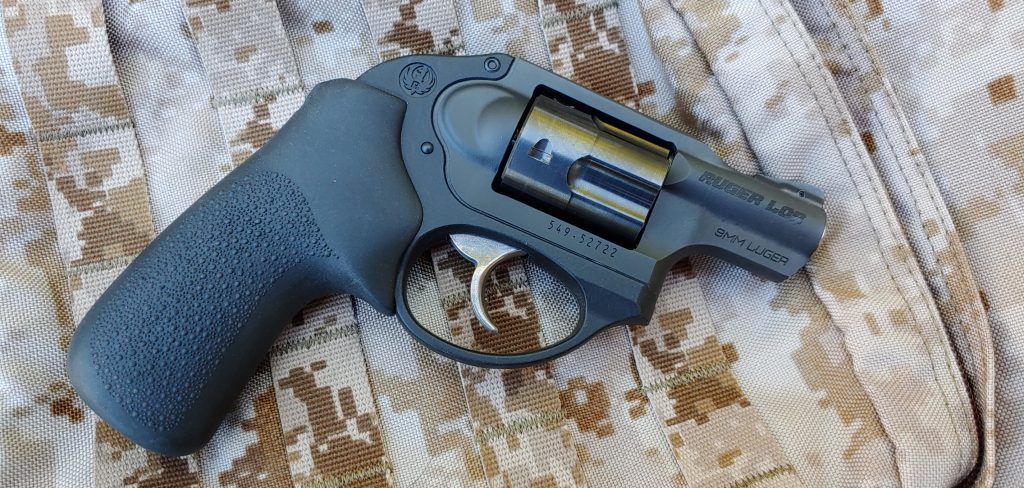
That’s a downside of the Ruger LCR in 9mm, and snub nose revolvers in automatic cartridges in general.
For fast and intuitive reloads, you’ll need moon clips to use the Ruger LCR. Without moon clips, you have to poke out each individual casing to reload. Moon clips are somewhat fragile and bend easily when force is applied. Luckily they tend to be cheap and easily replaceable.
Is the Ruger LCR 9mm The Future?
Maybe, but since revolvers guys tend to be purists, they cling to their traditional revolver cartridges. If you’re like me and just feel your collection isn’t complete without a revolver, then the Ruger LCR is likely for you. The Ruger LCR is a fantastic carry gun for the new revolver aficionado or for those who want a very spartan and capable gun. If you’re carrying something like the Ruger LCR, then you might as well get the best version of the gun and the best version, in my humble opinion, chambers 9mm rounds.
The Vortex Ridgeview Tripod: Lightweight yet Strong

Lightweight and strong are seeming to be two favorite buzzwords within the shooters market. Regarding tripods, we want it to be easily packable yet still serve as a a strong shooting platform. Three new carbon fiber tripods that Vortex recently released are the Radian, Ridgeview, and Summit. The Ridgeview has been a go to for a meet in the middle price range and use for support optics, yet still built with the quality and strength to use as a shooting platform if needed.
Why the New Release of Tripods?
While Vortex has primarily been an optics company, it has also been expanding greatly with their product development team. There has been a demand from Vortex customers for a quality and focus driven tripod, and now the Optics Company has the people and time to do it right.
From a Vortex rep, “Carbon fiber and Arca compatibility were two large priorities for us and this is very visible throughout the line now. Competing with other brands currently available was not the direct intent. For the most part, we just needed to refresh our tripods, increase the quality, and still offer them at a great price relative to the quality level.” and they did just that.

Capabilities of the Ridgeview Carbon Fiber Tripod
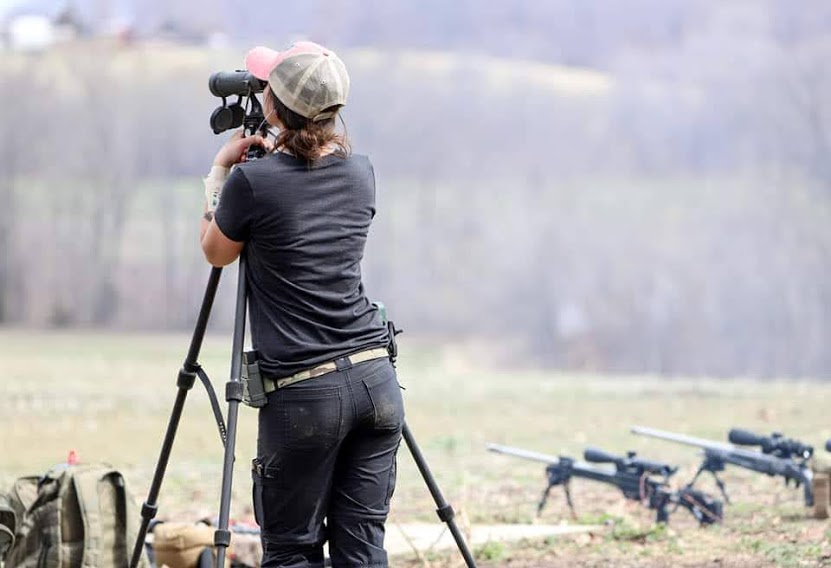
When using the Ridgeview Carbon Fiber Tripod there were a few things that stood out immediately
- Pan Head– The two way pan head is very ergonomically friendly and easy to use. For panning, simply use the lever that is already pointing towards you at an easy to reach place and turn it to the left in an unscrewing motion. This will release the head with as much tension as you want. When the glass is back where you want to be, such as another target, simply tighten to the right and your head is now locked in place. This makes it easy to pan while not moving your face off the glass.
- Adjustments on Legs– The legs feature a quarter turn adjuster which makes it simple and quick to loosen and tighten each leg. There are also leg locks on the top of each leg that allow you to angle the legs in three different positions.
- Height– When a man that is 6’7″ uses this tripod and states, “Wow, I’m shocked that this tripod can reach to my height.” that means nobody had met that need yet. For how lightweight and minimalist this tripod is it still has the height capabilities, with it being able to extend to 73.8″ making it the tallest tripod that Vortex provides.
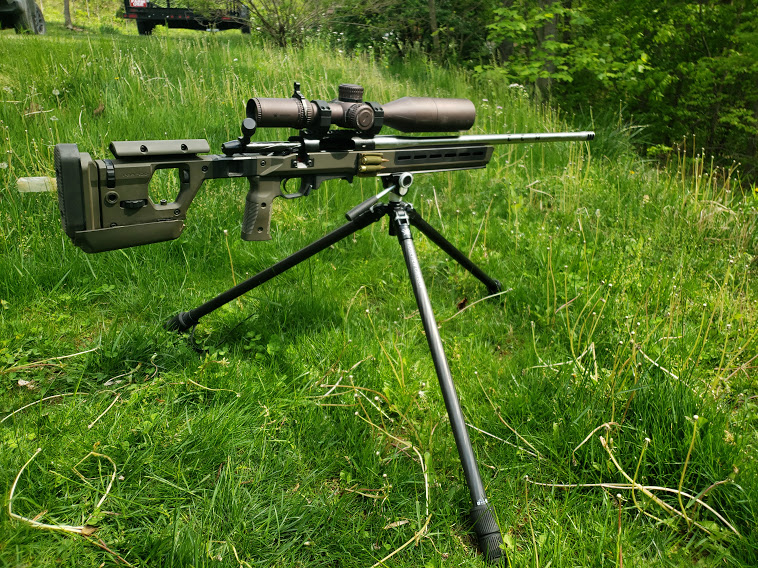
In second locking position allowing a seated engagement position. 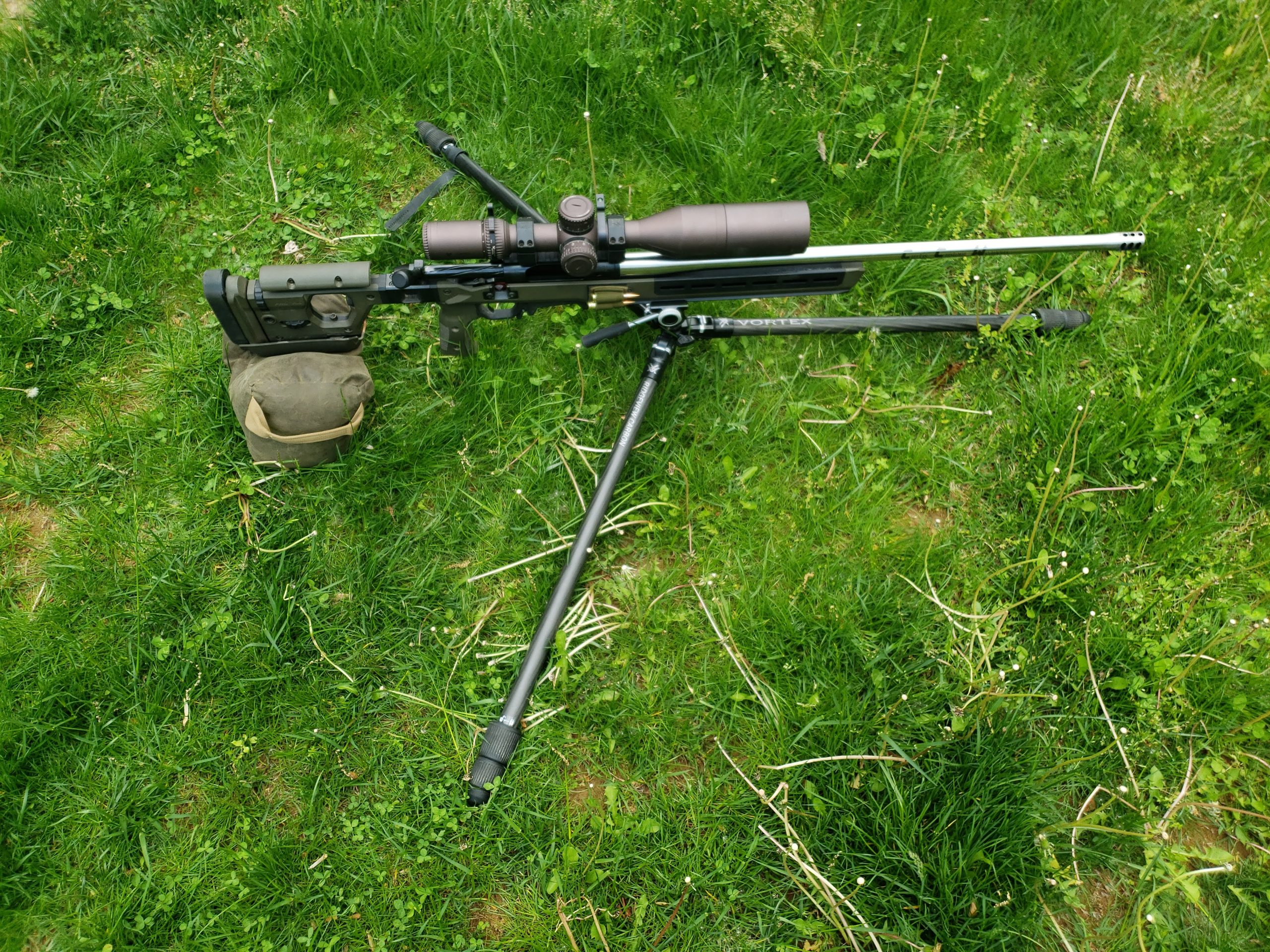
In lowest leg locking position allowing engagements from the prone.
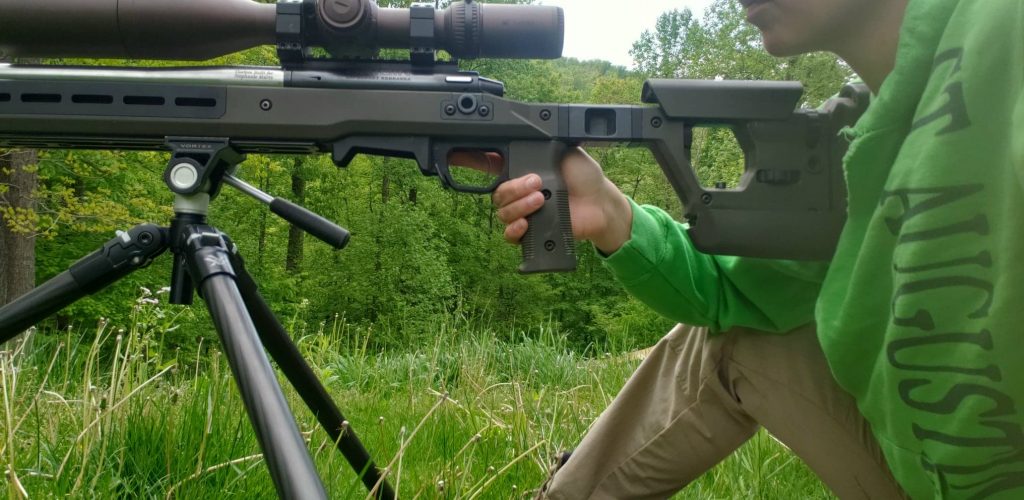
- Strength in locking– While this tripod was meant for a support optic it can also 100% be used as a stable shooting platform. A two man team used the Ridgeview tripod to shoot off of throughout an entire Mammoth Sniper Challenge and had no worries of the legs coming loose and creeping down or it feeling flimsy.
- Lightweight– Instantaneously the weight change was noticed. Weighing at only 3.0 pounds compared to other lightweight carbon fiber tripods that can weigh over 4 lbs this quickly became the standard. Being made with carbon fiber and not aluminum creates a lightweight platform but still has the strength to not be flimsy or bow.
Note: The legs also include a rubber strap attached to a leg that can clip all three legs together for even easier packing.
Specs
- Head Style 2-Way Pan
- Weight 3.0 pounds
- Height 8.3-73.8 inches
- Max Load 22 pounds
- Min Height 8.3 inches
- Max Height 73.8 inches
- Folded Dimensions (HxW) 29.0 x 3.2 inches
- Leg Material Carbon Fiber
- Leg Sections 3
- Leg Angles 3
- Leg Locks 1/4 Turn
- Head Mount Arca-Swiss
- MSRP $649.99
Options
The Ridgeview Carbon Fiber Tripod features a removable leveling hook that a bag or other weighted item can add some additional stability on harsh terrain or windy environments. When removed the tripod has the ability to reach 8.3″ low for prone shots.
For head accessories, you have the option of purchasing the Pro Leveling Head which provides finer adjustments and can help with using the tripod for shooting more than support optics. The tripod also comes with a Quick-Release Plate with 1/4″-20 Thread that can be used to add additional accessories such as a table. Tables can be used with a bag as another way to create a shooting platform.
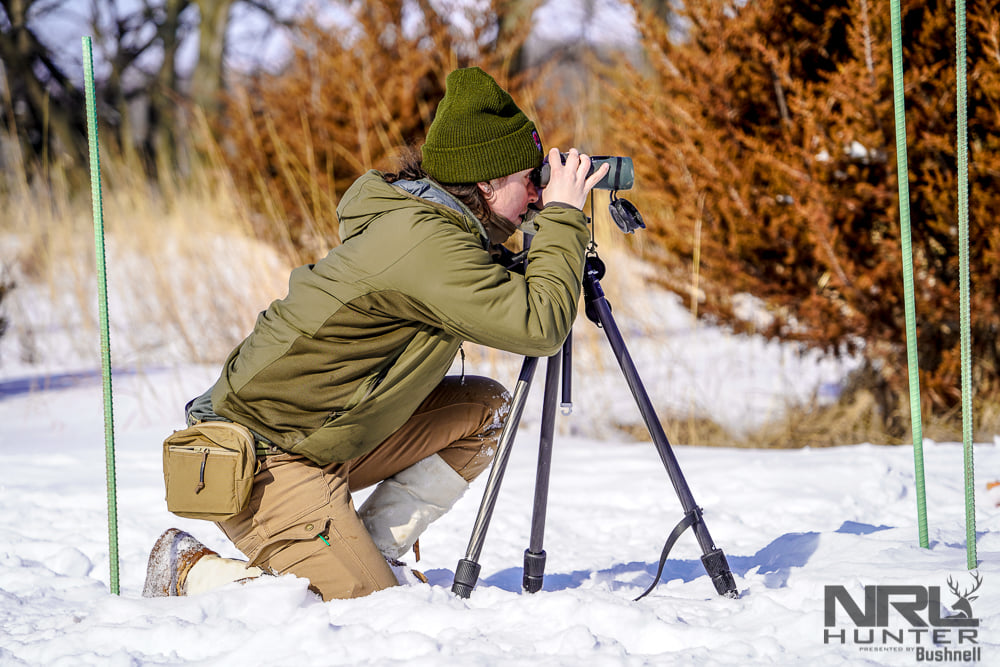
Note: While the Ridgeview can work as a stable shooting platform it is recommended that you also have a secondary support such as a backpack in the rear to give additional support and stability.
Below is a product overview from Vortex
If you just need some help understanding what tripod and accessories are best for YOU below are some FAQ’s to help you out..