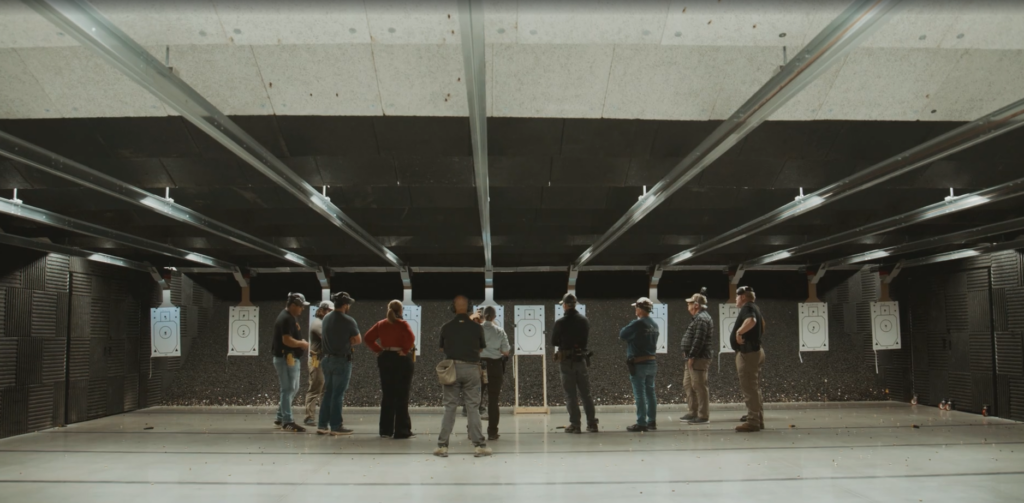
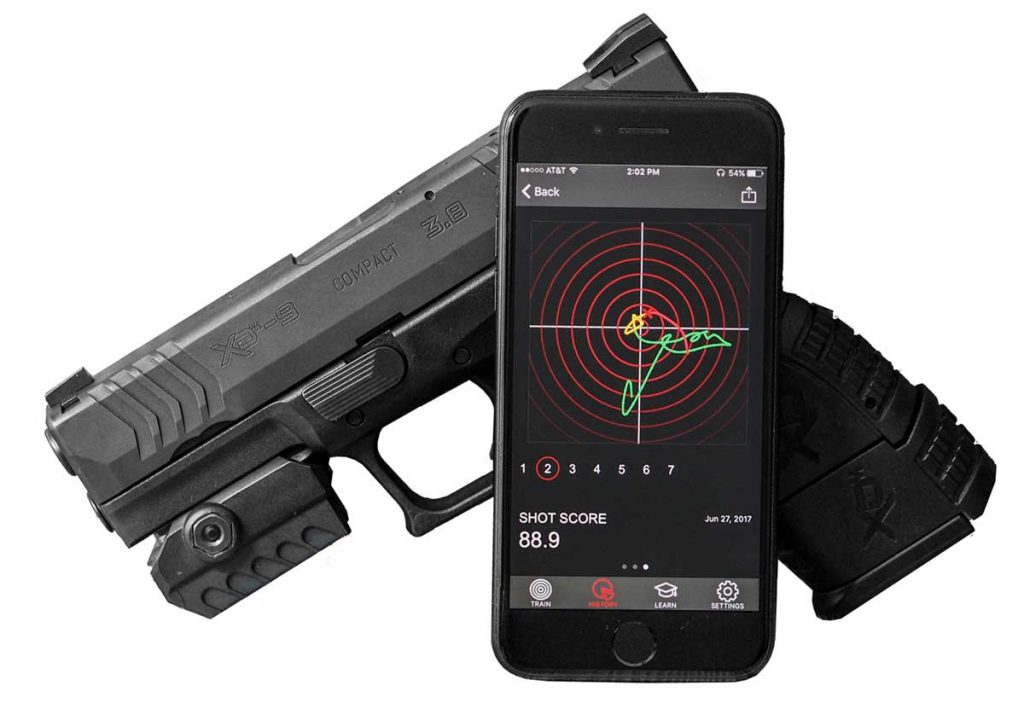
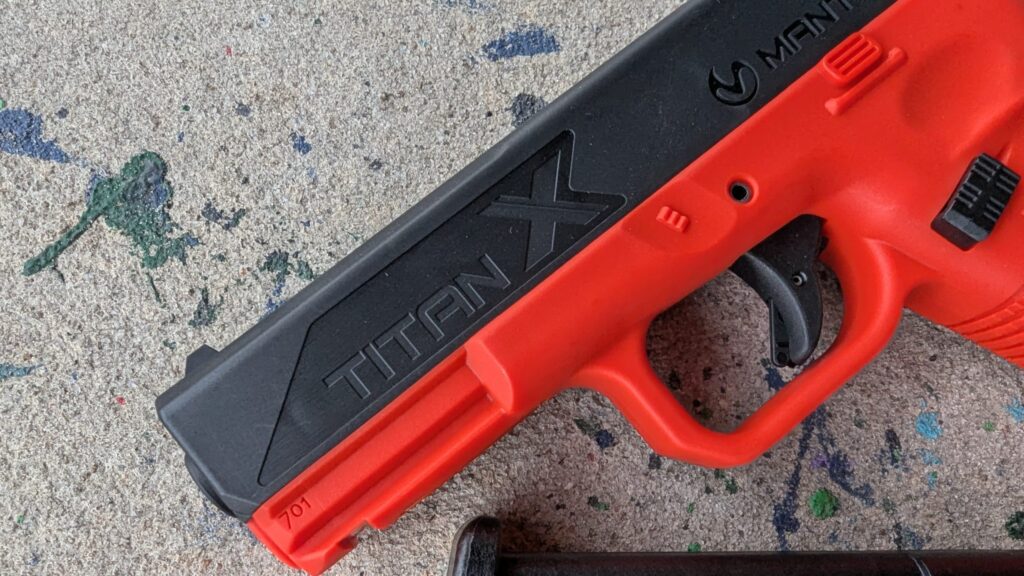
I’ve been chasing that ever-changing goal of a faster draw. How fast can I draw and fire a shot into the target? With a goal of getting it in under 1 second, I’ve been racing the clock daily. Sometimes with dry fire, sometimes with live. I’ve used the TitanX a lot to get my draw down and to get real-time feedback. Along the way, I’ve realized that how you train your draw to the first shot matters.
Early on, I was screwing myself, and I should have known better. In the quest for speed, I was willing to hit the gas and be a little sloppy. The goal was to refine the sloppy draw into a good draw. I firmly believe that pressing the gas to failure makes me a better shooter than just always being perfect. If you’re not pressing the gas, how can you really improve?
Training for a Faster Draw
Advertisement — Continue Reading Below
With that in mind, the draw-to-first-shot drill went great in dry fire, but fell apart when I went live. A big part of that was focusing so much on seeing the dot and getting the shot off without focusing on much more than that. My draw to first shot got faster, which is great, but my second, third, and fourth shots suffered.
The Draw To First Shot – Beyond the First Shot
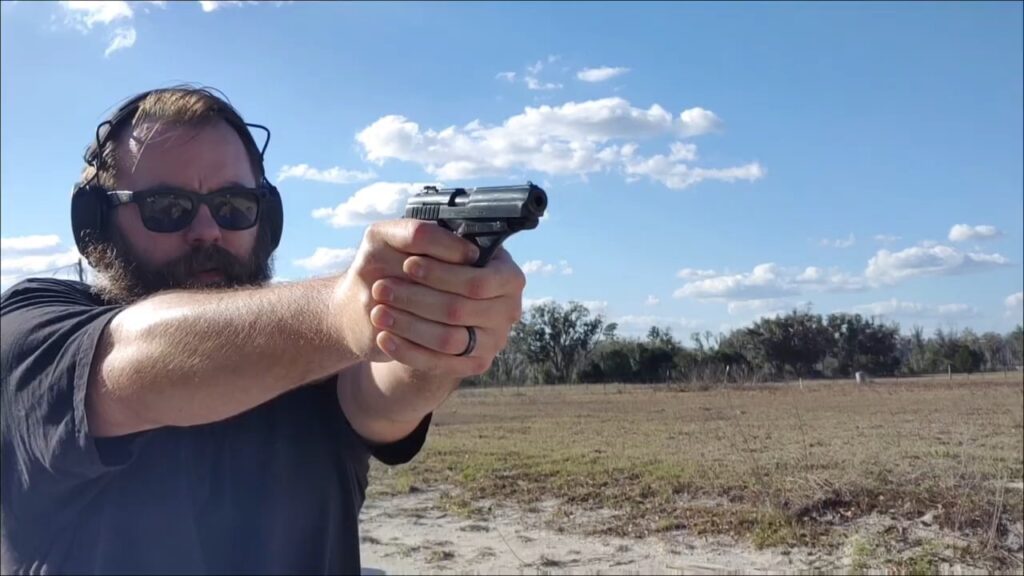
I was sacrificing a good grip to get faster, and that wasn’t necessary. I could draw and get an accurate first shot, but it fell apart after that. My grip wasn’t allowing for proper recoil control. It threw me for a loop because, ultimately, I was dry-firing wrong.
Advertisement — Continue Reading Below
My quest to release tension in the shoulder went a little too far. I was a little too relaxed, and that translated to a less firm grip. I’m not a “crush grip” guy, but I get enough to try and prevent any sympathetic movement.
A good first shot is great, but handguns suck at stopping threats. The need for multiple rounds is likely. Keeping a grip that allows multiple accurate rounds is crucial—something I learned fairly quickly.
Training the Draw
After seeing my flaws and realizing practice was a bit wasteful, I decided to start from the very beginning. I read Joel Park’s work on the subject of the draw and utilized his method. I started by not even drawing; rather, I practiced getting my hands from a relaxed position to the gun in .4 seconds.
Advertisement — Continue Reading Below
At the same time, my support hand was moving to my centerline to meet the gun. I practiced this simple move for a few minutes every day with a focus on achieving a high, firm grip on the gun—every time. By the time I hit the .4 par time, I could achieve a high, solid grip on the gun. As I kept practicing, this became something I could do on demand, no warm-up needed.
It took a while to get over pushing the gun down when I reached for it. This was something I never realized I was doing until I broke the draw down into such small steps. Pressing the gun down counteracts a good draw and keeps me from achieving a solid grip on the gun.
Advertisement — Continue Reading Below
From there, I graduated to a complete drawstroke.
Trigger Press and The Draw
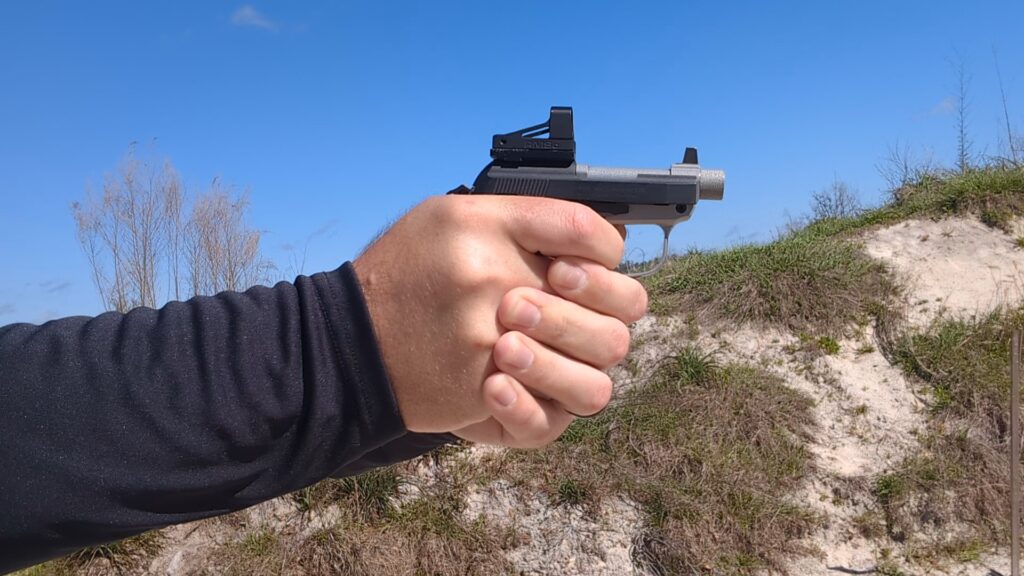
I continued to follow Joel Park’s advice. I was no longer racing to pull the trigger. I didn’t pull the trigger as I practiced the drawstroke. I was racing to get an acceptable sight picture on an IPSC-sized A-zone. I also had to learn not to punch the gun out.
Advertisement — Continue Reading Below
I learned I was doing that by trying to find the sight picture rather than racing to find the trigger. I would still go as fast as I could until the wheels fell off, but I wasn’t sacrificing the basics of grip to do so. As I learned to see the dot on the target, I got naturally faster with better accuracy.
Once I started pulling the trigger, it became the least important thing I was doing. I haven’t gotten below a sub-second draw yet, but my shots are stacking on top of each other, and I feel so much more confident in my drawstroke. It’s a work in progress.
Then again, isn’t it always?
Advertisement — Continue Reading Below