If you searched for the best barrel length for an AR, you’d find dozens of articles on the subject. However, you won’t find nearly as much information regarding the best shotgun barrel lengths. This isn’t a major point of discussion largely because tactical shotguns are limited by the National Firearms Act (NFA). While AR pistols utilize braces and a myriad of barrel lengths, shotguns don’t receive that same treatment.
This is primarily because the AR is a homogenous design, meaning it is one platform made by hundreds of companies. Shotguns aren’t quite like that; we have different designs from different manufacturers that rarely share barrel compatibility. A Mossberg barrel, for instance, is vastly different from a Remington one.
Picking the Right Shotgun Barrel Length
As a shotgun enthusiast, I wanted to discuss the differences between various barrel lengths for home defense and determine which might be the best option for the average user.
Advertisement — Continue Reading Below
A Note on Velocity
As you trim an AR (or really any rifle barrel), you quickly sacrifice a fair bit of velocity. Rifles rely on high velocity to maintain stability over distance and to ensure the fragmentation of the projectile upon impact. Trimming the barrel has a functional, often detrimental, effect on the rifle’s terminal performance.
With shotguns, you still lose velocity as you shorten the barrel, but it doesn’t have nearly as significant an effect on terminal performance. The difference between a 26-inch barrel and one as short as 6.5 inches is only about 300 feet per second (FPS).
Advertisement — Continue Reading Below
While that sounds substantial, velocity isn’t the primary driver for buckshot in a defensive scenario. Shotguns are typically used at pistol distances, and we aren’t counting on fragmentation. We need adequate penetration, which is easily achieved even at lower velocities.
Velocity can, however, affect your pattern. A round of 00 buckshot moving at 1,600 FPS tends to pattern wider than one moving at 1,200 FPS. While there is likely a low-velocity threshold where patterns become disappointing, I haven’t found it yet. Even with 12-gauge rounds moving at 900 to 1,100 FPS, which is the low end of what you’d see from a 6.5-inch barrel, you can still achieve effective patterns.
Overall, barrel length has a negligible effect on how buckshot performs on a target.
Advertisement — Continue Reading Below
Comparing Common Barrel Lengths
To find the “best” length, we have to acknowledge the NFA. While the NFA and certain state laws put up a barrier to short-barreled shotgun (SBS) ownership, we have to include these common lengths to have a complete discussion.
18.5 to 19.5 Inches (Non-NFA)
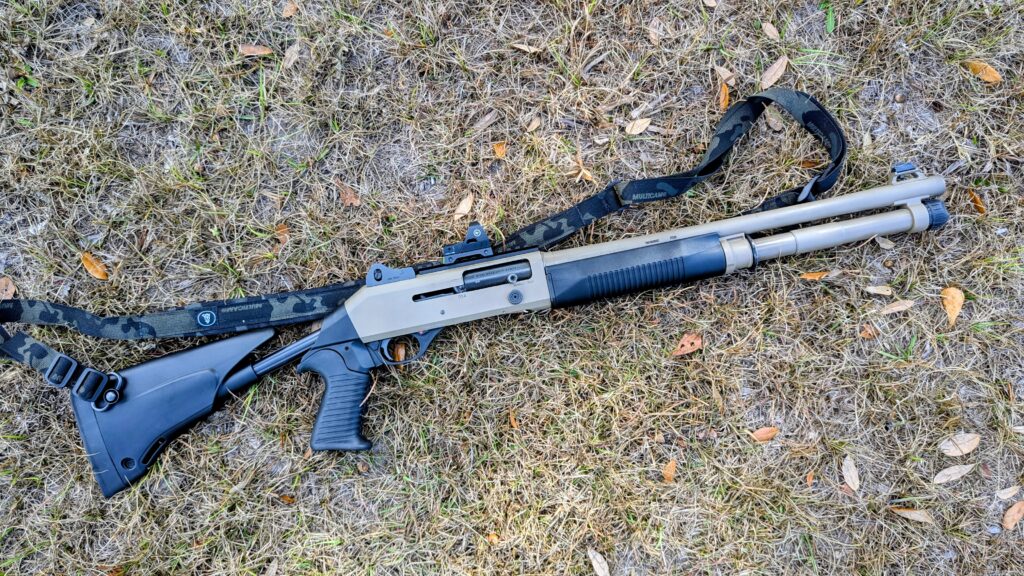
The 18.5-inch barrel is the most common tactical length. Some modern options, like the Beretta A300 Ultima Patrol, use a barrel slightly over 19 inches. This is generally the shortest you can go while staying out of NFA territory.
Advertisement — Continue Reading Below
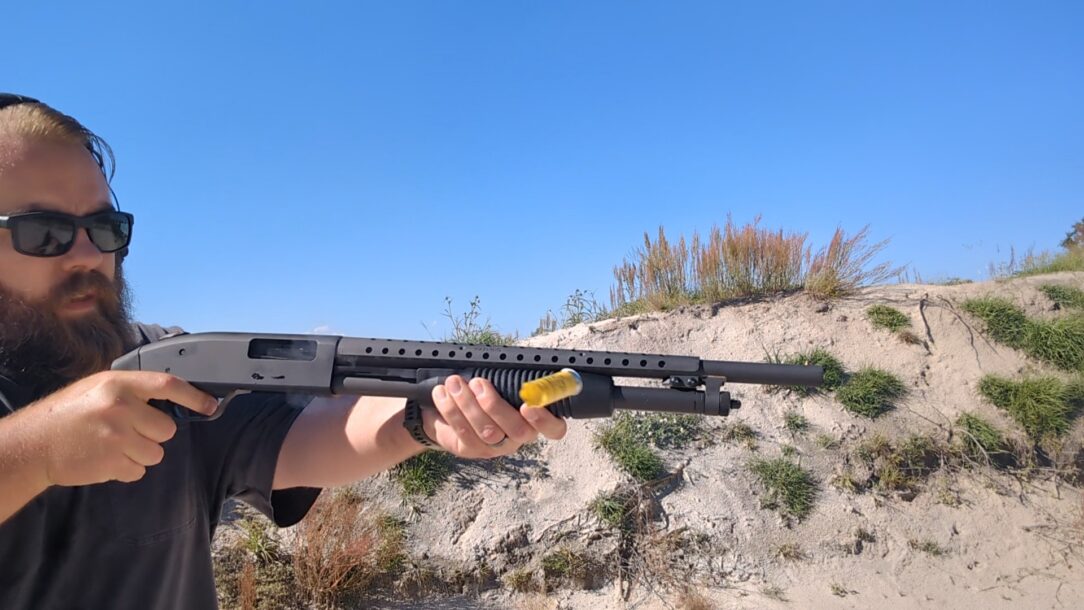
Commonality has its benefits. These guns are easy to find and require no tax stamp. Most 18.5-inch guns with tubular magazines offer a six-round capacity using 2.75-inch loads. These shotguns tend to be light, handy, and well-balanced. However, they are still long: a Mossberg 590 with an 18.5-inch barrel is only .13 inches shorter than an M16A4. It’s not the most maneuverable option, but it’s the standard for a reason.
20 Inches (Non-NFA)
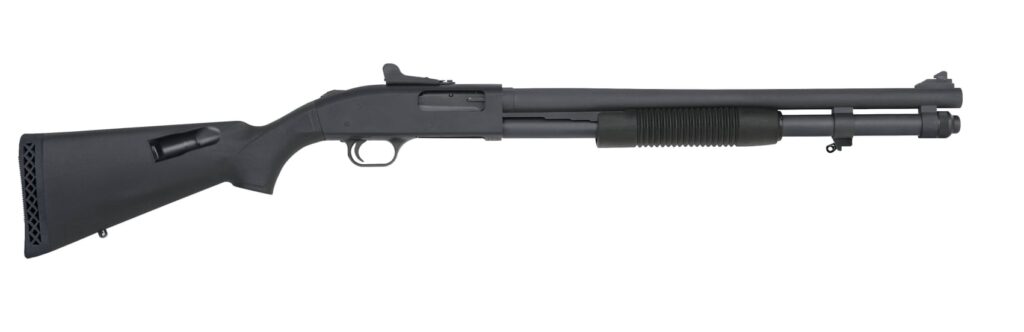
At the 20-inch mark, you’ve gained an inch and a half, making the gun longer than a full-sized M16. The main benefit here is capacity. Typically, a 20-inch barrel allows for a full-length magazine tube that holds eight rounds.
Advertisement — Continue Reading Below
Keep in mind that not all 2.75-inch shells are the same length; they are only 2.75 inches after being fired. Depending on the crimp, you might find that an eight-round tube only fits seven shells of a specific brand. These guns can also become quite front-heavy when fully loaded, especially if you add a weapon light.
14 Inches (NFA / SBS)
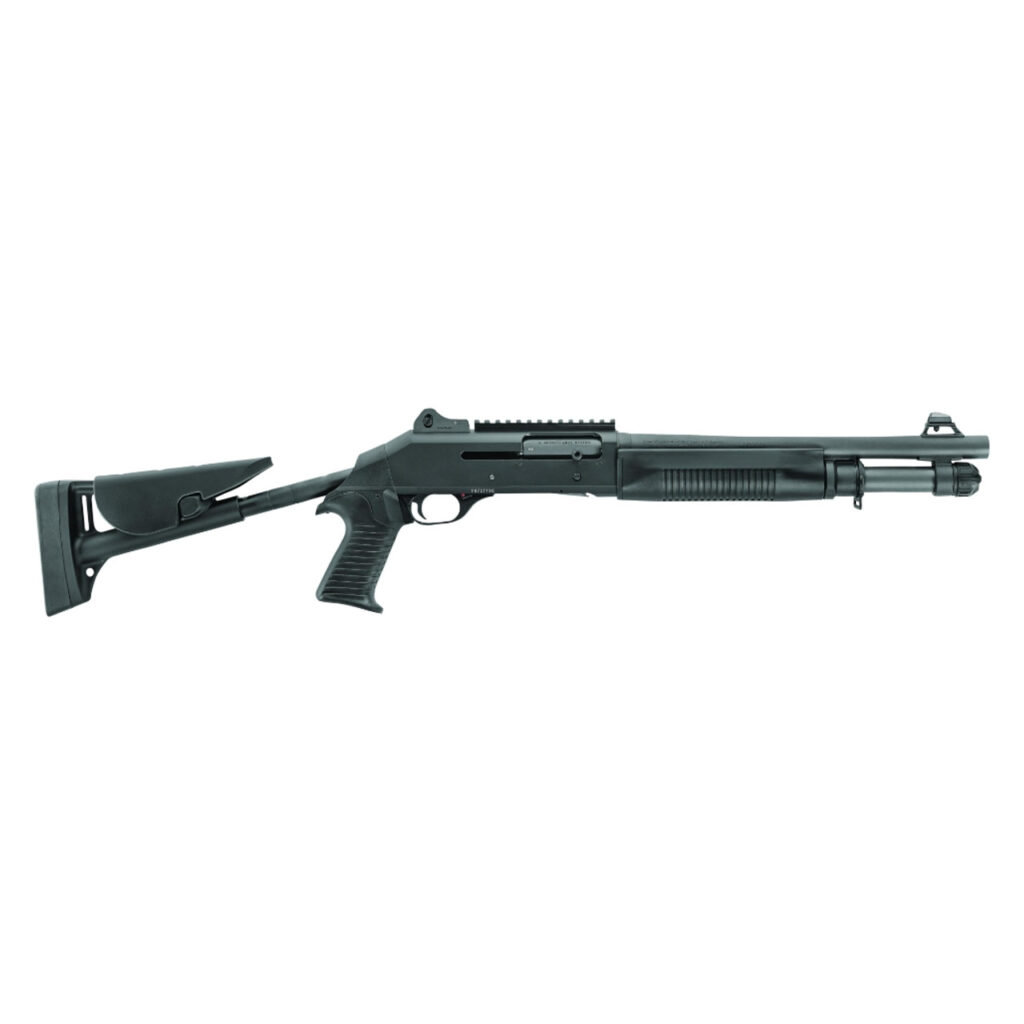
The advent of the Mossberg Shockwave and Remington TAC-14 has flooded the market with easy-to-convert SBS options. Once you get your tax stamp and add a stock, you have a 14-inch powerhouse.
Advertisement — Continue Reading Below
At 14 inches, the shotgun becomes significantly more maneuverable. It enters carbine territory in terms of handling while remaining well-balanced. A tubular magazine at this length usually holds five rounds, though guns like the Benelli M4 or Remington 870 can often “ghost load” a sixth. This is a very capable amount of ammo for such a compact package.
6.5 to 10.25 Inches (NFA / AOW)
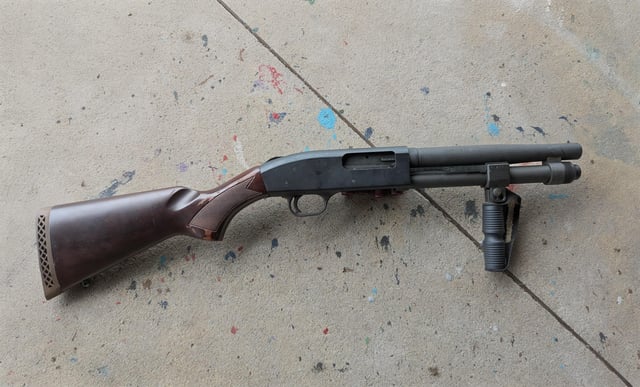
These are the super shorties, typically found as Any Other Weapons (AOWs) like the Serbu Super Shorty. These barrels create an ultra-short gun that is easy to maneuver through tight hallways and is near PDW (Personal Defense Weapon) size.
Advertisement — Continue Reading Below
The downside is rarity and mechanics. You can’t simply chop a standard barrel to this length because the lug that connects to the magazine tube must be moved. Capacity is the biggest hurdle.
A 10.25-inch gun might fit four rounds with an extension, but anything shorter usually limits you to two or three. Additionally, these guns are incredibly loud, produce massive muzzle flash, and have significant recoil.
What About Box Magazines?
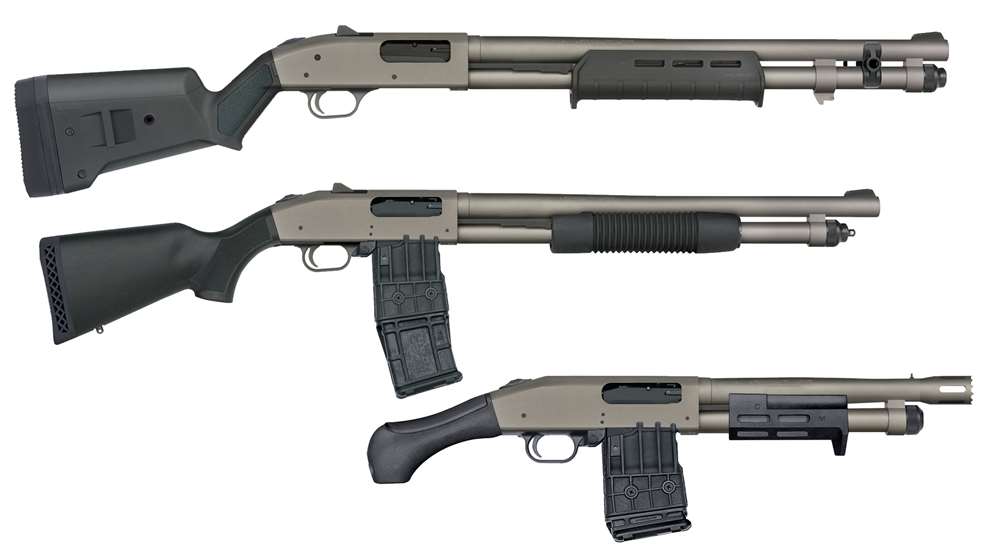
Box magazine-fed shotguns could solve the capacity issues of short barrels. While many box-mag shotguns are unreliable, the Mossberg 590M series is a solid contender.
Advertisement — Continue Reading Below
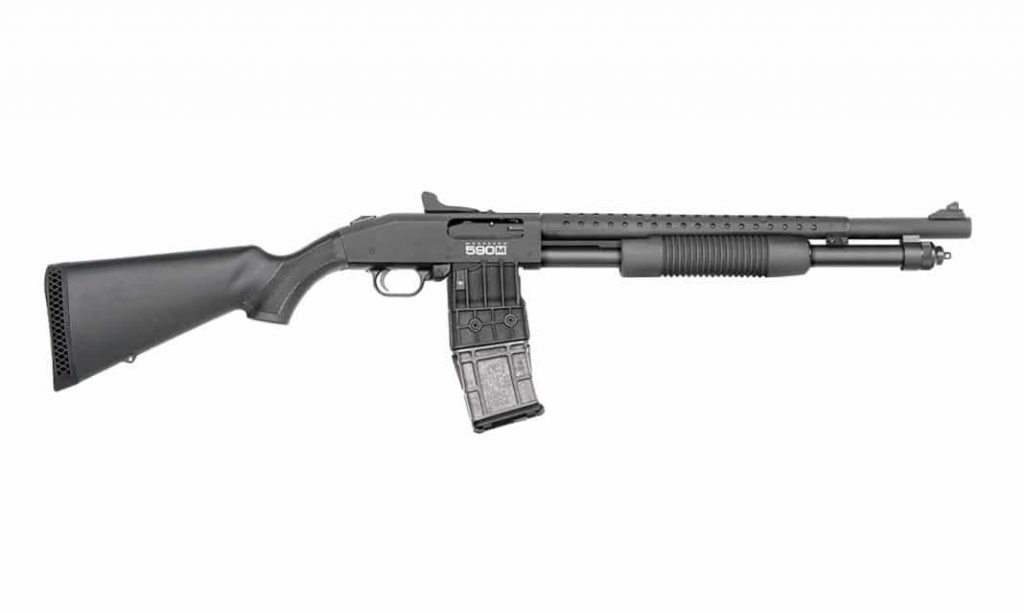
If you registered a 590M as an SBS and shortened the barrel, you could have a 10-inch barrel with a 10-round (or more) magazine. It would require some custom gunsmithing to shorten the proprietary magazine lug, but it would be a formidable setup.
The Verdict: What’s the Best?
In my opinion, the 14-inch barrel is the best all-around option. It offers the perfect mix of availability, maneuverability, and capacity. It’s the “Goldilocks” length that is just right for most defensive applications.
However, if Mossberg ever releases a factory SBS version of the 590M with a 10.25-inch barrel, that might just take the cake.