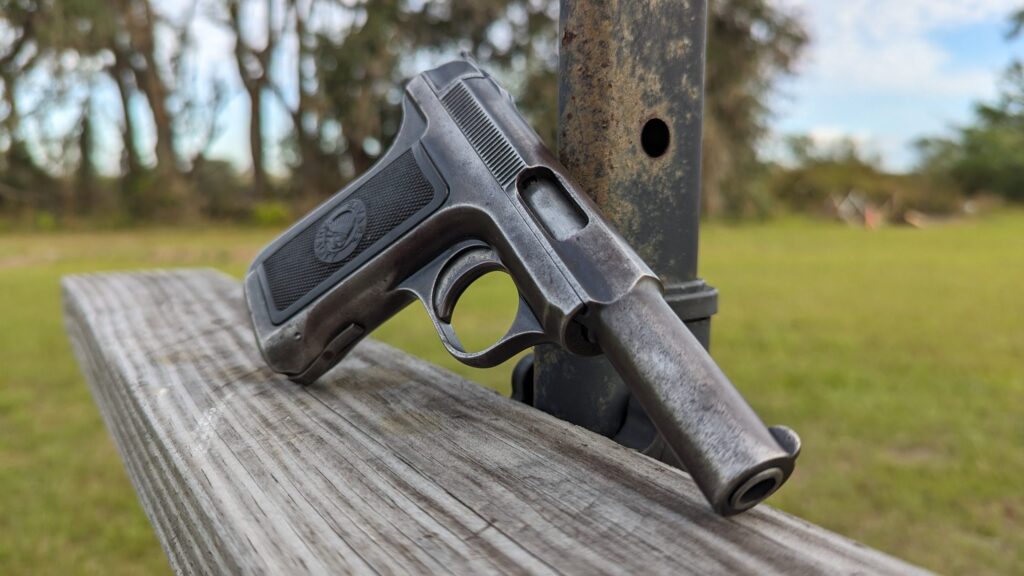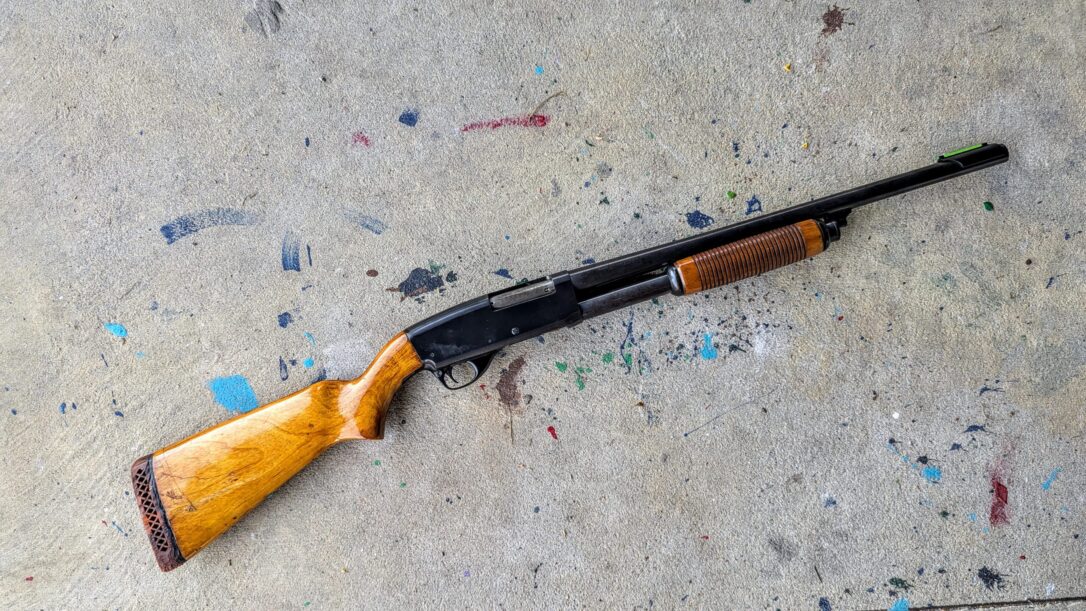
Most of the old and weird shotguns are new to me. Guns, I’m experiencing for the first time. That’s not the case with the Savage Model 67. The Savage Model 67 was, and remains, the shotgun my dad has always hunted with. He’s had a Model 67 since before I was born and swears by it and its full choke for slaying deer.
A History with the Savage Model 67
It’s put thousands of pounds of venison in my dad’s freezer over its lifetime of service. He spent $60 on this shotgun decades ago, and it’s never let him down. His gun is beat to hell, but it still does what he needs, so there is certainly an argument for if it’s not broke, don’t fix it. I recently saw a Savage Model 67 in a pawn shop for $80 bucks and snatched it up.
Mine isn’t exactly mint. Someone hacked the barrel down to around 20 inches and tossed on a cheap clip-on high-visibility front sight. Still, anytime I run into a gun for less than a hundred bucks, I snatch it up. Impulse control isn’t my forte around cheap old shotguns.
Advertisement — Continue Reading Below
The Blue Collar Special
The Savage Model 67 hit the market around the same time as the Mossberg 500, the Remington 870, and the Winchester Model 1200. The guns from Remington, Winchester, and Mossberg were all created to be mass-produced and cheaper than the previous generations of shotguns, like the Winchester Model 12.
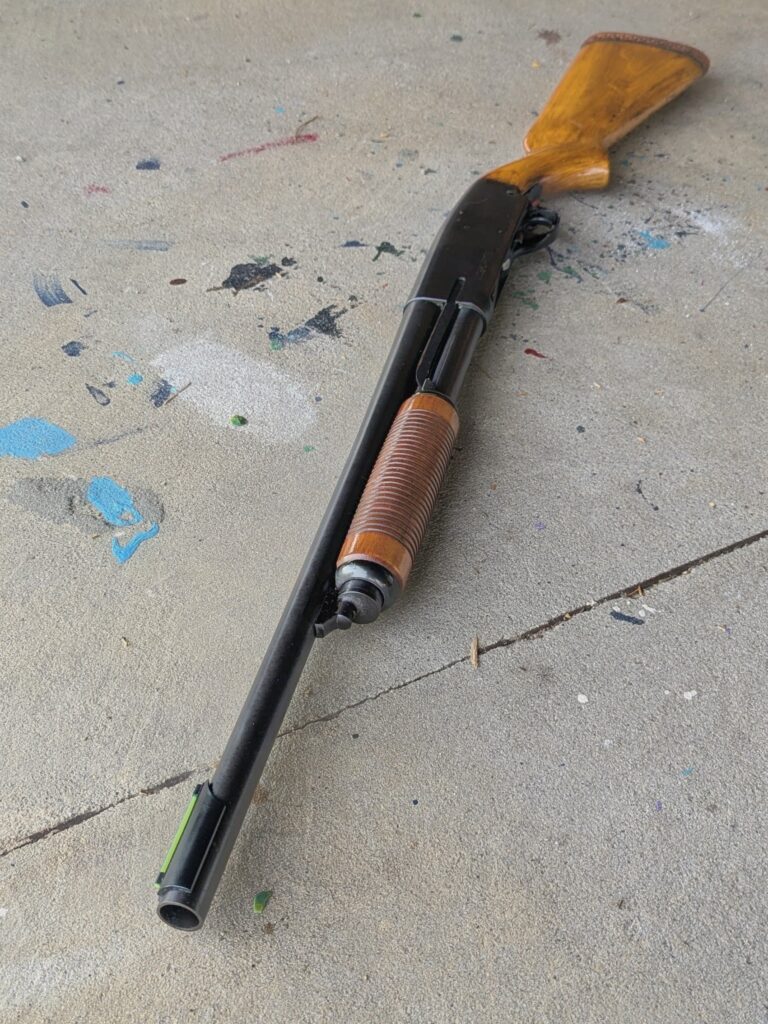
The Savage 67 wasn’t innovative or fancy. The goal was to produce a pump shotgun that was even cheaper than the other mass-produced options. The 67 was based on the Stevens Model 77. The Model 77 was a fairly rugged and well-made shotgun. It served in Vietnam with South Vietnamese forces.
Advertisement — Continue Reading Below
By the late 60s, the Model 77 was updated to the Model 67. The design philosophy was to make it affordable. I wouldn’t go as far as to say they cut corners, but they made a few compromises to price the American-made pump action at a lower price than anyone else.
This included a permanently fixed barrel. The barrel cannot be removed from the receiver. Swapping barrels wasn’t necessarily a big concern for a budget shooter. Still, without a removable barrel, you were left having to remove the trigger group to clean the inside of the gun.
Advertisement — Continue Reading Below
Unlike the competition, the 67 featured a single action bar. While most of the modern shotguns integrated dual action bars, the 67 kept it to a single action bar. For the era, this wasn’t a big deal since so many guns operated without issue with single-action bars for decades.
Early models featured a steel receiver, but later models would use a lighter alloy to cut production costs. The trigger guard was metal, but it was a fairly weak pot metal that wasn’t much to brag about.
The Model 67 – Same but Different
These guns are often called Hardware Store guns. Hardware Stores and even Auto Parts stores sold guns when we were a proper country. Savage wanted that market. A big part of being a Hardware Store gun was various brandings.
Advertisement — Continue Reading Below
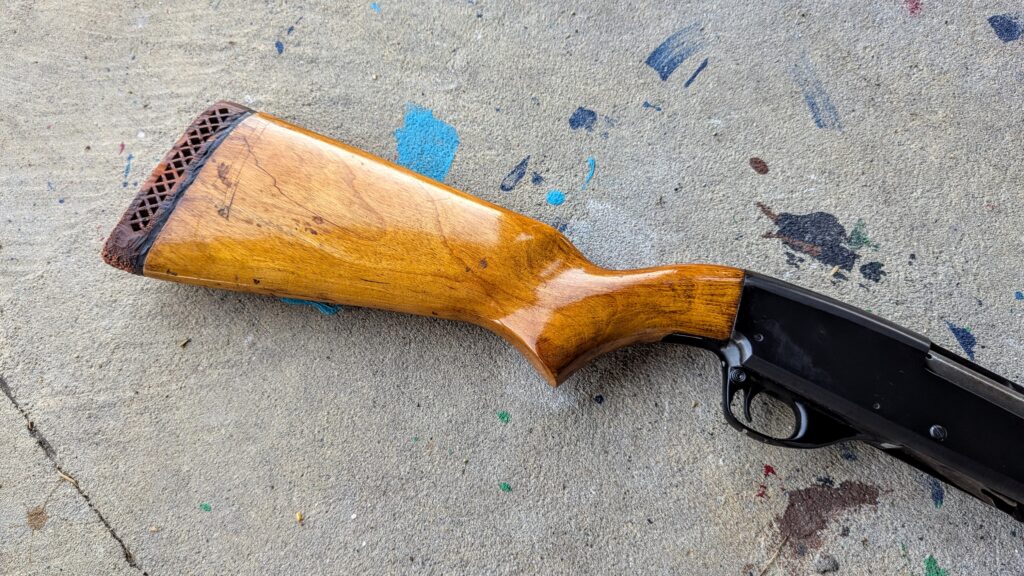
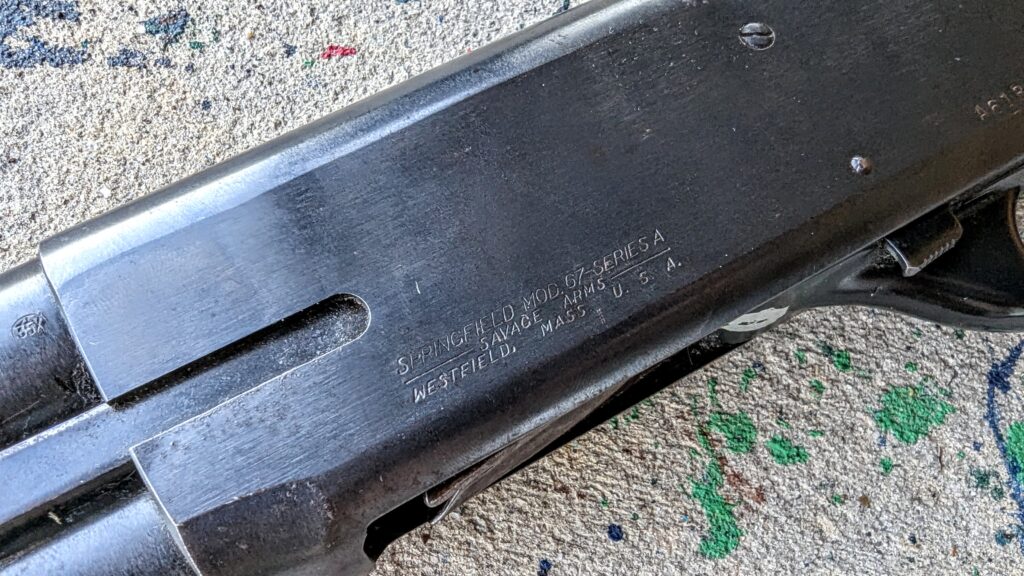
The Savage 67 was known as the Stevens Model 67, the Springfield Model 67, and then we had individual store brandings. Western Auto had the Revelation, True Value had the Cotter and Company, and the list goes on.
The series would occasionally update, and when updated, an initial would be added to the name. There were A, B, C, and E guns. This all represented the various small changes made throughout the gun’s life.
Advertisement — Continue Reading Below
The Model 67 Today
These days, they remain a common sight on gun store used racks. They are cheap guns, but compared to Turkish guns, they feel like Berettas. Hefty metal and real wood furniture go a long way. If you get a Bubba special like me, they tend to be even cheaper.
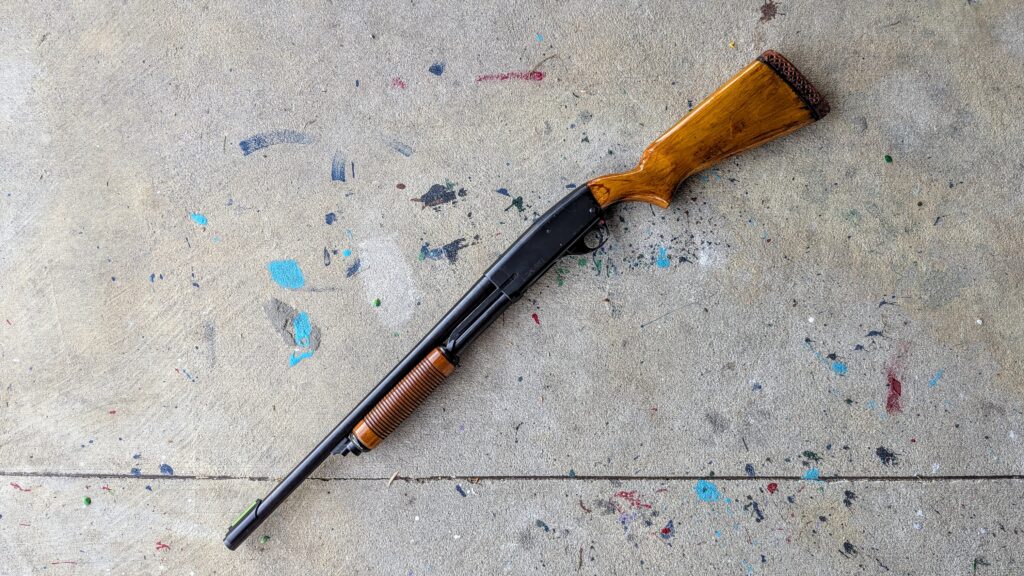
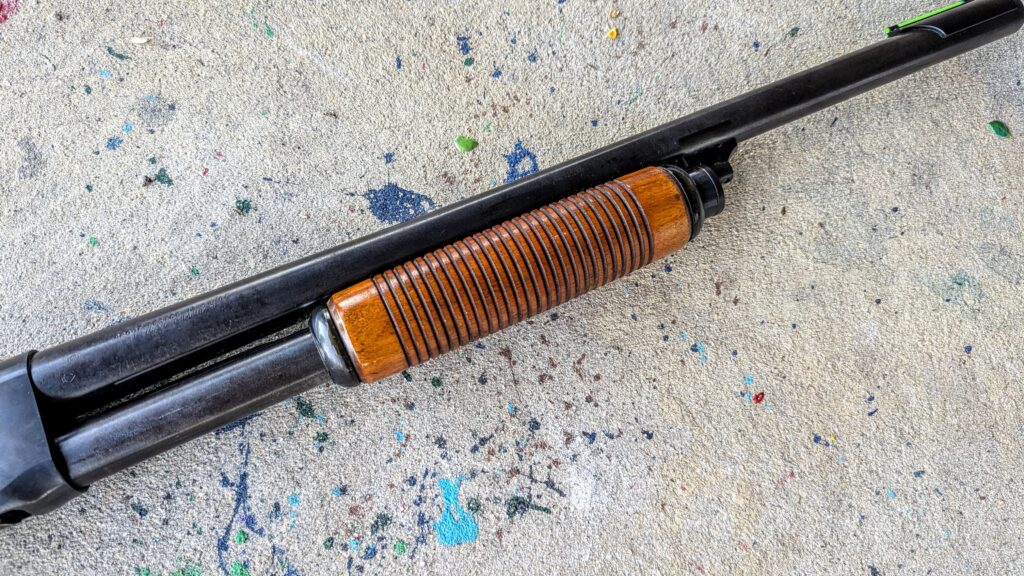
The gun’s fairly stout, with a surprisingly decent length of pull. It doesn’t necessarily feel cheap. The wood isn’t fancy, and the stock is devoid of checkering, but the honeycomb-style forend is beautiful. I’m a sucker for wood furniture.
Advertisement — Continue Reading Below
The magazine tube holds four rounds and can be plugged if necessary. The action is surprisingly smooth for a single-arm gun. You won’t get that Wingmaster experience, but it’s a solid, smooth pump that defies the gun’s low cost.
As you’d expect from a Bubba’ed barrel, the pattern isn’t impressive. It’s fairly wide with a bit of horizontal stringing. It cleans up with flight control, but with standard buckshot, it’s an across-the-room gun.
Recoil is the stiff push you expect from any 12-gauge pump gun. It’s certainly aided by a bit of the gun’s weight. Ejection and extraction were a non-issue, and the gun handled quite well when fired rapidly. I haven’t done a full test, but this model is seemingly reliable.
It’s a utilitarian gun to be sure. Nothing fancy, but it’s functional. Functionality is what counts at the end of the day.
The End of the 67
The Savage Model 67 had a rough end-of-life stage. As you got near the end of their production life, they became cheaper and cheaper, until problems occurred. Models made in the 1960s tend to hold up well, and as you get deeper into the Alphabet, you begin to see the cracks.
Broken parts, broken trigger guards, and jamming were problems. They are difficult to work on, and typically were so cheap that they weren’t worth paying to fix. Not only that, but as fewer hardware and department stores carried guns, the market for these guns dried up a bit, leading to their discontinuation.
If you’re like me and impulse purchase cheap guns, this might be the route to go.