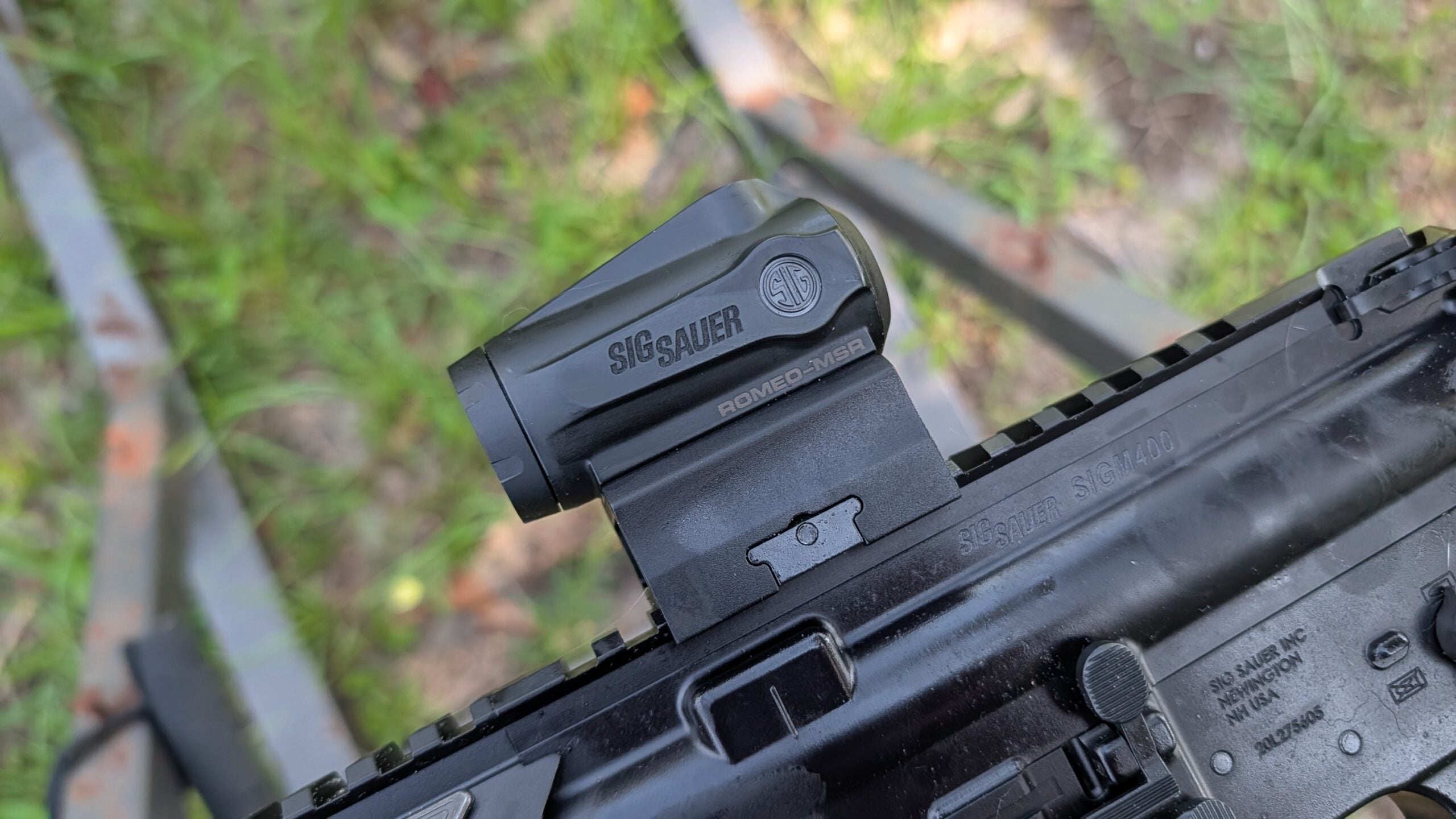
Do you guys remember the dark ages of red dots? There was a time when the idea of a budget red dot meant you were stuck with that red dot from Call of Duty. If you didn’t have an Aimpoint, what’s the point? Times have changed, and now $100 can get you a SIG Romeo-MSR Gen 2, and you have a competent red dot for 99% of everyday users.
The Romeo line of SIG’s red dots has carved its way into a variety of budget tiers. They’ve seen a lot of success, and the Romeo5 and Romeo-MSR have become the budget darlings of the rifle world. I do think it’s a bit odd that SIG has two competing optics at right around the same price point. The SIG Romeo-MSR Gen 2 is a mere $17 cheaper than the Romeo5 Gen 2.
Is the Romeo-MSR Gen 2 a Winner?
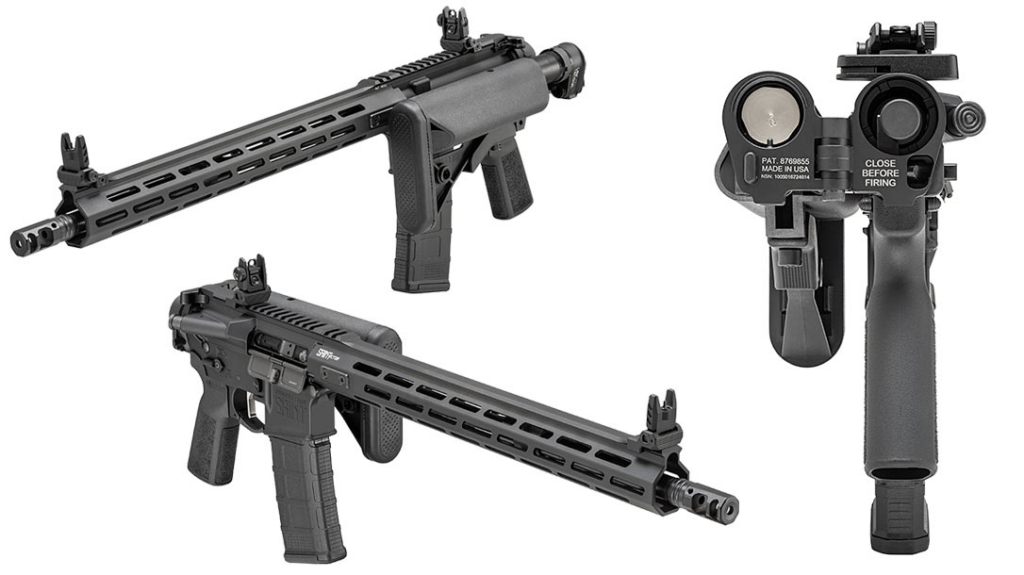
I got hands-on the Romeo-MSR Gen 2 thanks to the SIG M400 Forge. The M400 Forge comes with the Romeo-MSR Gen 2, and since I reviewed the rifle, I figured it would be a great way to squeeze two reviews out of the same ammo lot. I’ve put a little over 420 rounds through the M400 Forge and Romeo-MSR Gen 2.
Advertisement — Continue Reading Below
Breaking Down the Romeo-MSR Gen 2
The Romeo-MSR is about as bare-bones as a rifle red dot gets these days. The mount offers an absolute cowitness, and itself is a fairly lightweight aluminum design. The mount uses a single, teeny-tiny cross bolt to hold the thing on your gun. It doesn’t have much meat at all. This is probably the optic’s biggest weak point.
Here’s the good news: you can easily move the Gen 2 to Aimpoint T1/T2 mounts. There are some solid mounts out there for the Aimpoints…but then we are getting out of the budget market with a new mount. Might as well buy the Romeo 5 Gen 2. SIG also makes a MSR Gen 2 compact that sits low and seems to have a bulkier bolt.
Advertisement — Continue Reading Below
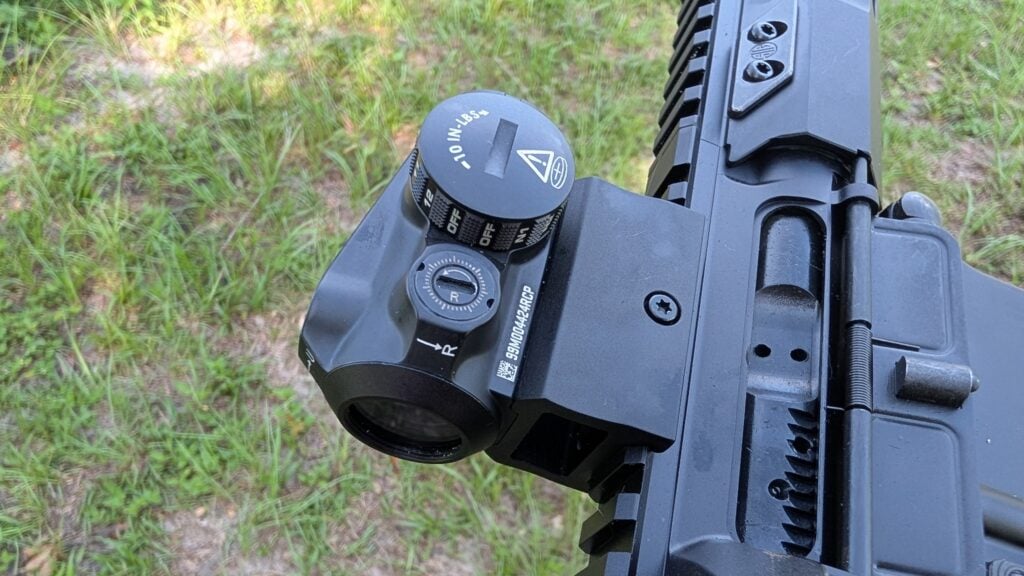
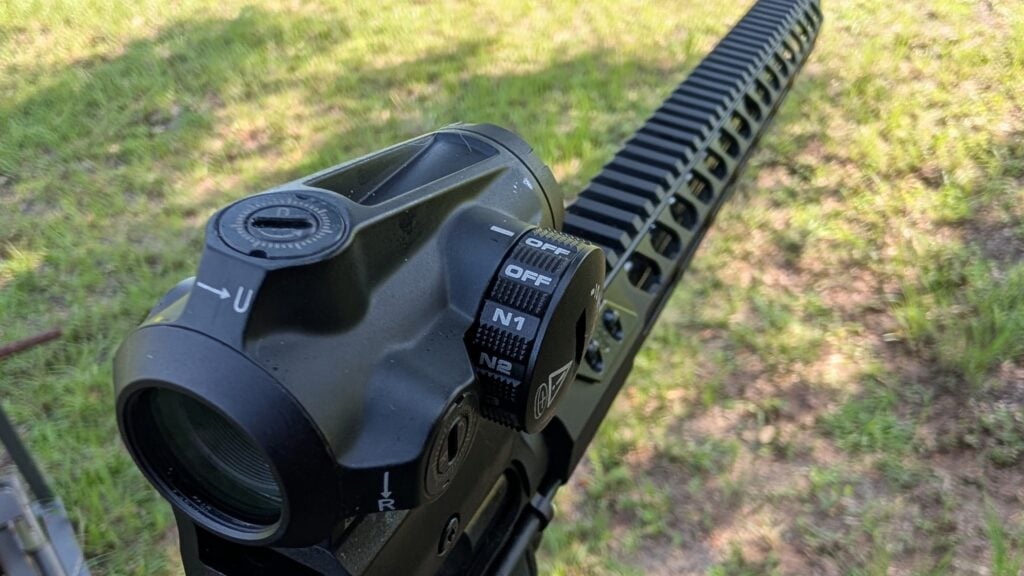
The Romeo-MSR Gen 2 uses a rheostat instead of buttons. I prefer buttons, but I don’t mind the rheostat dial design. The MSR Gen 2 comes with 10 daylight settings and 2 night vision settings. The rheostat was quite stiff at first, but got better as I made my adjustments.
Inside the optic, we have a 2 MOA red dot reticle. No alternatives, no multi-reticle design. A 2 MOA dot is perfectly usable, and often the preferred reticle design. They also make a green reticle option. All we need is a CR2032, and we get 35,000 hours of battery life. There is no MOTAC with this optic, but the battery life gives you plenty of hours of power.
Is there anything especially fantastic about this optic? No, not really. It’s just a red dot. At this price point, I think the feature set is perfectly fine. It’s a bare-bones red dot at a bare-bones price.
Advertisement — Continue Reading Below
To the Range
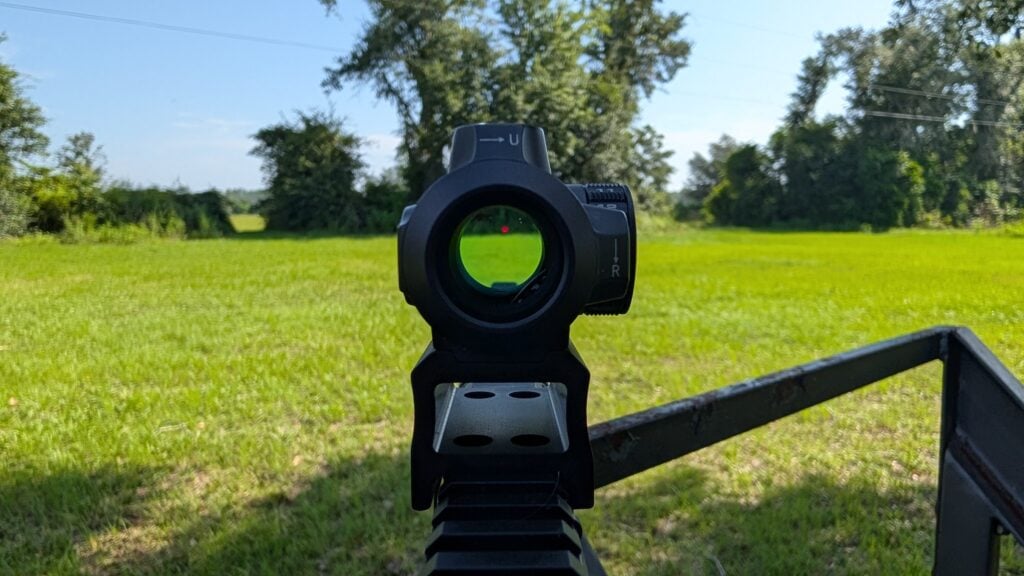
Let’s talk about the reticle. Much like the mount, it’s a bit of a downside. It certainly isn’t a crisp 2 MOA dot. It streaks heavily and looks a bit distorted. Luckily, it’s a small dot so it’s not going to cover an absurd amount of target. It’s fine, and won’t stop you from hitting your target, but it’s far from a nice, crisp 2 MOA dot.
The rheostat is mounted on the right side, and sits fairly tight to the optic’s body. It doesn’t impede your peripheral vision. The original MSR used a top-mounted dial; I prefer this side-mounted design 100%. It’s just easier to reach and adjust and more intuitive to spin it forward to brighten and rearward to dim.
Advertisement — Continue Reading Below
The reticle can get crazy bright. I shoot in Florida, in the summer, against a berm that’s nearly white. It’s just oppressively bright at times. Dim dots need not apply. Even in that environment, I never needed to go beyond setting eight to see the dot.
The notch filter is noticeably less than the older MSR red dot. It’s a light blue tint, but not bad by any means. The view through the tiny little window is plenty clear. For a budget optic, this is impressive. A lot of budget optics rely on a hefty notch filter to preserve battery life, but that’s not the case with the Romeo-MSR Gen 2.
Advertisement — Continue Reading Below
The turrets are slot type and sit flush with the body of the optic. They do provide a tactile and audible click. What’s a little weird is that some clicks are stiffer than others. Sometimes I’d apply a good bit of pressure to make one adjustment but then apply that same pressure, and it would jump two or three clicks.
Going Fast
The Romeo-MSR Gen 2 chewed through those 420 rounds without an issue. It retained the zero without a problem. It’s streaky, but usable enough to make hits out to 200 yards without much difficulty.
The refresh rate seems perfectly fine. I didn’t see any lag as I moved from target to target. Even when I just do the wave around test, I don’t see any noticeable lag. Going fast certainly wasn’t a problem, and I could feel confident with this optic for home defense engagements where speed wins.
Advertisement — Continue Reading Below
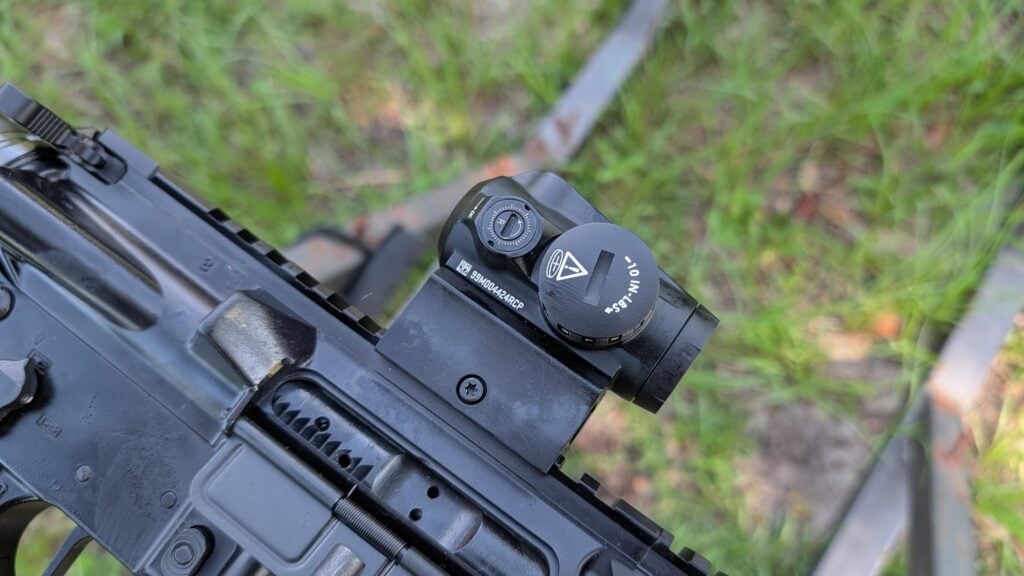
It’s July in Florida, so it rained on two of my range days. Not that I minded because rain beats 96-degree temps with 80% humidity. The rain certainly didn’t challenge the IPX7 rating of the optic. We both got a nice shower, followed by the sun and humidity coming back with a vengeance.
The Little Optic That Could
A hundred bucks isn’t a ton of money these days. The Romeo-MSR Gen 2 is cheaper than comparable Holosuns, and better than comparable Vortex dots. This might be the cheapest dot out there that doesn’t suck. It’s not fancy, but it excels at the basics, which is all we need it to do.