To split or not split wood is the question. When to split wood depends on several factors. There are no hard-and-fast rules. However, most can agree that when wood is wet, it’s a good time to split!
Why Split Wood?
Splitting wood seems simple, but timing matters. Some wood burns fine as-is. Other pieces act like stubborn mules and demand a clean split. Knowing the difference saves effort, fuel, and a few choice words you’d rather not yell at a log.
Wet wood is the first warning sign. Moisture hides deep inside thick rounds and slows ignition. You can stack it, curse it, or give it the evil eye, but it still won’t burn well. Splitting exposes the core and speeds drying.
Advertisement — Continue Reading Below
Bark adds another layer of trouble. It traps moisture and shields the heartwood. A quick split removes that barrier and lets air move through the stack. Good airflow is free performance, and every fire appreciates it.
Splitting for the Fireplace at Home
This takes more discipline. Fireplaces love consistency. Even pieces stack well, burn predictably, and maintain a steady heat. Tight spaces need uniform fuel, not oddball chunks that roll around like they own the place. So, be ready to saw and split for the fireplace. Split wood burns cleaner and hotter, which keeps the chimney happier. A neat stack also looks better, and there’s no shame in enjoying a tidy woodpile.
Advertisement — Continue Reading Below
Splitting for a Campfire and Survival
Splitting for a campfire gives you more freedom, but the rules still help. Smaller pieces catch faster and support early flame growth. A few split sticks can turn damp kindling into a working fire. Campfire wood doesn’t need to be perfect, but it should be suitable.
Forget uniform sawing or chopping. Throw it on as long and unkempt as it is. Feed it in. Adjust accordingly. Split wood gives you that cooperation when the weather doesn’t.
Advertisement — Continue Reading Below
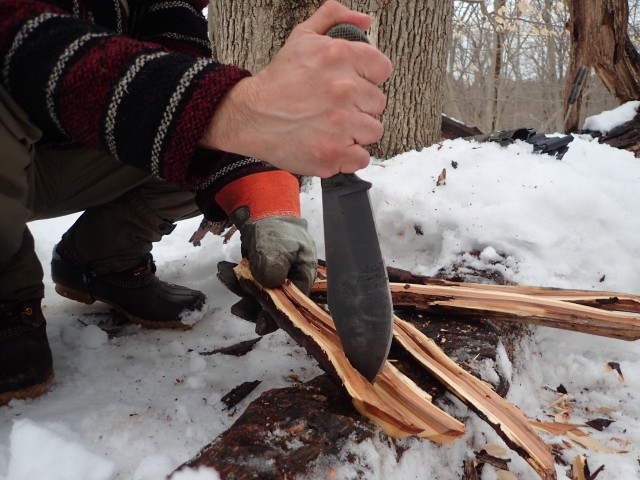
In survival settings, splitting is helpful. And gathering an extra-large pile of thin twigs and sticks is essential. You need dry inner wood for ignition, especially when the world is wet and unhelpful. A split reveals the dry core, even in steady rain. It also creates sharp edges for feather sticks, both of which are super important.
When you’re cold, tired, and losing daylight, split wood becomes more than fuel. It becomes your lifeline, and that’s when to split wood!
What About In Snow?
Here’s a tricky one. If it’s convenient and you have the right tool, have at it. However, in my experience, I split every log that had snow on it. After several years, I learned that quality dead wood with snow covering it would ignite if placed on an existing fire. If you have only snowy logs to start a fire, they will need to be split to a thin pencil width.
Advertisement — Continue Reading Below
Ways to Split Wood
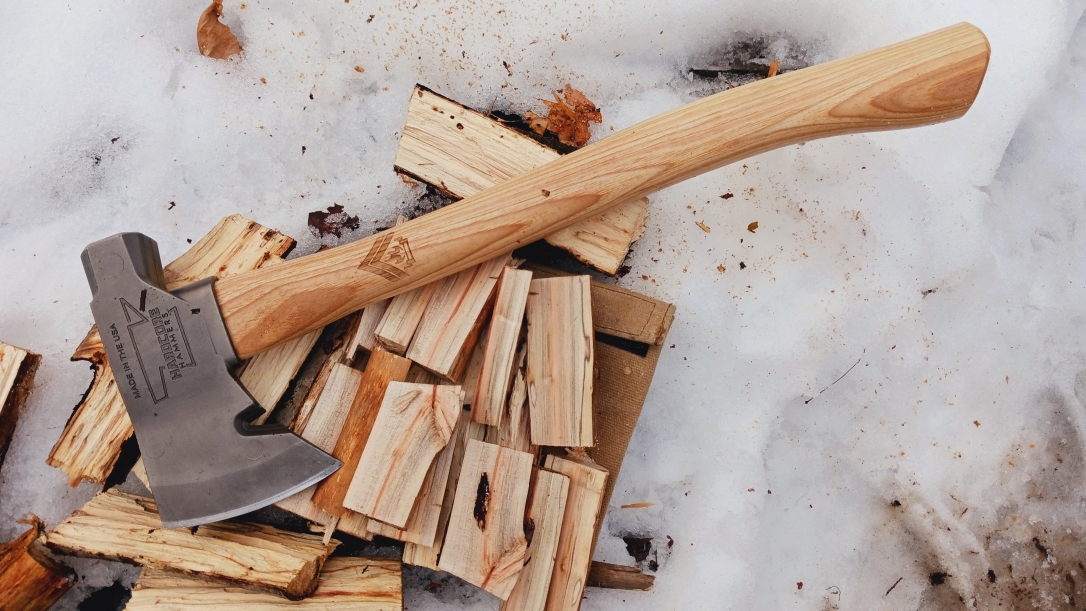
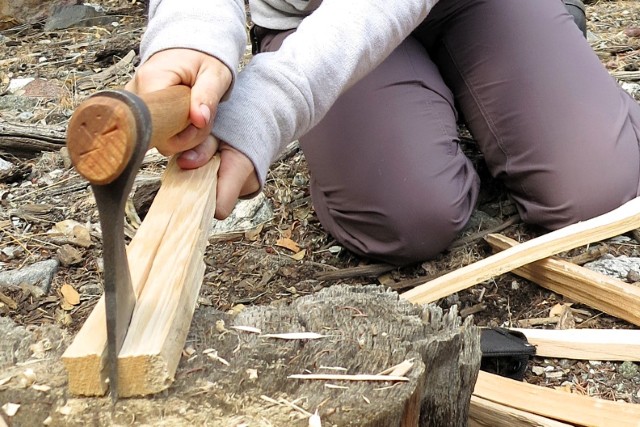
You can split wood in several ways. Use an axe or hatchet for most jobs. A hatchet handles small rounds and camp chores. An axe handles larger pieces and heavy work. Choose the right tool and keep it sharp. A dull edge wastes energy and bruises your pride.
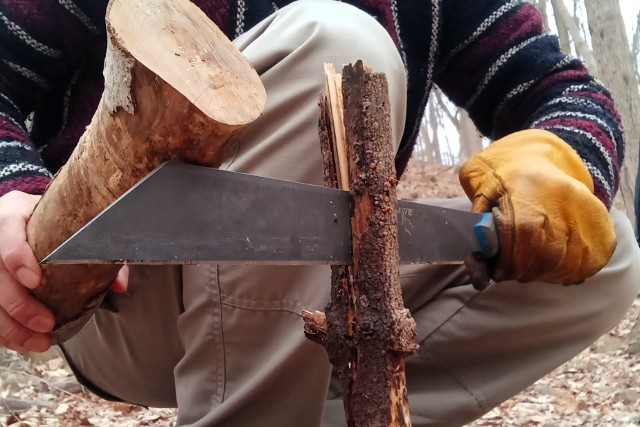
You can also split wood with a large knife or machete. This works best with small rounds and kindling. Drive the blade in, baton the spine, and let the blade guide the split. Keep your fingers clear and strike with control. This method shines when you need dry inner wood fast and don’t have room for a full swing.
Advertisement — Continue Reading Below
A tomahawk, or “hawk,” offers another option. It’s light-headed, bites well, and handles small splits with ease. I stick to wood that’s wrist-thick, and anything larger in diameter I throw on as fuel. Choke up on the handle for control. Use short, precise strikes to open the grain.
A hawk won’t replace an axe, but it excels at camp chores and quick kindling. It’s the multitool of the wood-splitting world—light, handy, and always ready to prove it belongs in your kit.
To Split Wood or Not: Thoughts
Splitting wood is simple once you know when and why. If you always have a stout tool for splitting like a fixed blade knife, hawk, or hatchet, you’ll be the wiser. Read the wood. Split when needed. Burn smarter, not harder.
Advertisement — Continue Reading Below