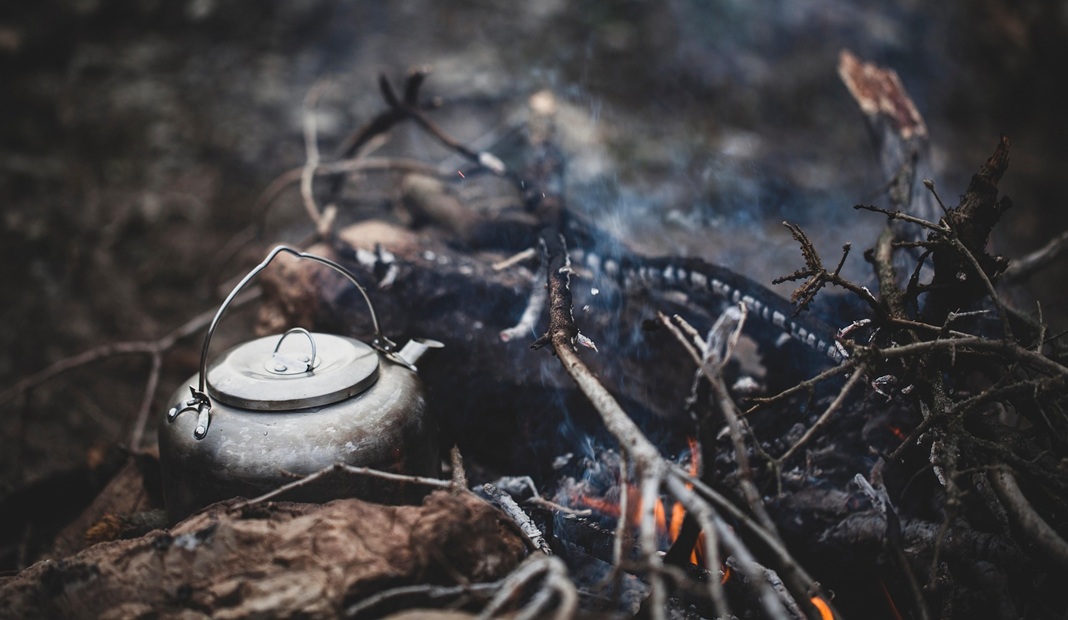
It’s fairly common knowledge that if you’re faced with using questionable water for consumption or food prep, boiling it will kill waterborne pathogens. When I teach preparedness classes, I always ask, “How long should you boil water to make it safe to drink?” The answers typically include one minute, five minutes, ten minutes, even twenty minutes.
How to Purify Water by Boiling It
Here’s the thing. If you have a limited fuel supply, you don’t want to use any more of it than absolutely necessary. The longer you boil the water, the more fuel you’re going to use. At the same time, you don’t want to risk getting sick from drinking bad water. So, you want to make sure you’re boiling it long enough to make it safe, without overdoing it.
Advertisement — Continue Reading Below
What Boiling Does
Boiling water will kill waterborne pathogens, such as protozoa, bacteria, and viruses. These are the little germs that can make you very sick. Being ill is bad enough, but imagine having severe intestinal issues while also not having access to running water. That’s probably not nearly as much fun as it sounds.
On top of the discomfort and potential mess, you’ll also end up more dehydrated than you were when you started, due to the fluid loss.
Advertisement — Continue Reading Below
How Long to Boil Water?
Here’s the science part of today’s lesson. Most pathogens are killed at 150F. If you think back to your middle school science classes, you might remember that water boils at 212F at sea level. As it approaches that boiling point, water will reach and then exceed 150F, right?
We let it get to boiling because that’s a no-nonsense, easy-to-see indicator that the water has gotten hot enough to kill off the germs that may be swimming around in it.
Advertisement — Continue Reading Below
As for the official word, according to the Centers for Disease Control (CDC), you’re supposed to bring water to a rolling boil for one minute to make it safe from pathogens. If you’re at or above 6,500 feet in elevation, increase that time to three minutes.
What Boiling Doesn’t Do
While heating water to a sufficiently high temperature will kill waterborne pathogens, it will do exactly nothing about heavy metals, pesticides, pollution, or toxins. In fact, it could make things worse with regard to those substances. When you boil water, you lose some of it to steam. As a result, you’re actually concentrating the amount of those toxic substances. You’ll need a proper water filter to handle those.
Plan Ahead for Boiling
If you’re packing a water bottle, it should be a single-walled steel bottle. This way, you can use it to boil water, should that become necessary. You’ll sometimes hear that you shouldn’t use an insulated water bottle because they could explode when you try to boil water in them. That’s not really a thing. At most, it might bust a seam.
Advertisement — Continue Reading Below
The real reason not to use them for boiling water is simple. The bottle is expressly designed to prevent the liquid inside from heating up. It will take you a lot longer, and a whole lot more fuel, to bring that water to a high enough temperature to kill pathogens. Water is a critical survival need. Be sure to have multiple ways to make it safe to drink.