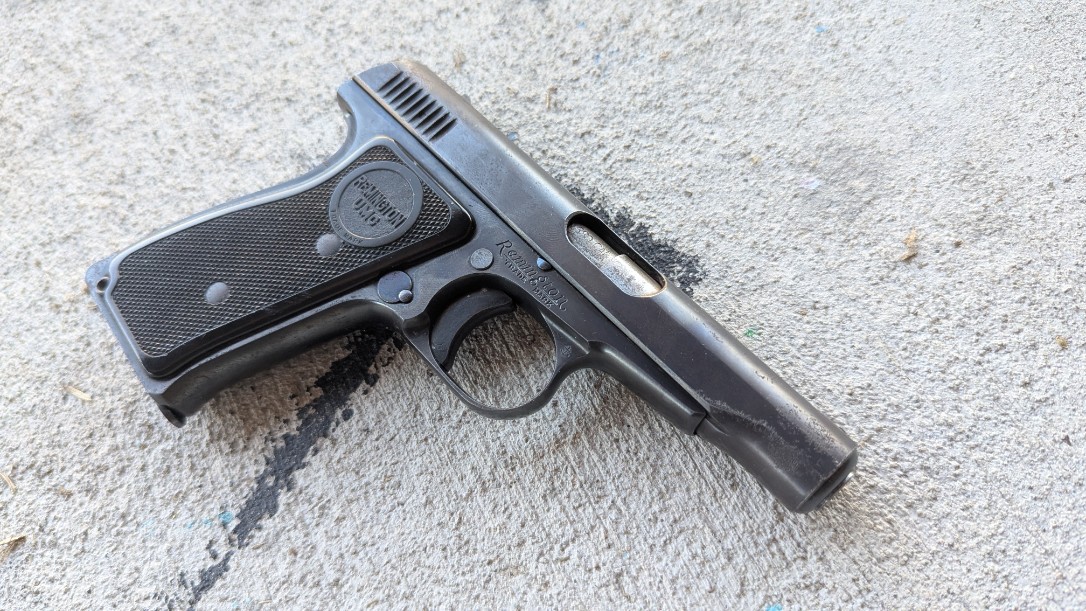
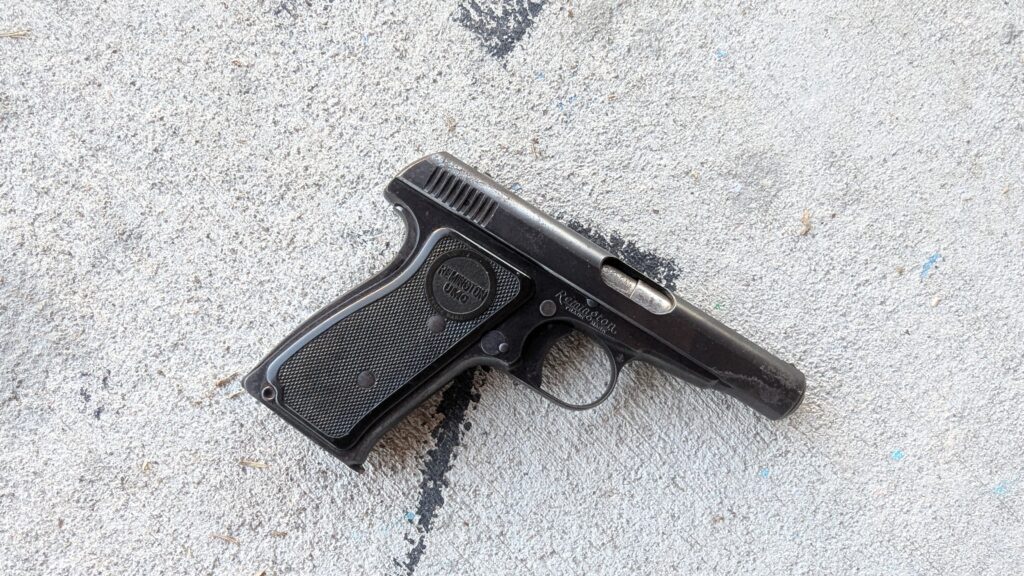
When I scored a Remington Model 51 for 400 dollars, I nearly did a jig. Sure, I’m a .32 ACP man at heart, but I’ll take a .380 when the gun is this cool. The Model 51 has always been on my bucket list. I have a real thing for early 20th-century pocket pistols, especially when they aren’t simple direct-blowback designs. The Model 51 featured a novel operating system that put it a step ahead of the competition.
Pedersen’s Remington Model 51
Designed by the legendary John Pedersen, the Model 51 was first produced in 1918 and remained in production until 1926. Available in both .32 ACP and .380 ACP, it offered a thin, downright lithe profile for self-defense and concealed carry. The secret to its slimness was the Pedersen-designed “Hesitation” delayed blowback system.
Advertisement — Continue Reading Below
Compared to contemporary blowback-operated guns, the Model 51 offered significantly less felt recoil. It also allowed for a remarkably lightweight slide. The hesitation-delayed design is fairly complex, featuring an independent breech block that “hesitates” for a fraction of a second to allow pressures to drop before cycling. It’s easy to see why it wasn’t widely replicated; while effective, the precision machining required made it expensive to produce.
In the modern era, we have so many simpler ways to delay blowback that hesitation designs are unnecessary. However, in 1917, this was a breakthrough—albeit one that resulted in only modest commercial success. The complexity ensured a high price tag, and the price tag kept many buyers away. While it had less recoil than an FN Model 1910, the difference wasn’t radical enough for most people to justify the extra cost over a simpler competitor.
The Model 51 in Technicolor
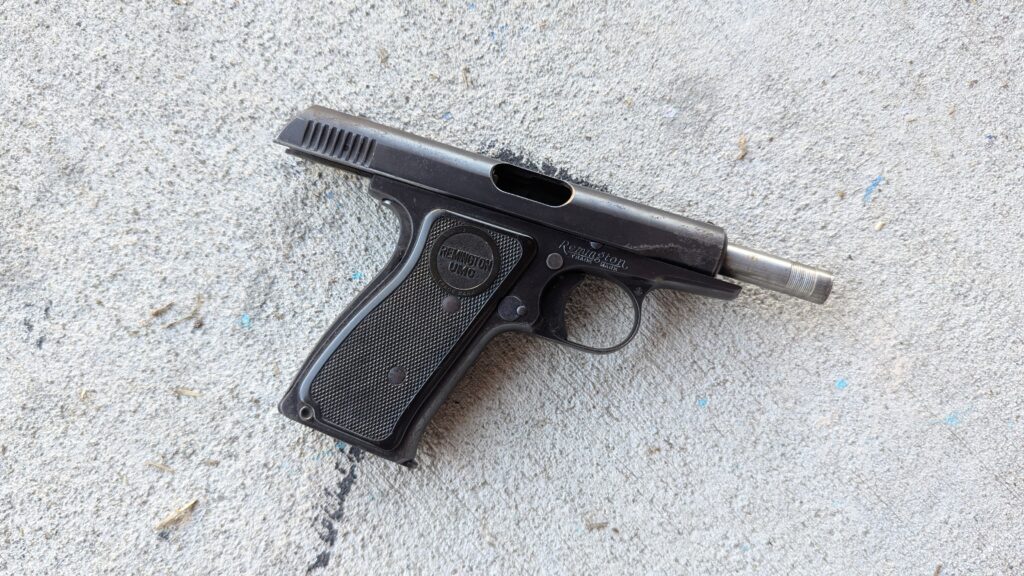
In the hand, the Model 51 is remarkable. It is incredibly small and thin, yet highly ergonomic. It features a manual safety that pulls double duty by locking the slide open for maintenance, though the slide does not lock back automatically on the last round fired.
Advertisement — Continue Reading Below
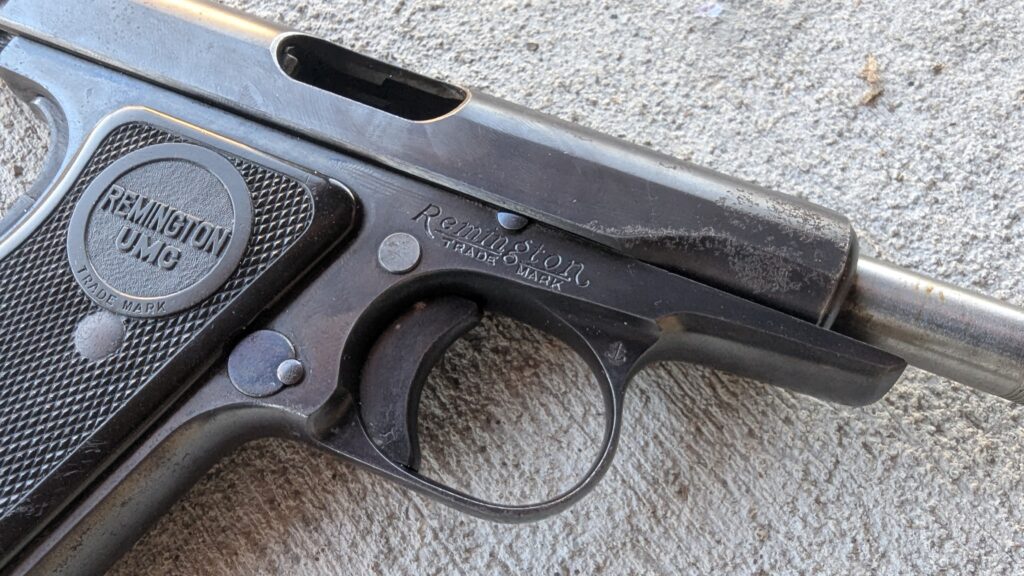
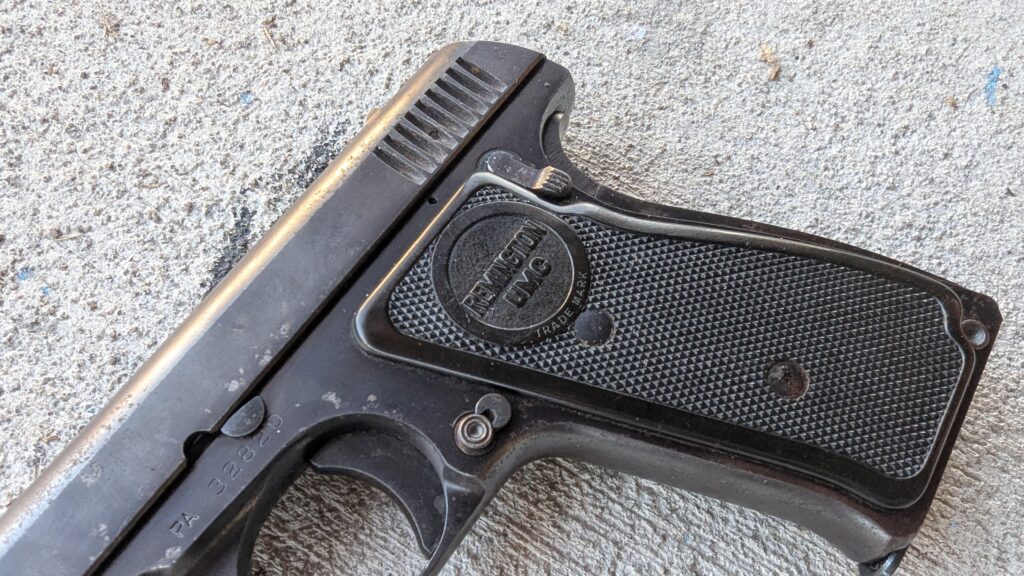
The .380 version holds seven rounds, while the .32 ACP model gives you one extra. The gun is fitted with simple plastic grips that are attractive in their minimalism, featuring the Remington UMC logos to remind you of “Big Green’s” storied history.
Advertisement — Continue Reading Below
The Model 51 came equipped with a modern-style magazine release, though the sights are definitely “micro-sized.” They are the type of sights that inspired the old saying that you’ll never see your sights in a gunfight. Despite the tiny irons, the slide glides rearward with an ease that makes it a joy to rack and load. You can truly feel the hand-fitted quality of this firearm; it’s a shame they didn’t produce more of them.
Shooting a Century-Old Classic
I’m never going to torture test a vintage piece like this, but I do enjoy taking it out to run a few magazines through it every so often. Shooting the Model 51 is an awesome experience. Its age doesn’t hinder its performance; the little gun chews through .380 ACP with ease and perfect reliability. In the 200 or so rounds I’ve fired, it hasn’t jammed once.
That might not be a high-round count by modern standards, but this gun is nearly a century old—give grandpa some credit. The first time I shot it, I thought, “They should really remake this.” Then I remembered that they did—and they righteously messed it up. Remington released the R51 in 2014, and it was a disaster of quality control and poor engineering.
Advertisement — Continue Reading Below
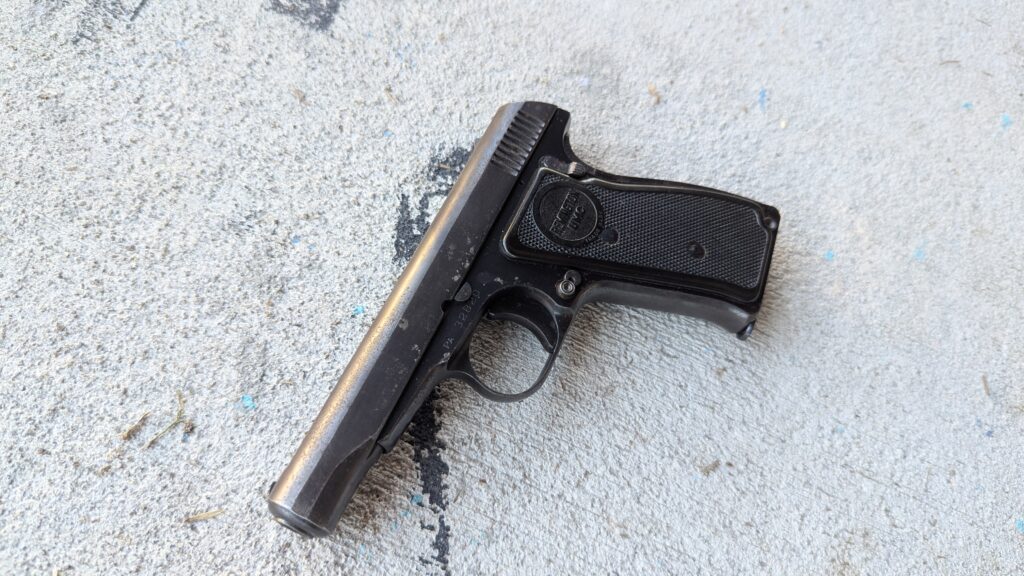
The original Model 51 is a vastly superior handgun. Scaling the design up to 9mm for the R51 was a mistake; the joy of the 51 is its thin, light frame. The 9mm round required more bulk and weight, stripping away the elegance of Pedersen’s original vision.
At the range, those tiny sights don’t give you much to work with, but when you line them up, the Model 51 puts rounds exactly where you want them. I’ve managed surprisingly tight groups at 15 yards (small enough to cover with your hand).
Advertisement — Continue Reading Below
The lack of harsh recoil makes rapid fire easy. Blasting double-taps makes me feel like a turn-of-the-century private eye dealing with mobsters. If I actually had to defend myself with it, I’d feel perfectly comfortable doing so.
Securing a Piece of History
Original Model 51s are drying up. They are getting tougher to find and more expensive as they transition from “old guns” to “rare collectibles.” They get broken, forgotten in corners, or tucked under beds. If you happen to find a Model 51 in good condition, snatch it up.
Advertisement — Continue Reading Below
Once you hold it, you’ll understand why John Browning himself called John Pedersen the greatest gun designer in the world.