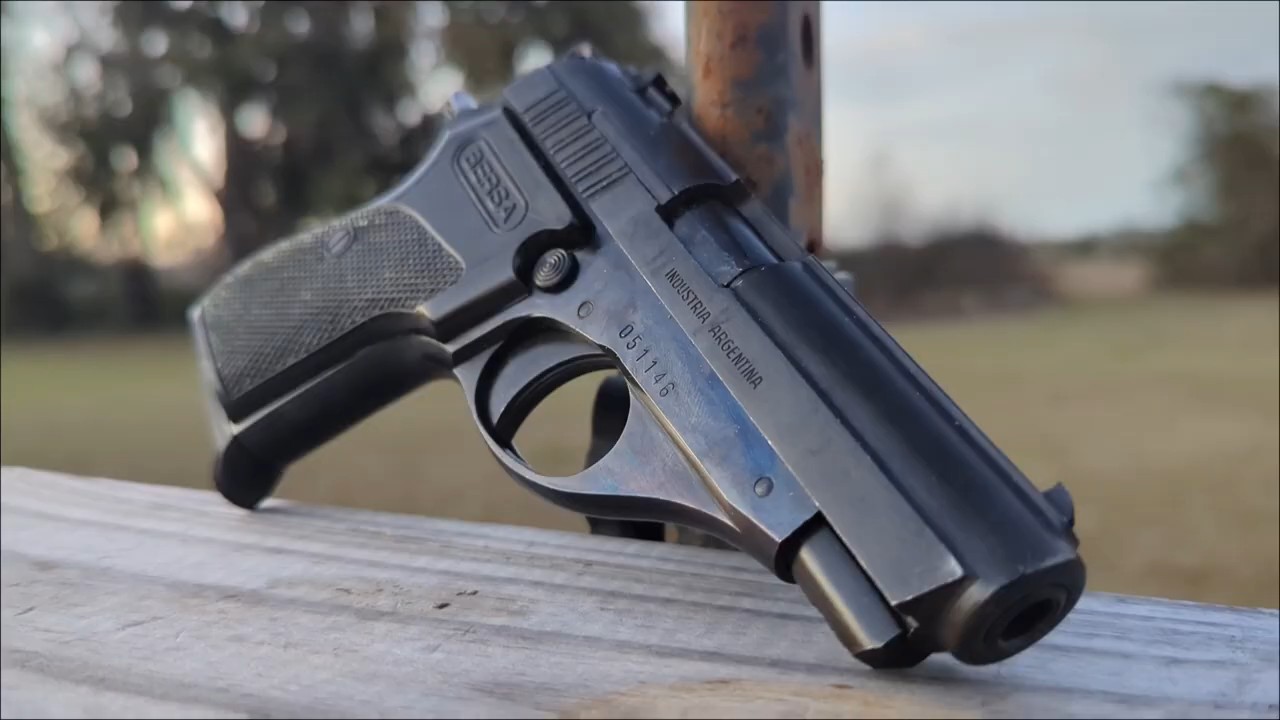
Argentinian firm Bersa makes a lot of guns. They produce polymer-frame, duty-style guns, 2011s, and even ARs, yet they are still known as the guys that make the Walther PPK clone for a lot less money than a PPK. The Thunder is what they are most known for, but it was far from their first gun. Their first centerfire pistol premiered in 1973 as the Bersa Lusber.
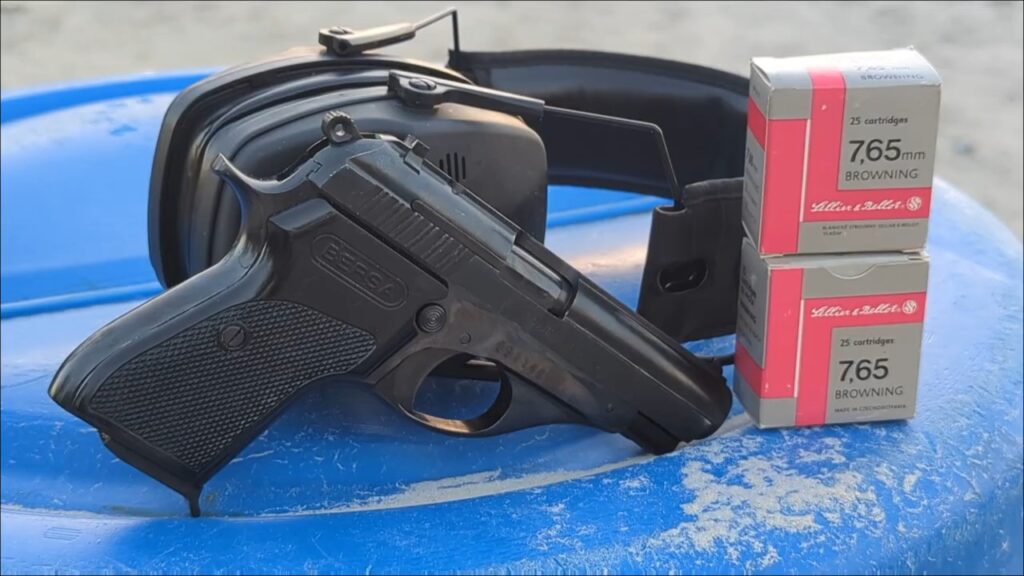
The original Lusber Model 84 was a neat pistol and effectively a clone of the Beretta Model 70. After the release of the Lusber 84, we got the 844, which is arguably a fairly radical redesign. Good luck finding a lot of information on this gun. It is quite obscure, but it remains cheap.
Advertisement — Continue Reading Below
Yet, it is a neat little .32 ACP that features an interesting design. It is a simple blowback-operated gun that combines Bersa’s past with what would become their future. I think the Lusber was critical to the eventual production of the Thunder.
Inside the Lusber 844
It is not a clone of any particular gun but seemingly a combination of the Beretta Model 70 and the Walther PP series. One of the three founders of Bersa had worked at Beretta, so his history clearly inspired Bersa’s first centerfire design. Conversely, Bersa’s future was the Thunder series, which cloned the Walther pistols.
Advertisement — Continue Reading Below
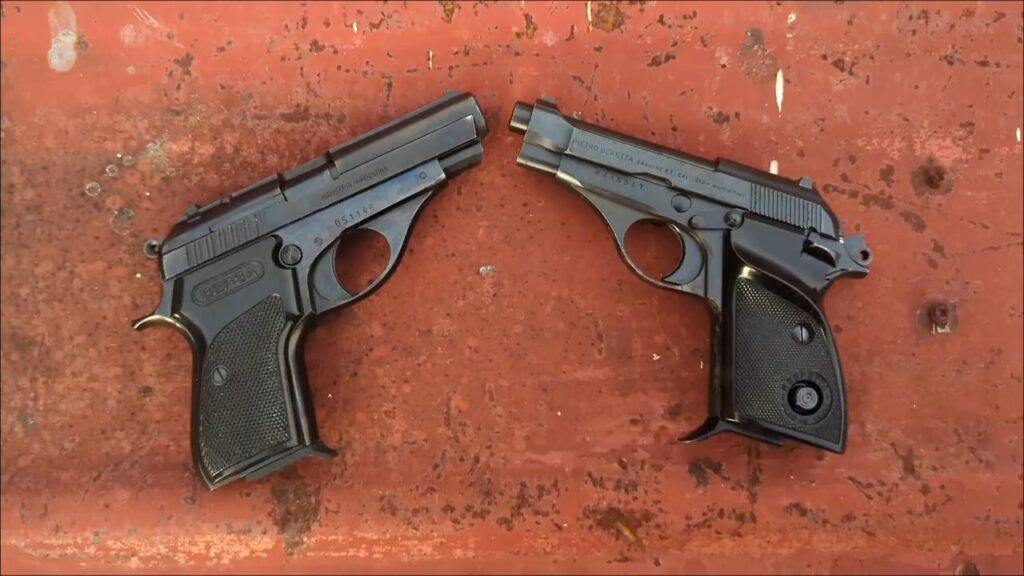
The frame is clearly inspired by the Model 70. The swoop to the front of the trigger guard, along with the overall frame design, is very Beretta-coded. Much like the Model 70, it is a single-action-only, hammer-fired gun. The magazine release is identical to the Model 70 as well.
The Safeties
The original Lusber 84 used a Beretta Model 70-style guide rod and recoil spring, but that changed with the 844. The recoil spring slides over the barrel, and the fixed barrel doubles as the recoil guide rod, much like a Walther series of pistols.
Do you like safeties? Good, because Bersa gives you three. We have the most apparent, which is the slide safety. It is not a decocker, and it is teeny-tiny compared to a Walther or Beretta safety.
Advertisement — Continue Reading Below
Then, up front and on the frame, we have a cross-bolt safety. Why? I have no idea. The slide safety and cross-bolt do different things. The cross-bolt safety locks the trigger. The slide safety places a block to prevent the hammer from striking the firing pin. If you put the slide safety in place and have the cross-bolt off, you can drop the hammer without the gun firing. It falls to a half-cock position.
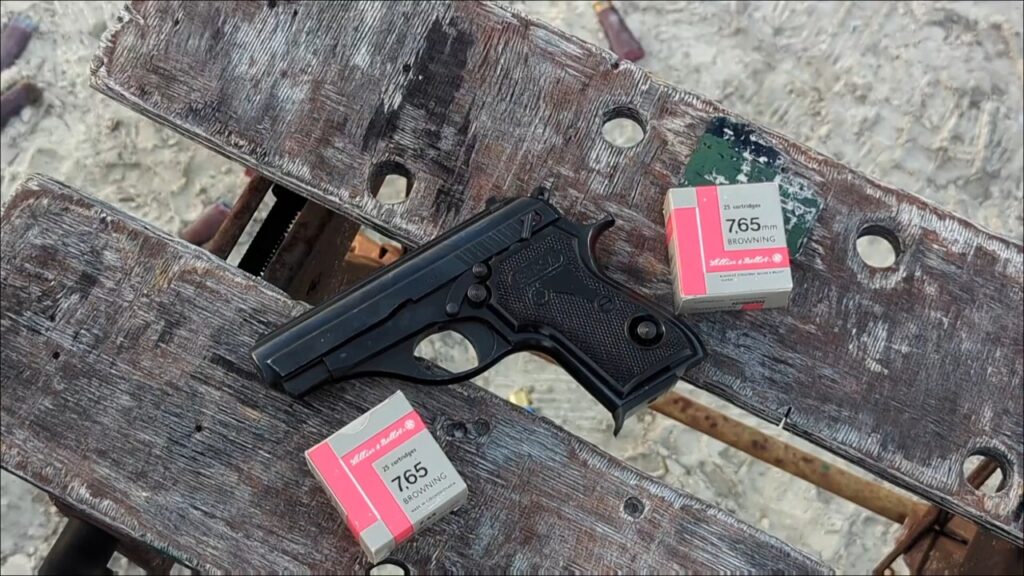
If the hammer is fully down, you cannot engage the slide safety because it doesn’t allow the rotating piece to rotate. Place the hammer on half-cock, and you can engage the slide safety. Finally, we have the dreaded magazine safety: the gun will not fire without a magazine in place.
Advertisement — Continue Reading Below
It Stays Odd
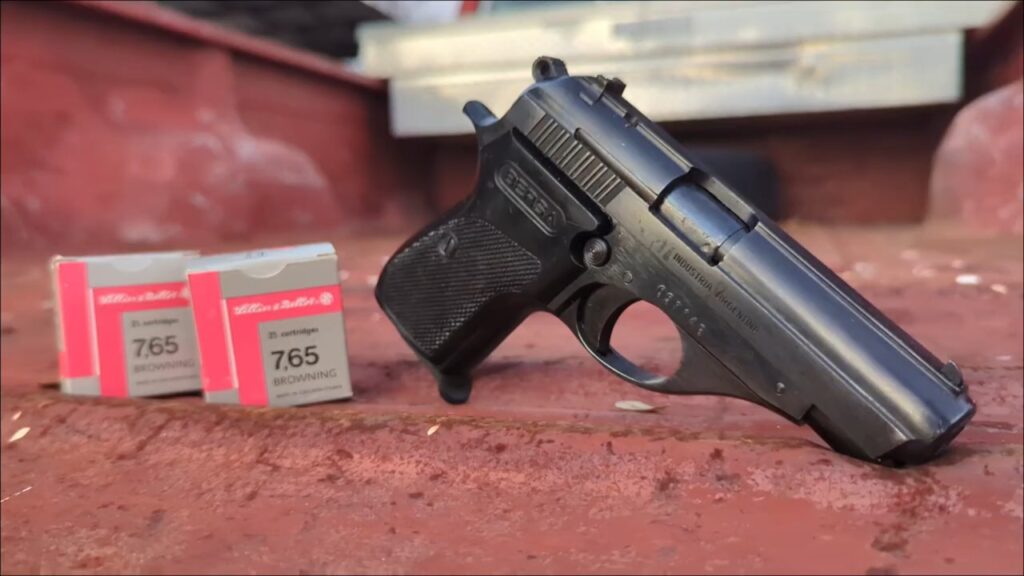
Field stripping the gun is neither intuitive nor simple. There is no standard takedown lever. Instead, the dust cover hinges upward. Press the dust cover up and retract the slide, and it comes off the back of the gun. Putting it together requires a third hand because you have to hold the frame, hinge the dust cover, and slide the slide back on simultaneously.
Chambering a round is easy if the hammer is rearward. When the hammer is forward, it is quite difficult. Remnants of cosmoline and the somewhat shallow slide serrations do not help.
Advertisement — Continue Reading Below
We get seven rounds of .32 ACP in a magazine where the follower is just way too big. An eighth round could easily fit, but for whatever reason, they went a little wacky with the design. The magazine does not drop free; it does not even move when you press the release.
The Lusber comes with a slide lock, but the slide does not lock open when the last round is fired. You can simply manually lock the slide open. The slide will partially lock open if you rack it on an empty magazine, however, the slide slams shut the moment you remove the magazine.
The Lusber at the Range
The two manual safeties make this a bit of a mess. I disable the slide safety, go to shoot, and realize I forgot to disable the cross-bolt safety. I sigh, remove the cross-bolt safety, and start shooting. Another issue is that the slide safety is easy to accidentally activate when you rack the slide, leaving you with a gun that drops to half-cock instead of firing.
Advertisement — Continue Reading Below
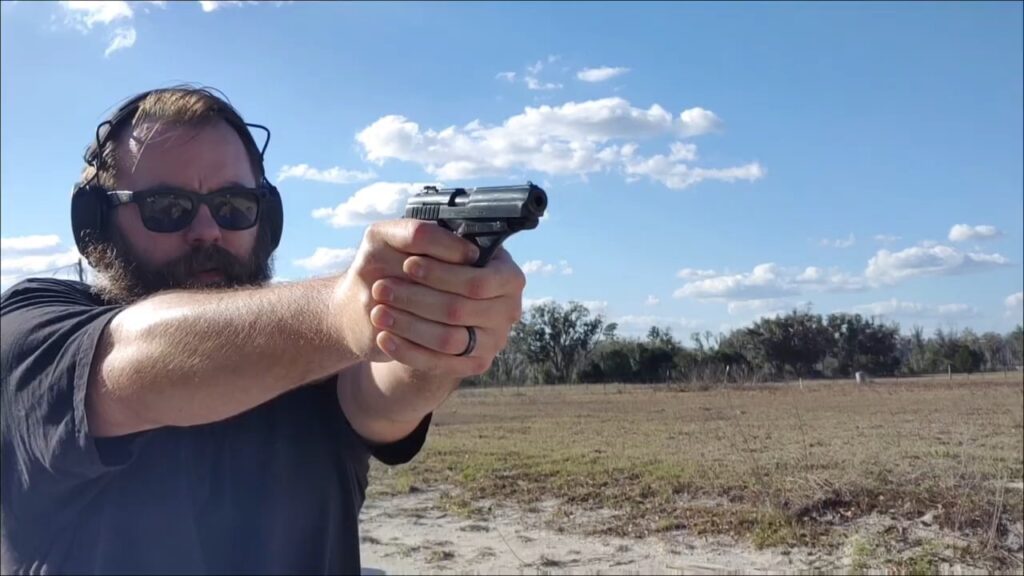
I want to call the trigger horrid. Compared to other single-action triggers, it is heavy and stiff. Compared to truly bad triggers, it is fine. The pull is short with no noticeable take-up, but it requires a lot of weight to get the hammer to drop.
Luckily, for a small gun, it is devoid of slide bite for the most part. I did nick my hand fairly well, racking the slide once. It fought me, and I hit the safety with just enough force for it to catch my skin.
Advertisement — Continue Reading Below
Shooting .32 ACP from an all-metal gun, even a direct blowback one, is nothing but pleasant. It is soft-shooting without any noticeable snap. You can empty that seven-round magazine without the sights leaving the target. It is why I love .32 ACP so much and why I think .380 is a bastard caliber.
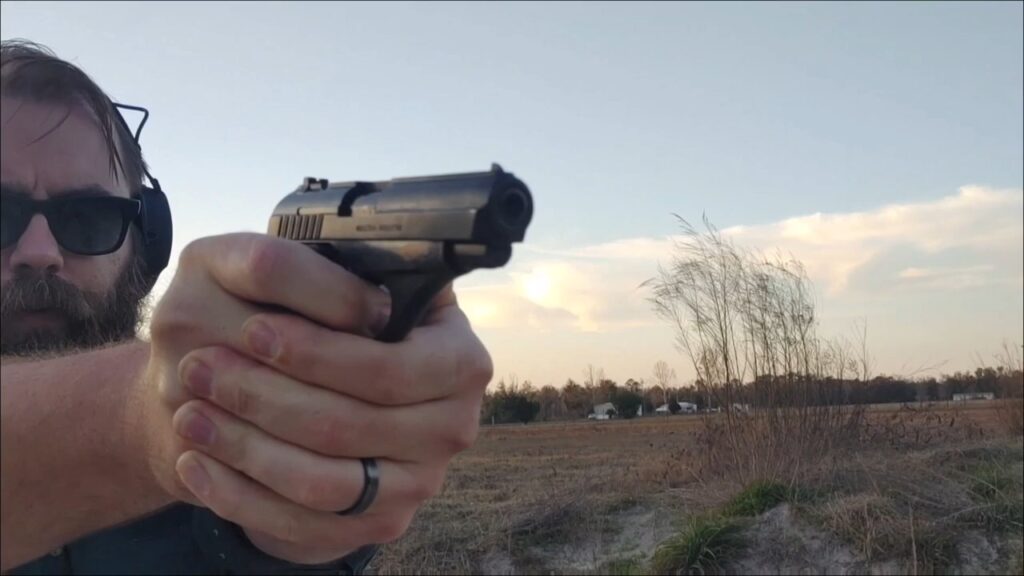
Even using hot old surplus, steel-core S&B ammo did not create much recoil. This wouldn’t be my first choice for a defensive pistol, but I wouldn’t feel under-armed if I had to use it. Reliability was no issue; it chewed through 60-grain JHPs, 71-grain lead FMJs, and the aforementioned S&B loads.
Advertisement — Continue Reading Below
Final Thoughts
Bersa has grown a lot as a brand. They make a ton of different guns, most of which seem to be high quality. The Lusber 844 is an interesting gun, full of quirks, and while fun to shoot, it is a bit of a mess. Still, sometimes making a mess can be fun.