Like other types of ammunition, shotshells, often called shotgun shells, have their own language. And for those new to guns and shooting, trying to understand that language can sometimes be overwhelming.
Walk into your local sporting goods store and you’ll probably be surprised by the size of the shotgun ammo section. That’s because many shotshells are designed for specific uses. Let’s explore some of the terminology to clear up any possible confusion.
All About Shotshells
What you’ll notice first is that, unlike rifle and pistol ammunition, which have a single projectile, shotshells contain multiple projectiles, often called shot or pellets. Before we look at shot, it’s important to understand the parts of a shotshell.
Advertisement — Continue Reading Below
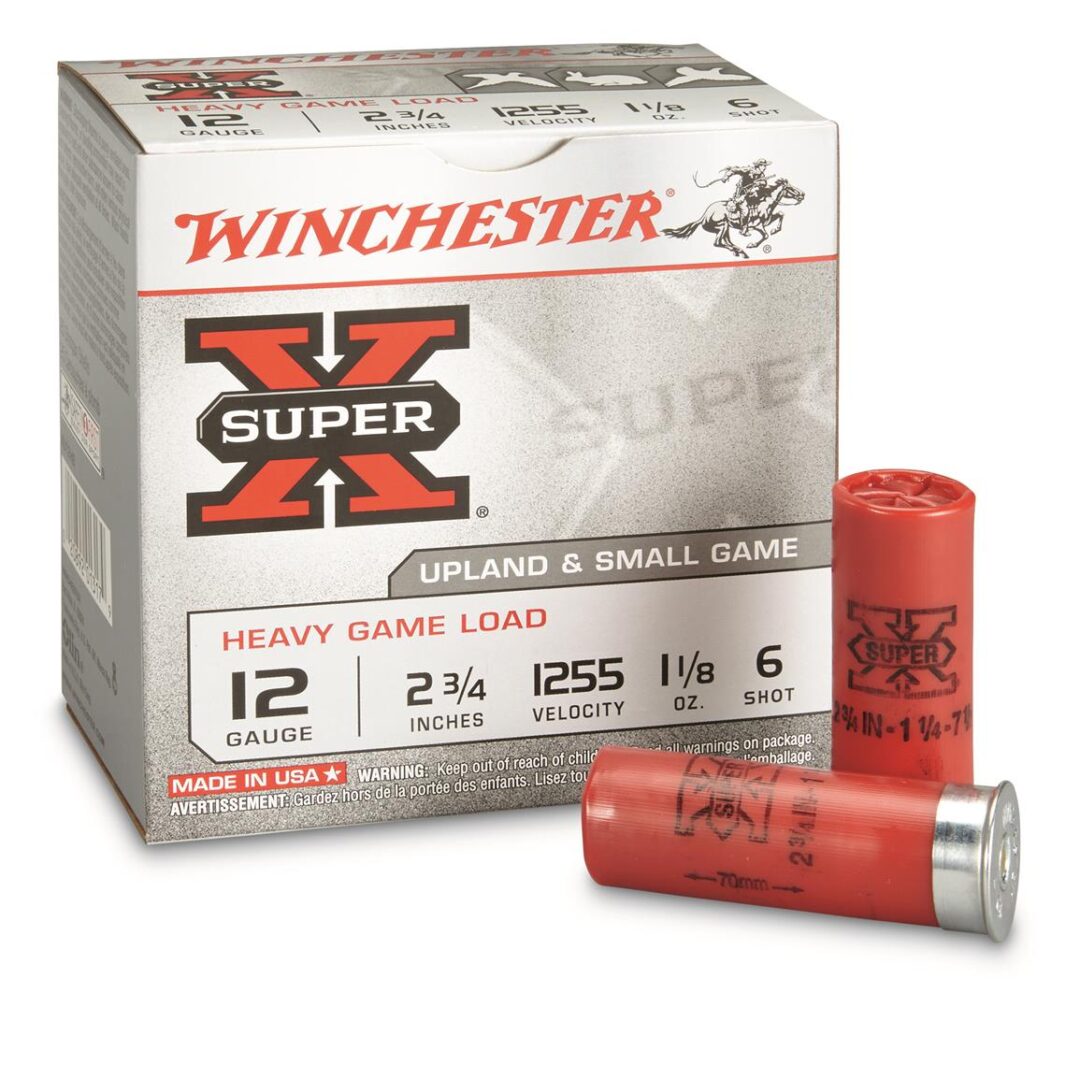
All have common components, including the hull, which is typically made of plastic with a brass base, a shot cup (or wad), a projectile (or multiple for birdshot and buckshot), and a primer in the brass base to ignite the gunpowder beneath the wad.
There are five common bore sizes in shotguns, with two being much more popular than the others. The most common are 12-gauge and 20-gauge. The remaining sizes are 28 gauge, 16 gauge, and .410 bore. From smallest to largest, they are .410, 28, 20, 16, and 12. The most common shotshell lengths are 2¾ inches and 3 inches.
Most shotshells contain small birdshot made from lead, although some use steel or other non-lead materials in areas that require non-toxic shot. This is common in waterfowl hunting, and non-toxic shot is also necessary for other bird hunting in certain areas. Shot sizes range from 9, the smallest, to 2, with larger sizes including BB, BBB, and buckshot.
Advertisement — Continue Reading Below
Now, let’s take a look at the three main types of shotshells you’ll see on the shelf at your local sporting goods store—birdshot, buckshot, and slugs.
More To Know
The most common is birdshot, designed for shooting flying game birds or other small game. These are loaded with many tiny pellets (usually No. 8, 7, or 6) that, when fired, spread out to form a pattern, making it easier for the shooter to hit small flying or running game than with a single projectile.
For context, a 1-ounce, 12-gauge load of No. 8 shot—the most common shot size for bird hunting—contains about 410 lead pellets. Incidentally, not all birdshot is used for hunting. Shotgun sports like skeet, trap, and sporting clays—all very popular in the United States—also use birdshot.
Advertisement — Continue Reading Below
Another type of shell, buckshot, was originally designed for shooting deer on the run in southern states where dogs are often used to push deer past hunters’ stands. Since that isn’t as common anymore, buckshot is now used in a different way—self-defense. Buckshot is similar to birdshot, but it contains fewer pellets that are larger.
The most common sizes are 000, 00, No. 2 buck, and No. 4 buck, with 000 being the largest pellets. Consequently, 000 shells contain the fewest pellets. A typical 12-gauge 3-inch load of 000 buckshot has about 12 pellets measuring 0.36 inches in diameter, whereas a 3-inch 12-gauge No. 4 buckshot contains approximately 40 pellets that are 0.24 inches in diameter.
Last is the shotgun slug, typically used for deer hunting, especially in states where regulations don’t permit the use of centerfire rifles. They are often called “rifled slugs” because they are designed to engage the rifling in a rifled shotgun barrel, imparting spin and increasing accuracy at longer ranges. A 12-gauge rifled slug is a large projectile, generally weighing about 1 ounce and having a diameter of 0.72 inches.
Advertisement — Continue Reading Below