New shooters who have recently acquired their first firearm inevitably want to shoot it. After all, why buy a gun if you’re not going to use it? Unfortunately, due to many factors, a first visit to the gun range to shoot your new acquisition can be very daunting. Here are some tips and tricks to make that first trip to the range a success, so you’ll want to return again and again.
To The Range for Your First Visit
Unless you are blessed with a huge ranch or farm where you can safely shoot your firearm, you’ll need to visit a purpose-built gun range. While most are commercially operated and charge a fee, some wildlife agencies have gun ranges open to the public. Check regulations before using them.
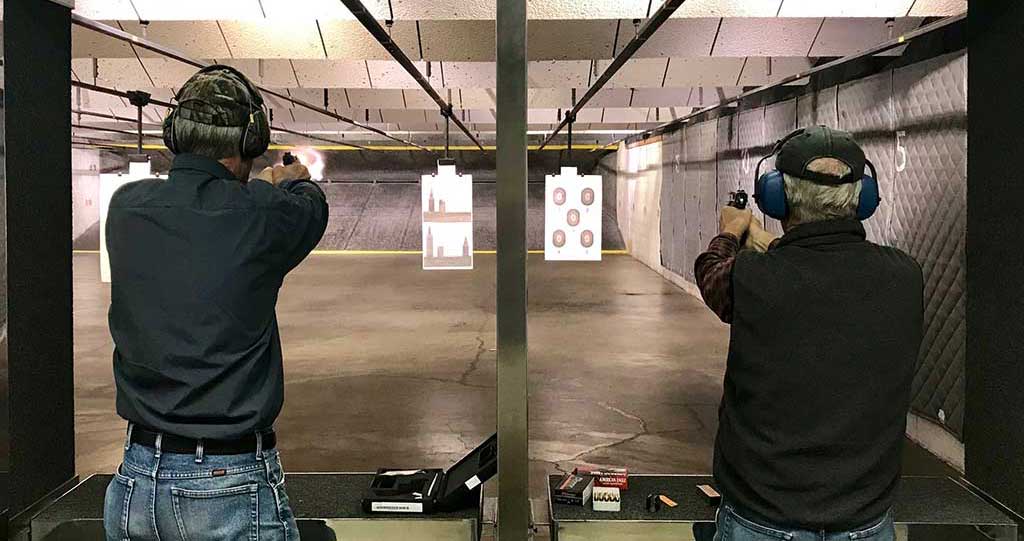
There are basically two types of gun ranges—indoor and outdoor ranges. Indoor ranges are primarily for shooting handguns, although some allow pistol-caliber carbines and even rifles. Most cities of a decent size will have an indoor range or two. Do a Google search to find one near you.
Advertisement — Continue Reading Below
Outdoor rangers, because of their size, are typically where you will be shooting shotguns and rifles. Most, however, also have handgun bays where you can practice with your pistol, too. Check with the range you plan to visit before you go to determine whether the gun you plan to shoot is appropriate for that range.
Some Terms You’ll Need To Know
There are words and terms used in shooting that aren’t used in everyday life. Consequently, if you don’t understand them, confusion will reign on your first range visit. Let’s explore a few.
A bench is the table or stand where shooters rest their firearms and ammunition when not firing. A hot range means that live firing is taking place. Cold means all shooting has stopped, and you shouldn’t handle your gun. The firing line is the line shooters stand behind when firing. Never cross it when the range is “hot.” Additionally, downrange is the direction guns are fired (toward your target) and should be pointed at all times.
Advertisement — Continue Reading Below
“Commence Firing,” sometimes called “Fire in the Hole,” is the green light to begin shooting at your targets. “Ceasefire” is the command to stop firing. When you hear it, stop immediately, place your firearm on the bench, and step back from it.
Indoor ranges and some outdoor ranges have lanes. Each person or group will have their own lane. Stay in your lane to shoot. Many ranges will also have a Range Safety Officer (RSO) on duty. He or she issues range commands and ensures everyone follows the rules of gun safety.
Find A Mentor
Everything is more fun with a friend along. And finding an experienced shooter to accompany you on your first range visit will almost certainly make it more enjoyable and productive. An experienced shooter will know the procedures once you reach the range, where to sign in and pay, how to handle guns at the firing line, and how target machines work, along with other important information that you won’t have to learn on your own.
Advertisement — Continue Reading Below
Without an experienced shooter along, your stress level will be much higher from worrying about where you pay, where the range lanes are, how guns are supposed to be handled and loaded, when it is safe to fire, and when it isn’t, and a dozen other things you’ll realize you don’t know when you get there and start setting up.
Trust me on this: Having a seasoned shooter walk you through the steps will reduce uncertainty and stress, leading to a more enjoyable experience.
Be Safe
As with any activity involving guns, firearm safety should be your top concern. Review the rules of firearm safety the night before your range trip and again when you arrive before you pull your gun out of its case.
Advertisement — Continue Reading Below
For those who aren’t aware, there are four cardinal rules of gun safety. When followed stringently, these rules will keep you safe when handling and shooting a firearm.
First, always keep your gun pointed in a safe direction. Second, treat all guns as if they are loaded. The third rule is to keep your finger off the trigger until you are ready to shoot. Lastly, be sure of your target and what lies behind it.