As we’ve discussed in the past, there’s a steep learning curve for those new to guns and shooting, much of it involving unfamiliar language. And the nomenclature pertaining to rifle actions is no exception. In a nutshell, a rifle’s action is the core mechanism for loading, locking, firing, extracting, and ejecting ammunition.
In layman’s terms, it’s the part of the gun that holds the shell in place while the trigger is pulled and the ignition occurs. There are five basic types of rifle action, which we’ll briefly explore here.
Understanding Rifle Actions
2 Most Common Rifle Action Types
The two most common actions you’ll see on rifles are the bolt action and the semi-automatic.
Advertisement — Continue Reading Below
A bolt-action rifle utilizes a bolt on the side of the action. To operate the action, the shooter lifts the bolt handle, pulls it back to eject the spent casing, pushes it forward to chamber a new round, and then rotates it down to lock the action.
Bolt-action rifles are commonly thought of as the most accurate rifles, although break-action guns, which we’ll discuss later, have many of the same accuracy characteristics. Bolt-action rifles are commonly used for hunting big-game animals such as white-tailed deer. Long-range competition rifles and sniper rifles also typically use a bolt action for their mechanism.
In a semi-automatic, the gun uses the energy, whether expended gas or recoil caused by the ignition, to eject the spent casing and load a new one from a magazine. That can be a detachable magazine or a built-in magazine that is not removable.
Advertisement — Continue Reading Below
The AR-15-style rifle—the most popular rifle in America, owned by millions of lawful gun owners—is a semi-automatic. The “semi” means it fires only one cartridge and loads one cartridge with each trigger pull. Those who say a semi-automatic rifle is a machine gun, as many dishonest politicians tend to say, are not telling the truth on the matter.
Digging Deeper
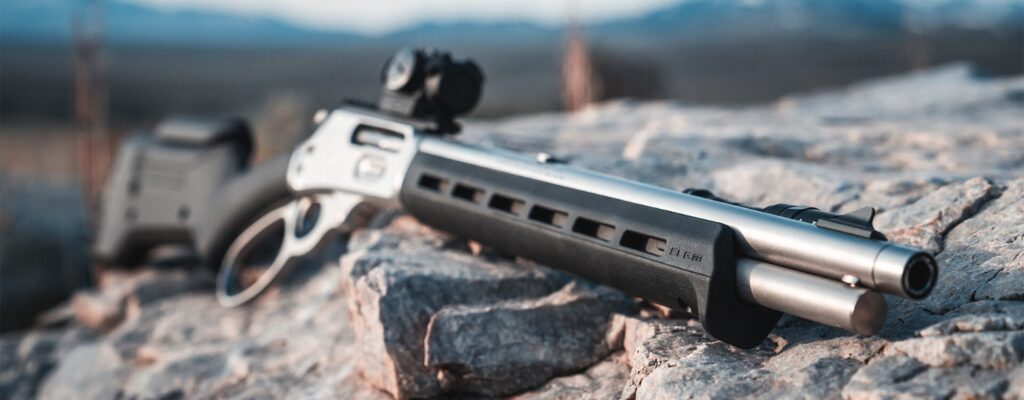
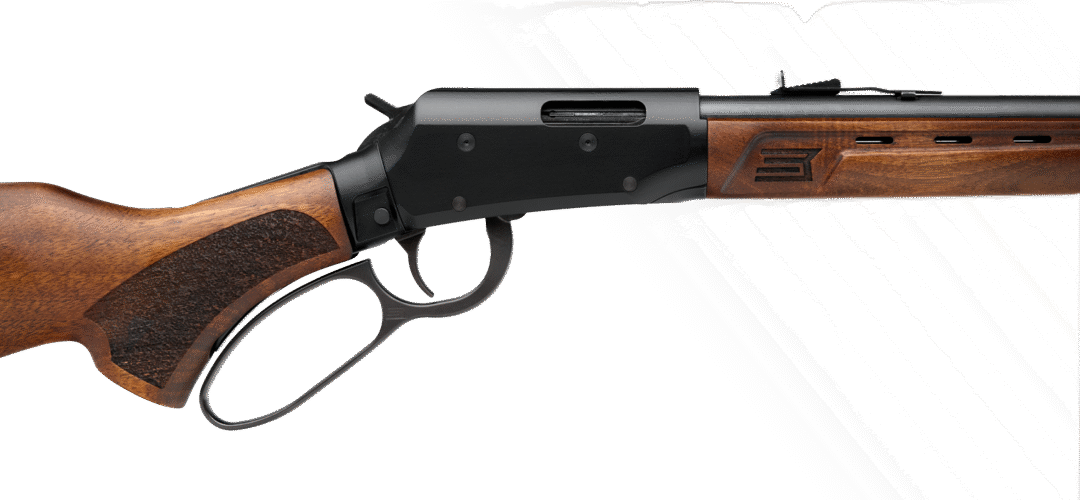
A lever-action rifle has a lever on the bottom of the action, typically under the trigger, that is used much like the bolt is in a bolt-action rifle. As the shooter works the lever downward, the action ejects the spent round, and when the lever is pushed back up, it seats another round, typically fed from a tubular magazine.
Most newbies to the gun world see lever actions as “cowboy rifles,” since they were designed many decades ago and were used frequently during the taming of the West. Now they are used primarily for hunting, although some use them for plinking, competition, and even home defense.
Advertisement — Continue Reading Below
A break-action rifle hinges in front of the receiver, allowing the user to remove the spent round and manually insert a fresh cartridge into the chamber. There is no automatic or manual mechanism doing the work, only the user.
Most break-action rifles are single-barreled and must be reloaded after every trigger pull, and many purists prefer them for hunting purposes. Double rifles are also break actions, but are uncommon. They’re traditionally used for large, dangerous game hunted on African safaris.
Lastly, the pump-action rifle is one of my personal favorites. To operate a pump-action, the shooter manually slides the fore end (pump) backward and forward to eject the spent brass and chamber the new round.
Advertisement — Continue Reading Below
These were once very popular, and I had a nice little pump-action .22 when I was a kid that I’ve always regretted selling. While they are no longer common, some New England hunters still favor pump-action rifles for whitetail hunting in the eastern mountains.