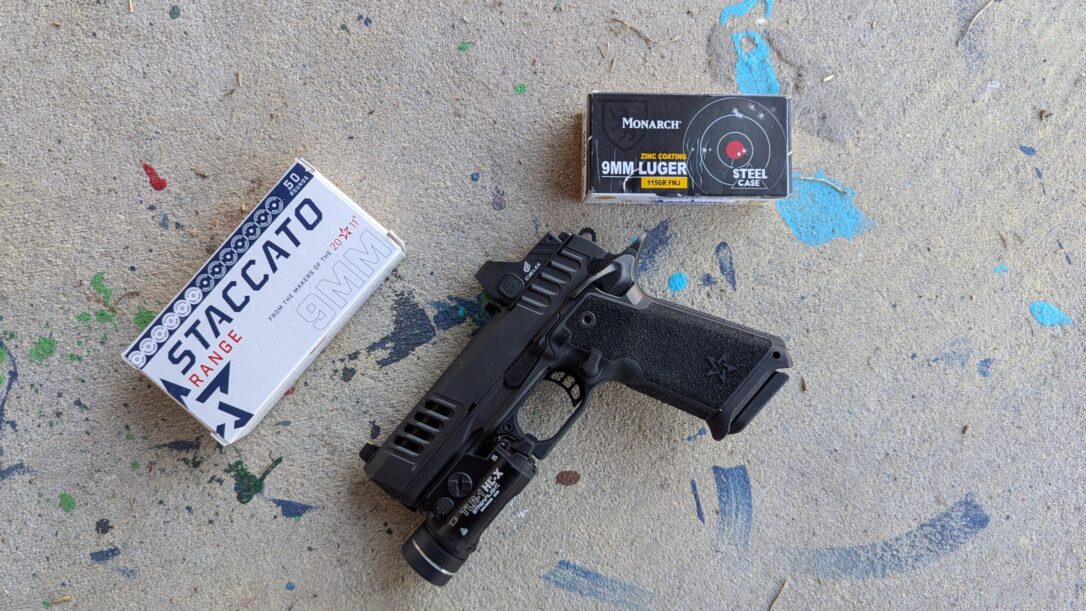
When it comes to training ammunition, is there truly a significant difference between a $10 box and a $15 box? I’m not talking about the gap between match-grade loads and bulk fodder, but rather the difference between “cheap” and “premium” range FMJs. Is it worth spending the extra cash on the pricier stuff?
Picking FMJs for the Range
This question was born out of frustration. While reviewing firearms, I often use the cheapest rounds I can find—usually Monarch steel-cased ammo from Academy. With my Academy card, I even get an extra 5% off. My annoyance peaked while zeroing red dots; I would shoot a tight three-round group, only to have rounds four or five turn into inexplicable flyers.
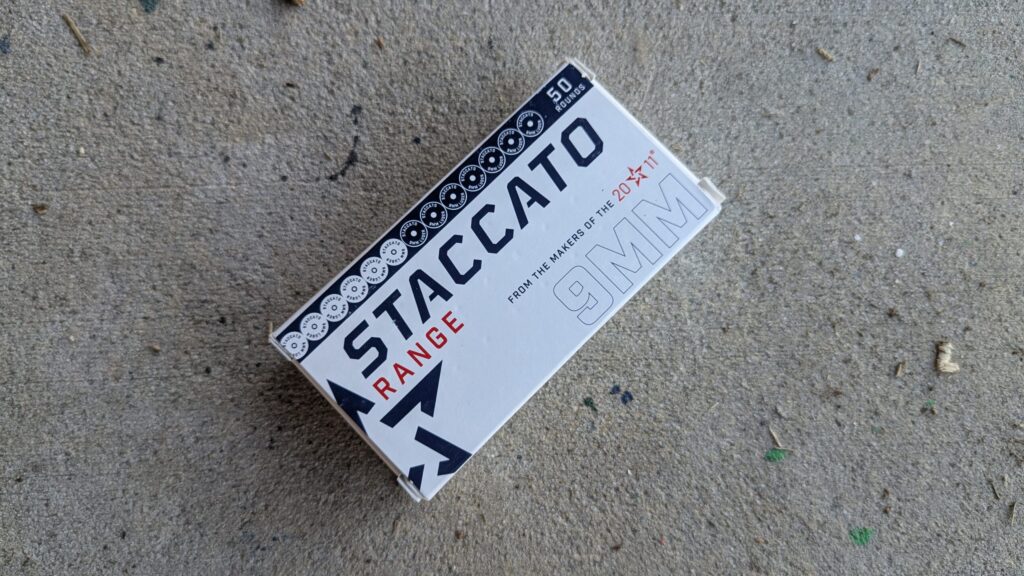
I started questioning my skills and my zero. To find out if the ammo was the culprit, I pitted several boxes of Staccato 124-grain range ammo against my standard Monarch FMJs.
Advertisement — Continue Reading Below
FMJ Differences: More Than Just a Case
Right off the bat, there is a fundamental difference between steel-cased and brass-cased ammunition. Brass is easy to reload, whereas steel generally is not. More importantly, brass provides more consistent velocities because it expands to seal the chamber upon firing and then constricts for easy extraction. While the “wear and tear” that steel cases cause on extractors is often overblown, brass is undeniably softer on your firearm’s internals.
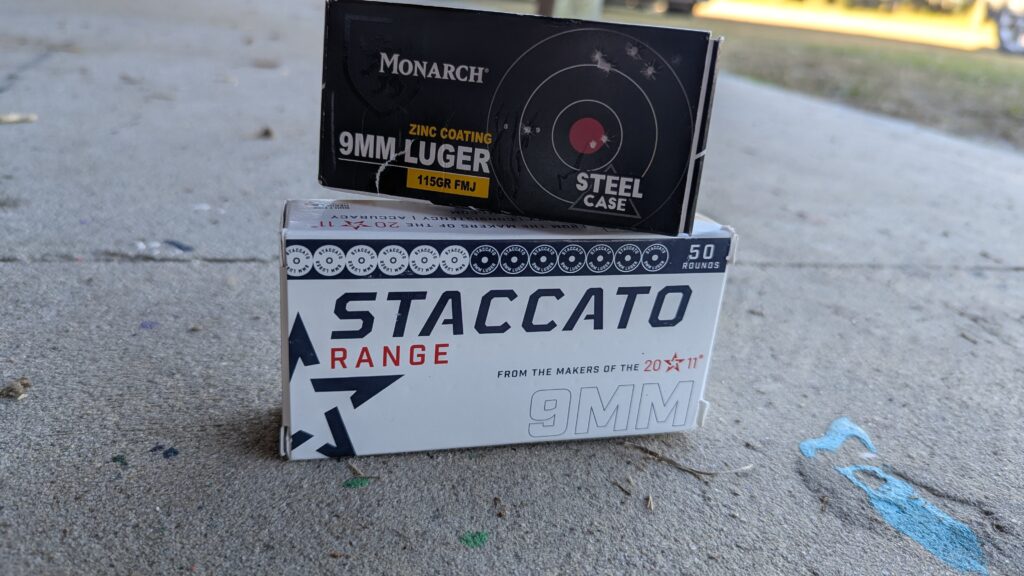
Higher-quality ammunition also tends to be cleaner and more reliable. You generally deal with fewer “duds” and a lower likelihood of the gun going click when it’s supposed to go boom. Beyond reliability, premium range ammo usually benefits from better quality control regarding powder charges and projectile uniformity.
Advertisement — Continue Reading Below
Still, do these benefits justify a 50% price increase? To find out, I headed to the range to see how they performed on paper.
Testing Cheap vs. Expensive FMJs
The most measurable difference is accuracy. To keep the test fair, I used a Staccato HD—the most accurate handgun I own. The optic was zeroed for the pricier Staccato ammo, so I didn’t penalize the cheaper rounds for missing the bullseye; I was looking strictly for group consistency.
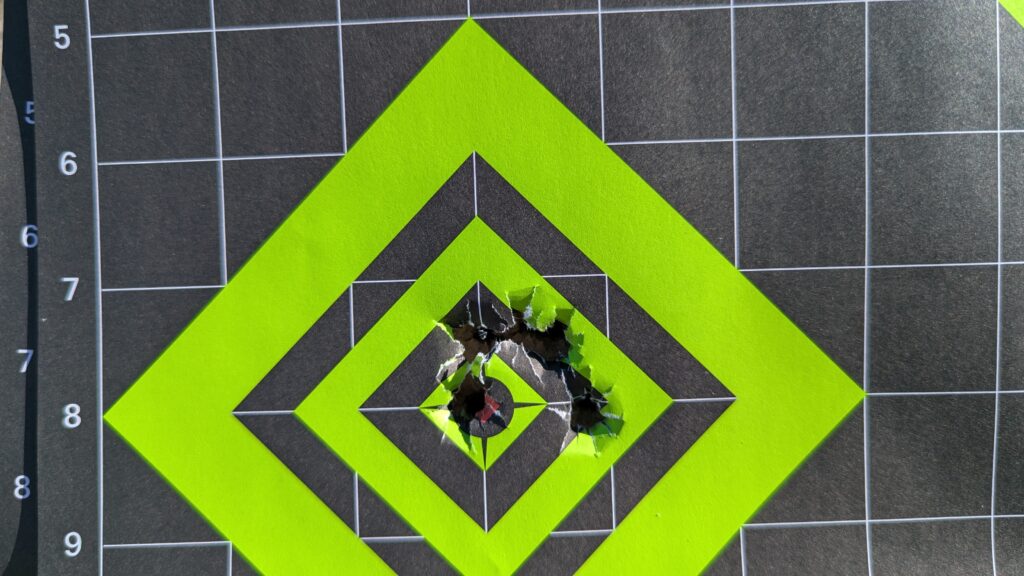
- 10 Yards: I fired four 5-round groups with each type. At this distance, there was virtually no discernible difference in group size.
Advertisement — Continue Reading Below
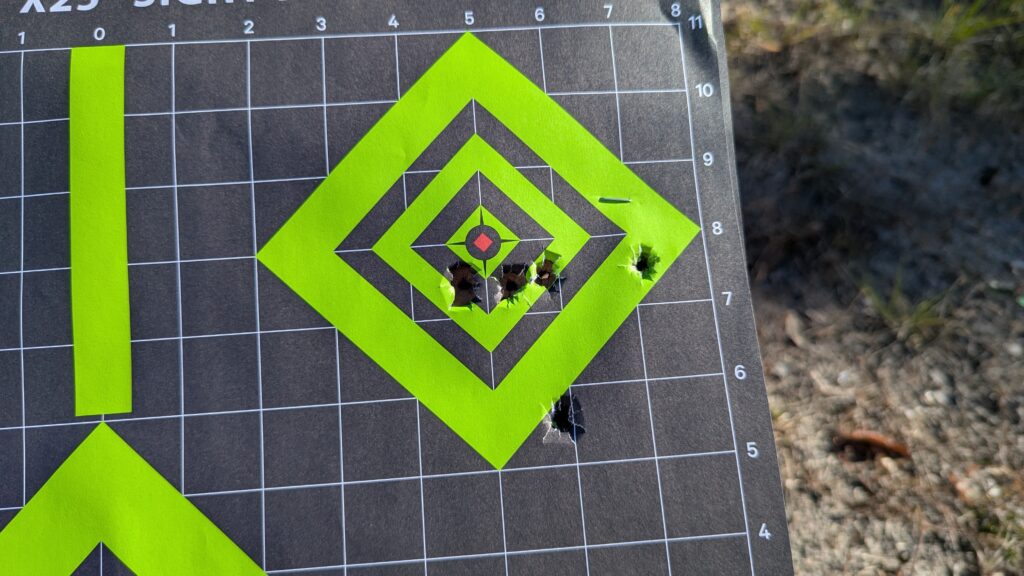
- 15 Yards: This is where the cracks started to show. The cheaper ammo became less consistent. I would put three rounds nearly dead center, only to have one round fly wide right and another land low. The premium ammo stayed tightly clustered.
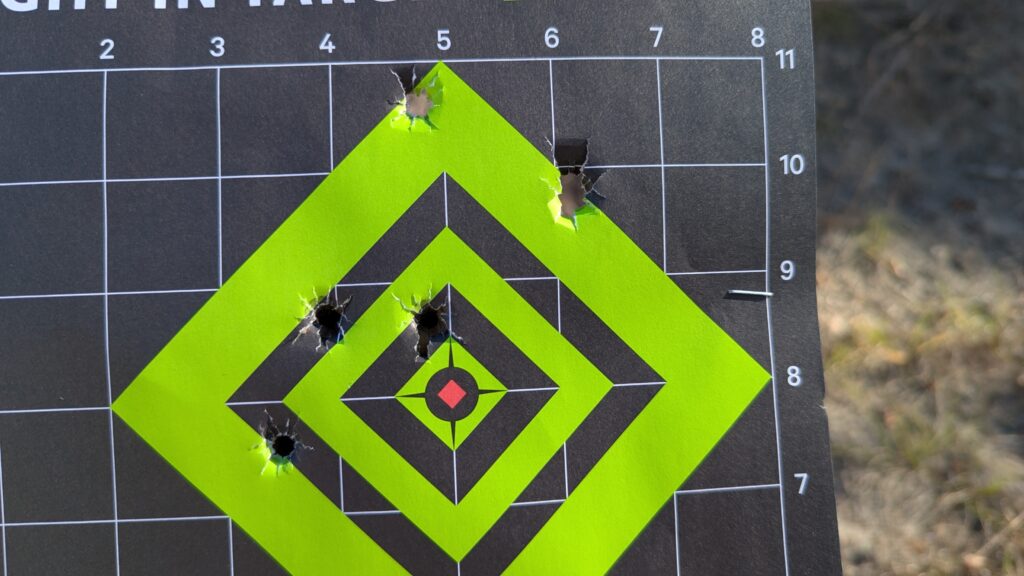
- 25 Yards: The gap widened. The groups were noticeably smaller and more consistent with the Staccato ammo. (Interestingly, I accidentally fired six rounds of the cheap stuff, and while two were stacked on top of each other, the overall spread was much larger).
- 50 Yards: This provided the most dramatic results. Aiming dead center on an IPSC target, the Staccato ammo went five-for-five. The cheaper Monarch FMJs only landed three out of five hits.
Weighing the Results
It isn’t surprising that higher-quality ammo is more accurate—that’s what you’re paying for. However, I was surprised to see the consistency deviate as early as the 15-yard mark. By 50 yards, the difference was massive.
Advertisement — Continue Reading Below
During the session, I also noticed that the cheaper ammo produced varying recoil impulses. These minor fluctuations, noticeable during slow fire, point toward inconsistent powder loads.
Is it worth spending 50% more per box? For general plinking, basic drills, or high-volume training, probably not. However, for competition—especially for “mediocre” shooters like myself—premium range FMJs are a smart investment. When you’re facing long shots on small A-zones, having ammunition that behaves predictably makes a world of difference.
Advertisement — Continue Reading Below
When I need an ego boost, or I’m heading to a match, I’ll be reaching for the Staccato ammo. For everything else, the “Academy Special” remains my go-to.