For years, I’ve seen Knoxx stocks and grips and felt a lingering curiosity. I experimented with a Gen 3 Breacher’s grip once and was fairly impressed, but I moved on quickly. I remember seeing Knoxx stocks in Walmart’s short-lived “tactical aisle,” but back then, I wasn’t willing to pony up the money to try one. To me, the tactical shotgun market of the 2000s was defined by these stocks.
Does the Knoxx Stock Work?
The 2000s weren’t a great time for tactical shotguns. In 2004, the Federal Assault Weapons Ban (AWB) sunsetted, and the market was instantly flooded with ARs, AKs, and similar tactical rifles. Shotguns fell off hard.

Advertisement — Continue Reading Below
Even fifteen years ago, the state of semi-automatic tactical shotguns was lackluster. At the time, if it wasn’t a Benelli, it wasn’t trusted—and Benelli was pricey. Remington and Mossberg dominated the market, and “tactical” usually just meant a shorter barrel and polymer furniture.
There wasn’t much advancement in the genre. You had the expensive Surefire DSF lights, which cost more than the guns themselves, or the occasional heat shield. Red dots were still rare on shotguns.
Then Knoxx arrived with recoil-reducing stocks, promising to cut felt recoil by 65%. Shortly after hitting the market, Blackhawk purchased the company and rebranded the line as Blackhawk Knoxx stocks. The original team at Knoxx later formed Adaptive Tactical, and they still produce fascinating gear today.
Advertisement — Continue Reading Below
Understanding Recoil and the Knoxx Design
In the 2000s, the “push/pull” method of recoil reduction wasn’t very popular yet. Rob Haught was teaching it, but it hadn’t yet caught fire. Most shooters relied on reduced-recoil ammunition to trim the thump; the standard technique was to pull the gun tight into the shoulder and simply “ride” the recoil.
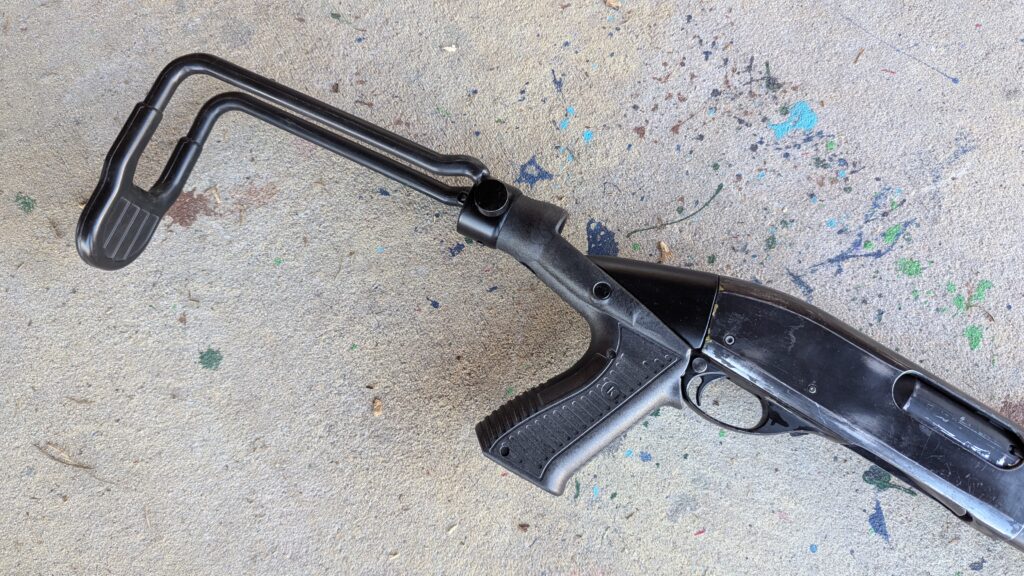
Knoxx’s idea was to reduce recoil via a unique mechanical design. Inside the pistol grip is a series of linkages and springs. When you fire, the gun is allowed to reciprocate rearward. The portion that attaches to the receiver is essentially a carriage that moves under recoil, pulling against a heavy spring.
Advertisement — Continue Reading Below
The theory is that the spring absorbs the energy before it ever hits the shooter. It’s a simple concept that sounds like it should work. I never knew for sure because the stocks were always so expensive—but now it’s 2025, and eBay is a beautiful thing.
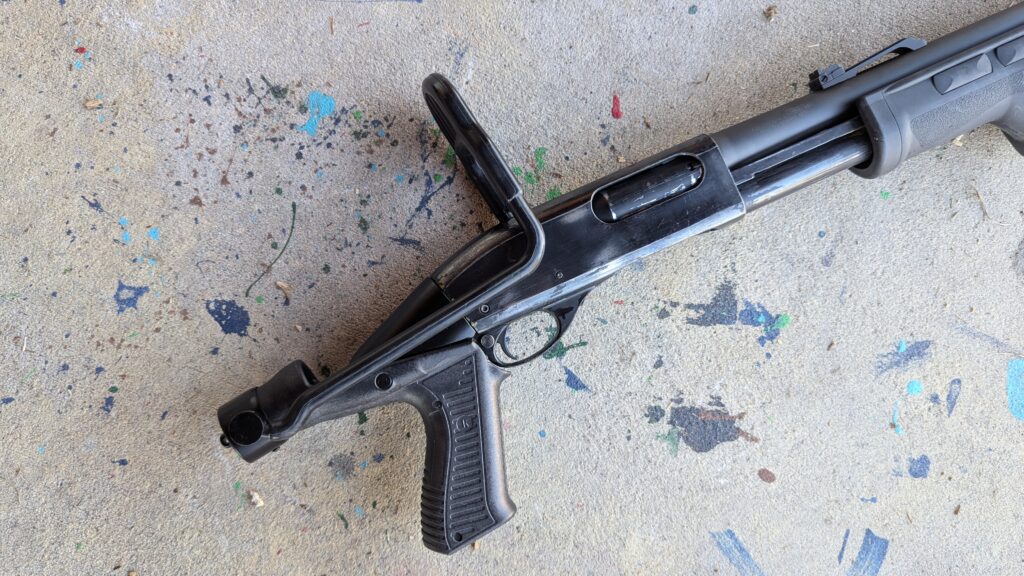
These stocks no longer fetch a high price. For 50 bucks, I snagged a Knoxx SpecOps model with a wire folding stock. A wire folder is usually the worst stock you can put on a shotgun. If you think it’s uncomfortable to shoot an AK with a wire stock, try it on a 12-gauge.
Advertisement — Continue Reading Below
I purchased this specific model because it was the cheapest, and I figured if this tech actually worked, the best way to test it was with the most uncomfortable stock available.
To the Range with the Knoxx Stock
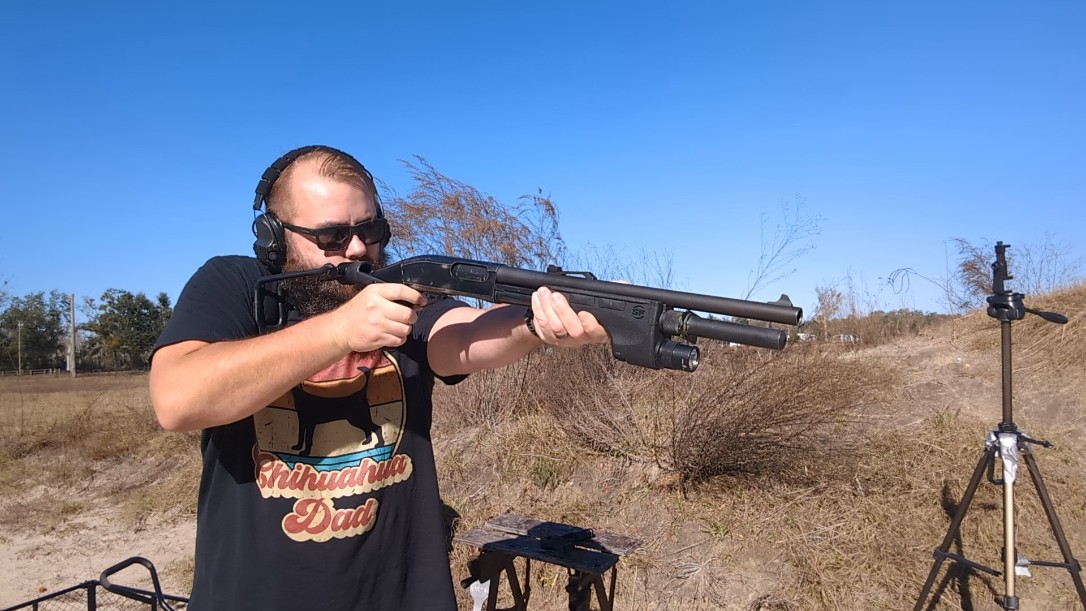
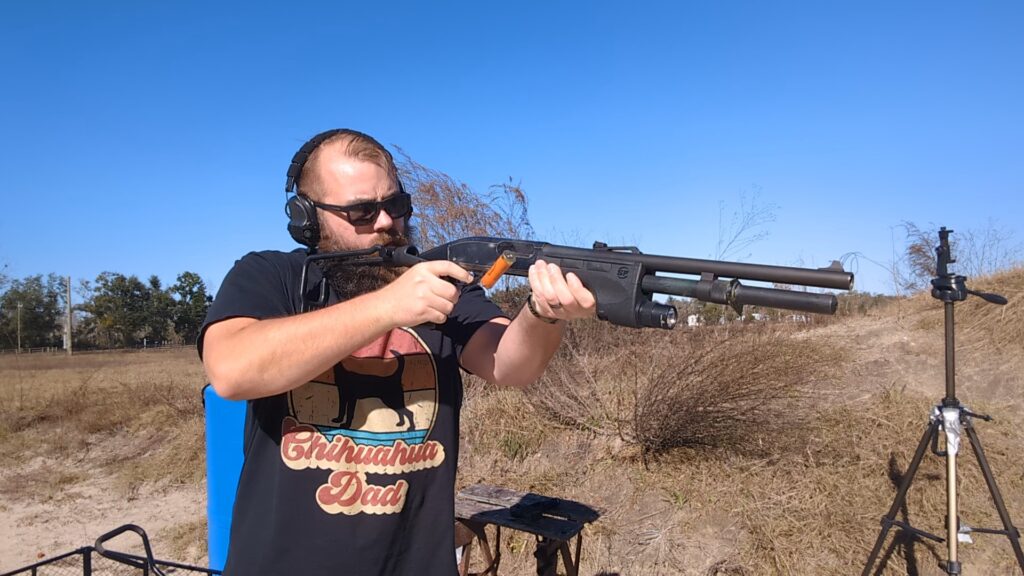
I threw the Knoxx stock on my Remington 870 and grabbed some full-power buckshot. If the recoil reduction worked, great. If not, my shoulder was going to pay the price. Since the stock folds over the top of the receiver, I decided to test it both folded and deployed.
Advertisement — Continue Reading Below
I started with the stock open, braced it against my shoulder, and let it rip. I was pleasantly surprised to feel next to nothing in my shoulder. It blew my mind. I actually felt the impulse more in my wrist than in my shoulder. I launched a few more rounds in rapid succession, and the wire stock never “bit” me.
Admittedly, it doesn’t feel great against the face—not because of the recoil, but because digging your cheek into a thin wire for a weld is never comfortable.
The Knoxx stock does exactly what it promises. If you combine this stock with the push/pull method, you are looking at .223-level recoil when using reduced-recoil ammo. It’s downright silly how well it works.
Advertisement — Continue Reading Below
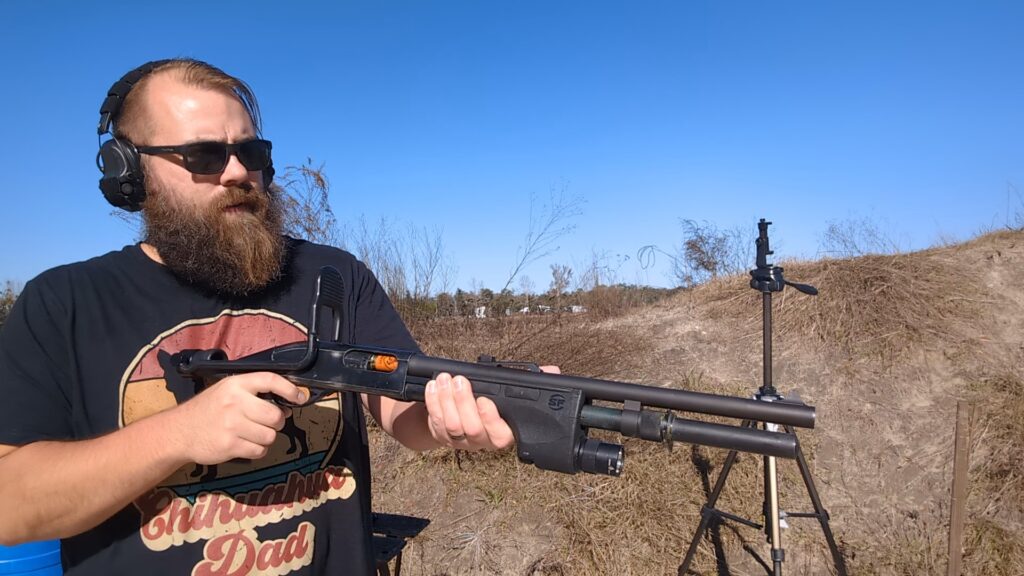
Folding the stock upward turns the gun into a “pistol-grip-only” option. It’s compact, looks “gangster,” and is a ton of fun. While the recoil wasn’t quite as soft without the shoulder brace, it was still surprisingly manageable. My wrist didn’t feel beat up, and my hands weren’t sore.
The Downsides and the Future
Despite the tech, wire stocks still suck at being stocks. The length of pull (LOP) is 14 inches, which is quite long for most shooters. Knoxx also produced an AR-style telescoping model, which is the more comfortable option and offers LOP adjustment, but the wire stock just looks cooler. “Vibes” are half the battle, after all.
Advertisement — Continue Reading Below
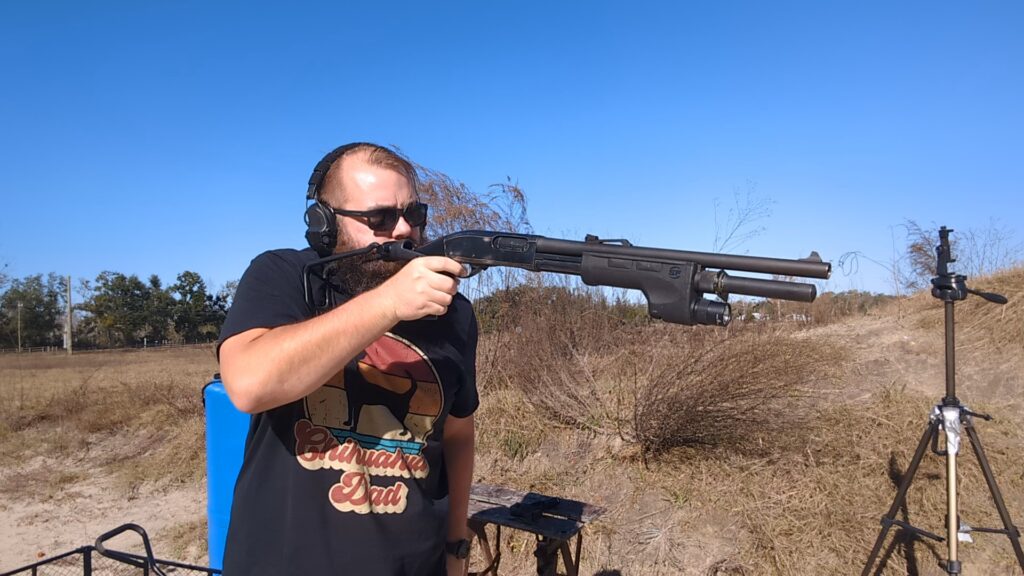
The Knoxx stocks kept their promise; they cut recoil considerably. However, it seems Blackhawk has effectively killed off the line. I believe this technology is still useful and, with some modern refinement, could be integrated into other grip styles. Who wouldn’t want a Raptor-style “bird’s head” grip with integrated recoil reduction?
Maybe, just maybe, this tech is due for a comeback.
Advertisement — Continue Reading Below