In 1996, American neuroscientist Joseph LeDoux wrote a book called The Emotional Brain. In that book, he introduced a groundbreaking concept that explains how the brain processes fear. His explanation revolves around two particular concepts that touch on both instinct and cognitive thought. His work details that when our brain encounters a potential threat, it uses two parallel pathways: the Low Road and the High Road.
This dual-pathway system explains why people may flinch or why their heart might race long before they cognitively recognize a threat. Firearms instructor Aaron Cowan often discusses LeDoux’s work in classes, and he is what made me start reading The Emotional Brain.
Journey to the High Road

Advertisement — Continue Reading Below
As someone who constantly wants to understand how to hone my self-defense mindset, I started giving his work a read. It helps that my wife is a neurological PhD who can break these concepts down to a “grunt” level.
Understanding the Low and High Roads of fear can help you understand what your body is going through, as well as why instinct and training are invaluable.
The Dark Parking Garage: High and Low Road Threat
I learn best through examples, and I expect most people do as well. Let’s use one to illustrate the High and Low Road of fear. Imagine walking through a parking garage late at night. No one is around, the lights are flickering, and it is cold. As far as you know, you are alone.
Advertisement — Continue Reading Below
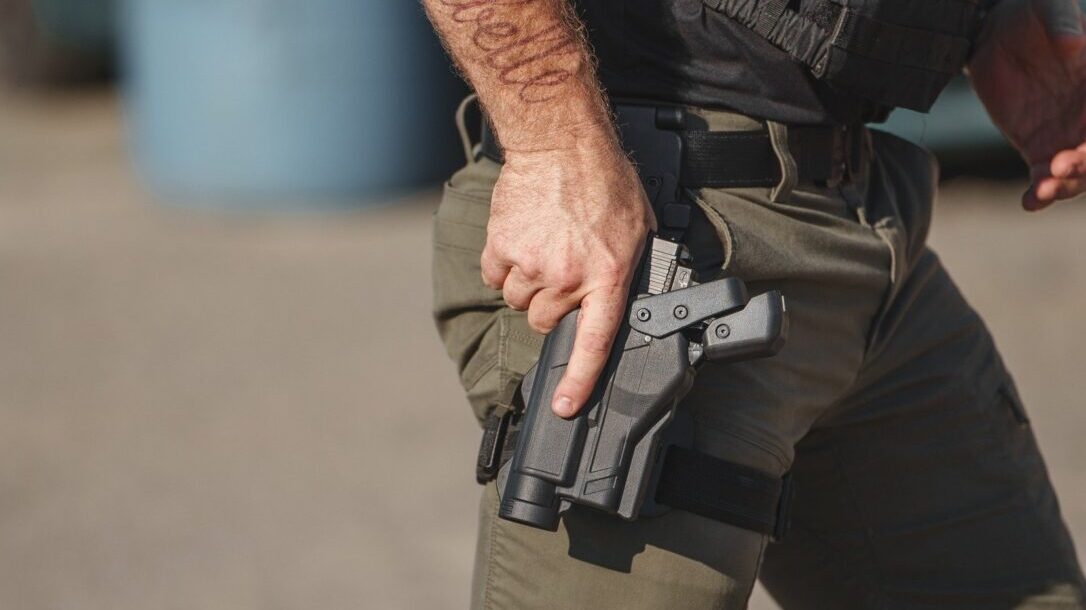
A shadow shifts behind a pillar. Before you can perceive anything, your heart begins to hammer, and your body is hit with a wave of fear. You might even start the steps of getting your hand ready to draw. That little bit of paranoia is your Low Road fear response.
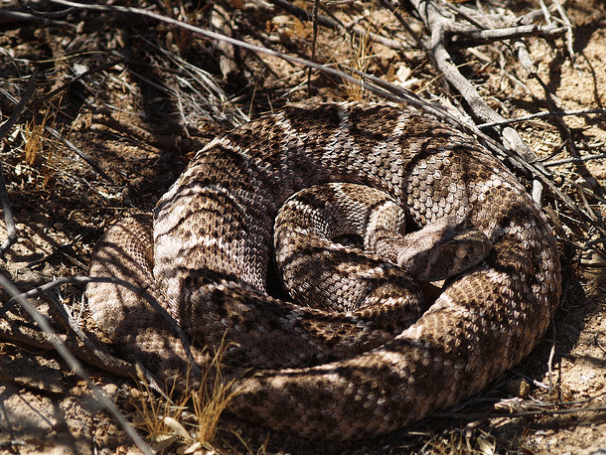
Have you ever seen a vaguely snake-shaped stick while on a walk in the woods? That sudden influx of fear and anxiety you get at the mere shape of the stick is the Low Road fear response. It is instinctive.
Advertisement — Continue Reading Below
The Low Road is what happens when the brain’s relay center, the thalamus, sends a signal directly to the fear center, the amygdala. It takes about 12 to 15 milliseconds for this to happen, and it bypasses the thinking parts of the brain entirely. This triggers an immediate physical response.
You might flinch or even jump backward. If someone throws a punch, you might turn away or attempt to block it. Your heart starts racing, and your body tenses up.
The High Road
We want the thinking part of the brain to take over so we can react with the proper information. Maybe that shadow is nothing; maybe it is just another person trying to find their car, or maybe it is a threat. We need our High Road to take over and provide us with the information needed to make a proper, conscious decision.
Advertisement — Continue Reading Below
The High Road is what happens when the thalamus sends information to the sensory cortex, where your brain analyzes everything. Then it goes to the hippocampus, where it is compared to past experiences, and finally to the Prefrontal Cortex, which sends the “report” to the amygdala.
It could tell the amygdala to calm down if the “snake” is actually a stick. This is the part of the brain you train to stay calm, and it is the part you want to keep online to regulate the raw feelings coming from the Low Road.
Advertisement — Continue Reading Below
According to Joseph LeDoux, from an evolutionary standpoint, it is better for the brain to treat the stick as a snake than the snake as a stick. This Low Road fear is invaluable to survival. It is the “better safe than sorry” approach.
How Self-Defense Training Comes Into Play
Our Low Road gets to run wild. There isn’t much we can do to shape our raw instincts. What we want to avoid is allowing the Low Road to overwhelm the High Road. When the Low Road is working, it is taking some of our cognitive power. If the Low Road overwhelms your Prefrontal Cortex, it causes the “freeze” mechanism.
We often hear of “fight or flight,” but “freeze” is the third, often forgotten response. While freezing was an evolutionary response that may have been valuable to our ancestors, in the modern world, it can get you hurt or killed. We want our High Road to stay online so we can survive.
Advertisement — Continue Reading Below

What we can do to “beat” our brain is to train. Stress inoculation is a great way to learn to stay cool under pressure. The military often gets a lot wrong with firearms training, but they are quite good when it comes to stress inoculation. For the average person, this could include a variety of activities.
Force-on-Force training is fantastic for working through stress. It isn’t life or death, but it hurts. The first time you run it, your brain will likely redline. A lot is happening, and getting shot with a paintball or Simunition round provides immediate, painful feedback.
Advertisement — Continue Reading Below
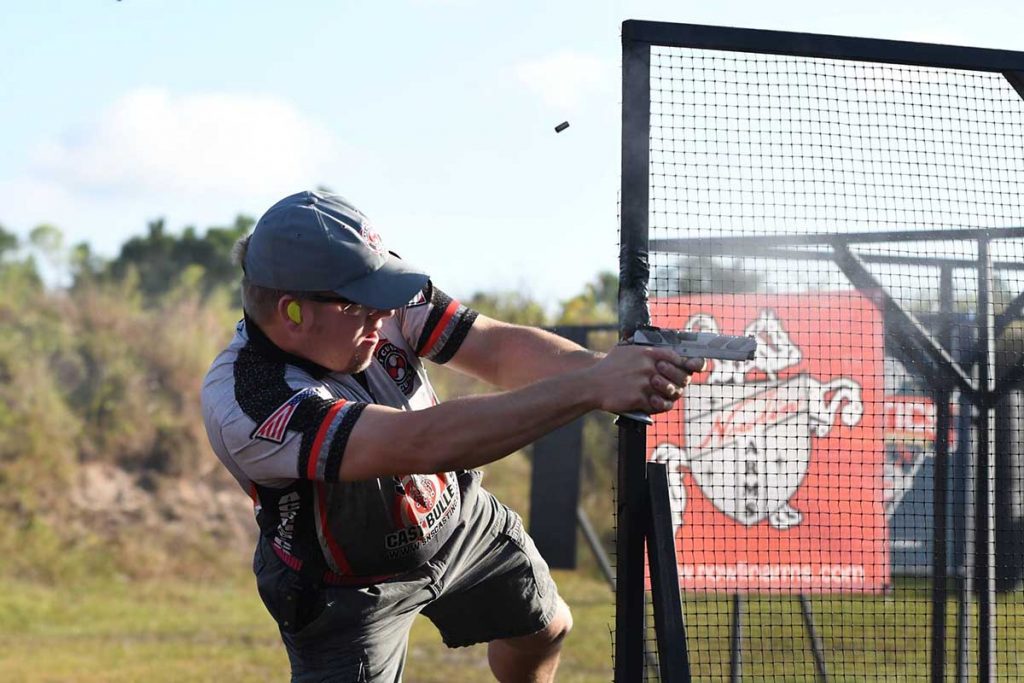
Competition is also great stress inoculation, especially when you are new to it. You want to win, you don’t want to be embarrassed, and you have to juggle stage parameters with handling firearms and engaging targets. Again, it isn’t life or death, but you are practicing working under pressure.
Motor Memory
Beyond stress management, being skilled in drawing and engaging with your firearm, pepper spray, or other self-defense tool is invaluable. If you throw a punch at an average person, they might block it, or they might turn away. If they turn away, they might avoid the punch, but they offer their back to the threat. A trained boxer is much more likely to block or avoid the punch without giving up their back.
Advertisement — Continue Reading Below
Building that motor memory of drawing, aiming, and engaging can help reduce the load on your High Road. When you do it so many times that it becomes a task you can perform without thinking, you free up “brain power” to keep your High Road working.
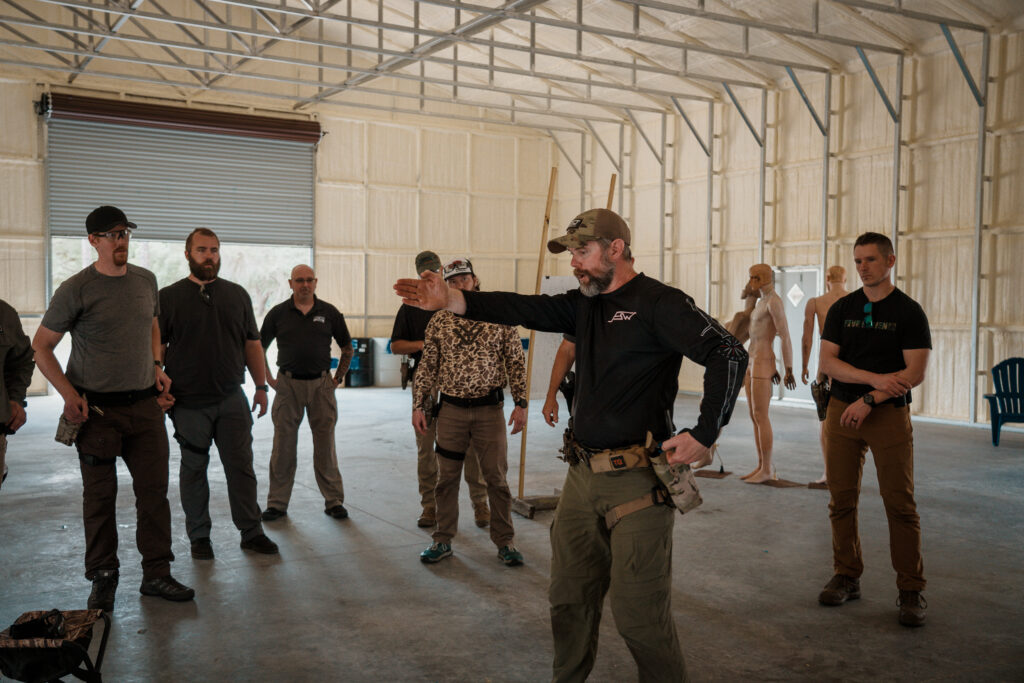
Dry fire and live fire practice contribute to this motor memory. One of my favorite examples of motor memory involves shotguns. Anytime I pick up a shotgun, I immediately go into the motor memory of a “push/pull” tension. Even when it is not necessary, such as when I am just examining a gun, I automatically start that process.
When you automate the physical process, you keep your Prefrontal Cortex bandwidth free to identify additional threats, look for bystanders, or find exits.
On the Road
You don’t need a neuroscience PhD to understand the High Road and Low Road of fear. You might not need to understand it at all. Audie Murphy didn’t know about the High or Low Road, but he did his job and did it well. However, I think understanding these concepts helps you understand yourself and reinforces the need for consistent training.
So train, stress yourself out, and be ready for the stick, the snake, or the shadow in the parking garage.