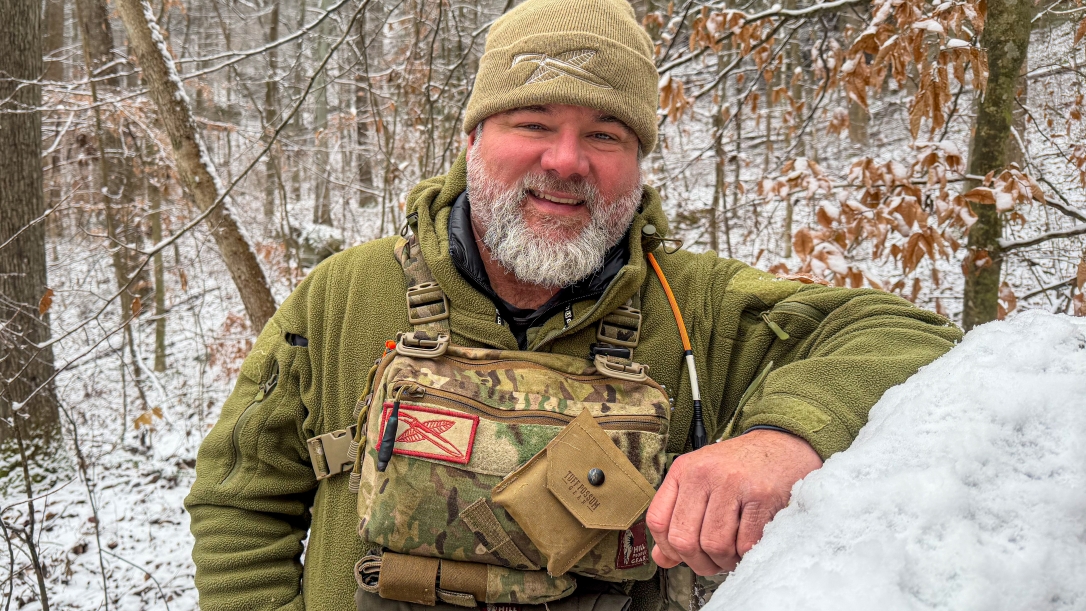
Several years ago, I saw a guy online using a war club to baton a knife through wood. At the end of the video, he said something to the effect of, “Why am I using a war club to baton wood, because I’m Craig Caudill!”
Fast forward about 10 years, and we’ve shared the pages of outdoor magazines on many occasions. I was honored to finally meet Craig at the Georgia Bushcraft Fall Event. Not long afterwards, I caught up with Craig to see what makes him tick on the gear side!
Q&A with Craig Caudill
Craig Caudill is a distinguished leader in wilderness education, serving as the Director and Lead Instructor of Nature Reliance School. Renowned for his best-selling books on backcountry skills and recognized as a certified master naturalist, Caudill offers comprehensive online and in-person courses that are highly regarded worldwide.
Advertisement — Continue Reading Below
These courses serve a diverse audience, including corporate entities, government agencies, and the public. His social media platforms now have millions of followers. The NRS community is simply the best at learning and building one another up.
Hey Craig, what interested you in the outdoors world?
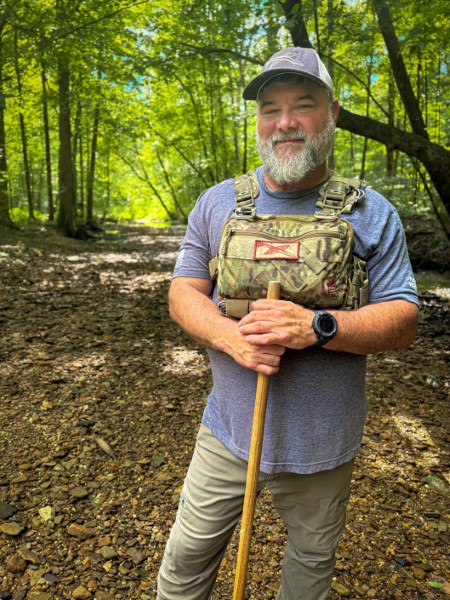
I grew up immersed in the outdoors, hunting, fishing, camping, and doing period-correct frontier reenacting. Those early blackpowder days really shaped me. Throwing tomahawks, using knives, shooting flintlocks, and spending long stretches in the field gave me a deep respect for both the outdoors and the history tied to it.
Advertisement — Continue Reading Below
On many of those trips, nothing was handed to us. We didn’t eat, sleep, or even have water unless we built shelter and gathered what we needed on site. That kind of experience at a young age leaves a mark. It taught self-reliance, problem-solving, and an appreciation for simple skills done well. Looking back, it’s no surprise that those experiences became the foundation for everything I do today.
EDC According to Craig Caudill
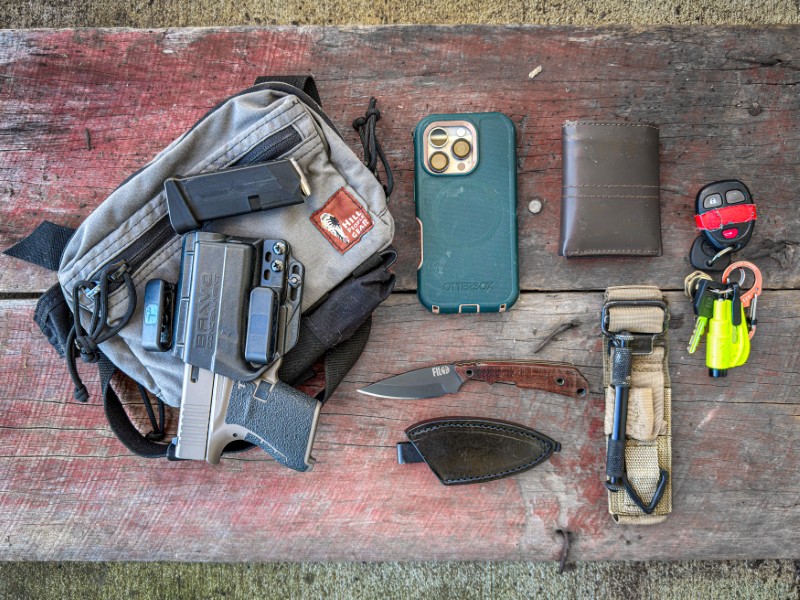
It’s pretty simple, honestly. I carry a wallet, my phone, a self-defense blade from Filo Bladeworks, a firearm, a tourniquet and chest seals, and my keys. Most days, that gear lives on my belt and in my pockets. If I’m just running around in a T-shirt and shorts, I’ll sometimes move it into a Hill People Gear fanny pack to keep everything secure and easy to access. The key is to utilize any of those items well, which requires training and practice with them. So I do that regularly.
Advertisement — Continue Reading Below
What’s your favorite tool setup: Trio set or One Tool option?
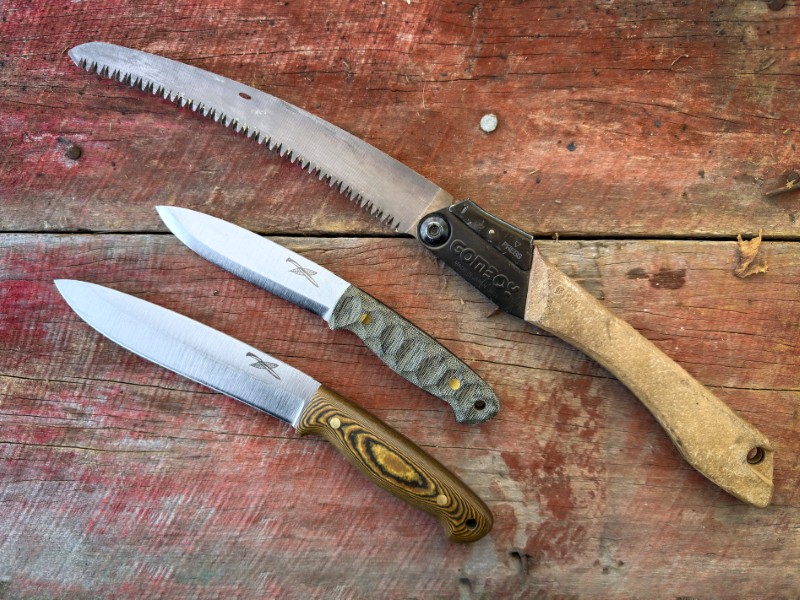
I usually run a multi-tool setup, and it really depends on what I’m planning to do that day. I’ve always been a fan of history, especially Indigenous cultures. They lived on the land for generations without modern gear. Most of the time, they relied on a simple system that included a small and a larger cutting tool.
I follow that same idea today, just with modern tools. I’ll carry one of the knives I designed and had built by LT Wright, usually a Shemanese or one of the Companions. Then pair it with a larger cutting tool. That might be a small axe or a saw. Which one I bring really comes down to the work I expect to do.
Advertisement — Continue Reading Below
Craig Caudill’s Chest Rig
Gear access and mobility are the big reasons I’m such a fan of a good chest kit. In a lot of ways, I carry the gear a frontiersman would have carried in a possibles pouch. It just rides on my chest instead.
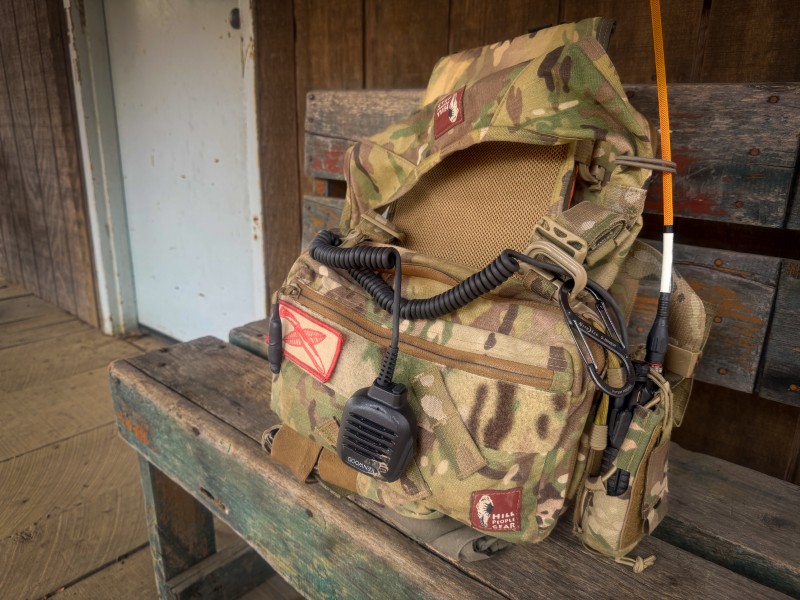
I run the Hill People Gear SAR Kit Bag. It lets me move, work, and even fight without it getting in the way. Everything stays accessible, and nothing restricts my movement.
Advertisement — Continue Reading Below
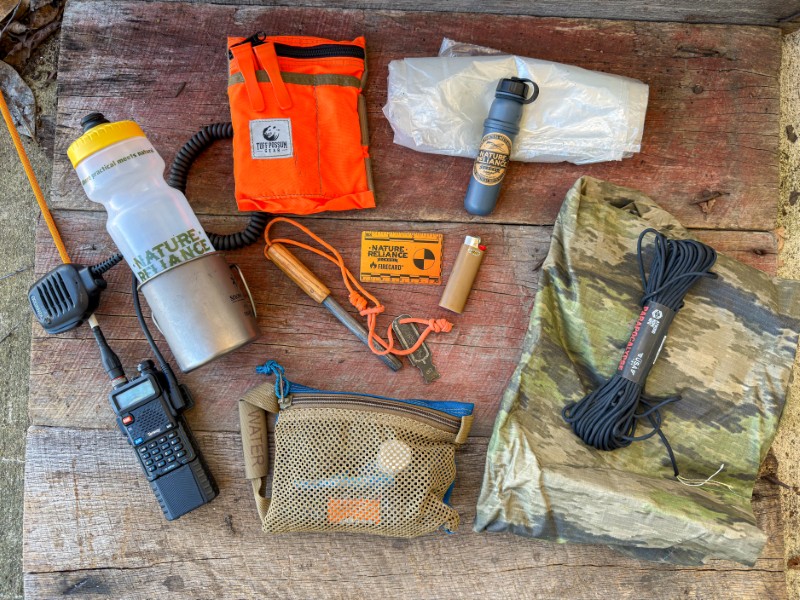
Inside, I keep a clear 55-gallon trash bag for shelter. For fire and maintaining core temperature, I carry our NRS Firecards, a lighter, and a ferro rod. Water-wise, I’ve got a Sawyer Mini with an extra bag, H2O Go, a metal cup, and an NRS squeeze bottle.
On the medical side, I carry a tourniquet, chest seals for trauma, along with a few protein and carb bars. The smaller stuff includes about 50 feet of paracord, 10 feet of jute, and a whistle. Also, a Shemanese and a Spark survival tool. I also keep a folding measuring tool for plants and tracks.
To keep it all organized, I use several small pouches from Tuff Possum Gear inside the kit so everything has a place and I can grab what I need fast. I always have a notebook and writing tools with me.
Advertisement — Continue Reading Below
Knife Designs from Craig Caudill
I’ve always been a student of history. I pull a lot of education and inspiration from the people who came before us. That’s exactly where my knife designs came from.
The Shemanese and the Shemanese Companion series were both inspired by the frontiersmen who settled places like my home state of Kentucky. The name Shemanese comes from the Shawnee word for “long knife.” At 12 inches overall, it’s longer than most modern survival or bushcraft knives, but still about three inches shorter than the original long knives those men carried.
Guys like George Rogers Clark, Simon Kenton, and Daniel Boone carried knives that had to do real work. They used them for fieldcraft, and they were expected to fight with them if things went sideways.
Advertisement — Continue Reading Below
That same mindset went into my designs. The blade shape works extremely well for field dressing a deer, doing bushcraft, or woodcraft. Still, it also gives you reach and the capability to defend yourself against an aggressor. Assuming you have the skill to use it properly.
Craig’s Recommended Gear for Wilderness Safety and Survival Levels 1 & 2
Wilderness Safety and Survival Level 1 is what I like to call a “camping trip where we study survival.” I tell students to bring it all. Whatever helps you sleep well and eat well, bring it, even if that means you show up with 500 pounds of gear. It’s a basecamp setup by design.
Advertisement — Continue Reading Below
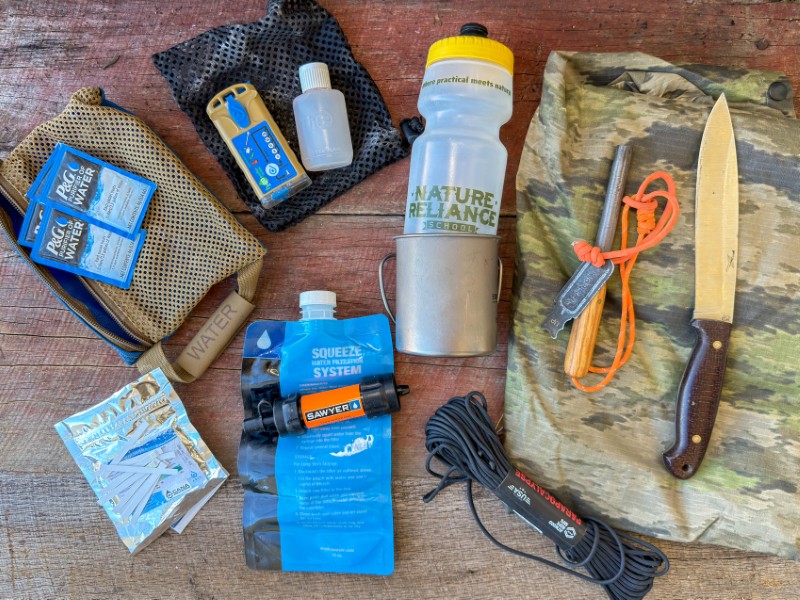
I do that because I’m an educator, not an intimidator. If people are cold, miserable, and exhausted, they don’t retain information. Comfort helps learning stick. In that class, I also provide all the training tools we need. Tarps, cordage, knives, water filters and purifiers, fire-starting gear, all of it is there so students can focus on learning rather than scrambling. Although I encourage people to bring whatever they consider survival gear. This is so they can get good feedback from our other extremely experienced instructors and me.
Level 2 is where things change. For that course, I tell students they’re limited to 25 pounds or less. What they choose to bring is up to them because we’ve already built a solid foundation in Level 1. For most people new to this style of training, Level 2 forces a real decision. You usually get to sleep well or eat well, not both.
We also schedule those classes when the weather is uncomfortable. Honestly, my hope is that it’s raining, snowing, and cold, or all of those. The instructors carry the same limited kit the students do, with a few backup supplies in case someone gets into trouble. That way, the experience stays realistic, but always safe. We have had numerous people do our Level 2 with under 10 lbs of gear.
Contact
Nature Reliance School | Survival, Bushcraft & Tracking Courses