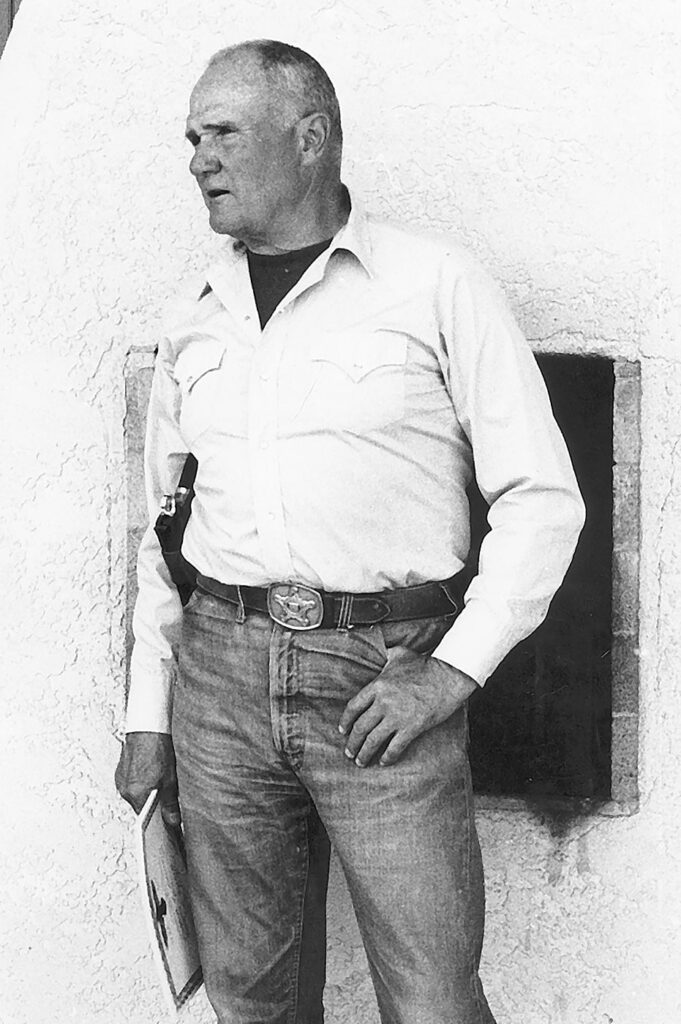
Colonel Cooper was well ahead of his time regarding not only firearms but also the mental process of survival. His famed color codes were part of his combat mindset, presented in his book Principles of Personal Defense.
Cooper’s Color Code
The color code is a simple way to determine a state of mind and readiness. It assigns specific labels to different levels of alertness and has been widely adopted by law enforcement, military forces, and armed civilians. However, the color code can also be tied to distinct neurological effects. As someone fascinated by the “why” of things, I have dug into the ways the color code relates to how your brain and body work.
Condition White: Unaware and Unprepared
Condition White is the state for a complete lack of situational awareness. You might be playing with your phone, daydreaming, or just dissociating.
Advertisement — Continue Reading Below
Internally, your prefrontal cortex is idling; it is a car left to warm up at best. It is focused on something internal, be it a daydream or stimulus from a phone or book. The Reticular Activating System (RAS), the network of neurons that acts as the brain’s filter, regulates attention by deciding which sensory inputs reach awareness. In this state, it is essentially tuned out.
The downsides to Condition White are numerous. It leaves you vulnerable to attack; a threat could appear and approach without you ever noticing. Neurologically, there is no mental buffer, leaving you vulnerable to an amygdala hijack if something violent occurs. You will be overwhelmed, unable to process what is happening, and unlikely to react in a favorable manner.
Condition Yellow: Relaxed and Alert
Condition Yellow is the state of readiness we should aim to occupy through daily life. You are aware and scanning for anomalies, but you are not falling into paranoia.
Advertisement — Continue Reading Below
Your brain is actively utilizing the RAS to filter for threats and anomalies. You maintain a baseline level of norepinephrine, which keeps the prefrontal cortex alert. Maintaining Condition Yellow gives the brain a buffer that allows you to identify threats or oddities faster and formulate a plan. This also prevents you from jumping from 0 to 100, allowing the nervous system to ramp up rather than crash.
Condition Orange: Alert and Ready
When you transition from Yellow to Orange, you have recognized a potential threat. Maybe it is an individual on the street acting aggressively, or someone at a bar who is getting uncomfortably close.
Advertisement — Continue Reading Below
Internally, your amygdala signals the hypothalamus to begin a sympathetic nervous system dump. Simply put, your “Spidey-Sense” has activated. You begin to recognize the threat and plan how to deal with it. You form a mental plan: “If the threat does Y, this is how I will react.” This pre-planning reduces your cognitive load and prevents a “freeze” by pre-loading your decision.
Condition Red: Fight Time
Now the threat has done Y. Something has triggered the need to resist and fight.
Your heart rate will likely be between 115 and 145 beats per minute. Your brain hits the brakes on the prefrontal cortex, your logic center, and hits the gas on the basal ganglia, which is your habit center.
Advertisement — Continue Reading Below
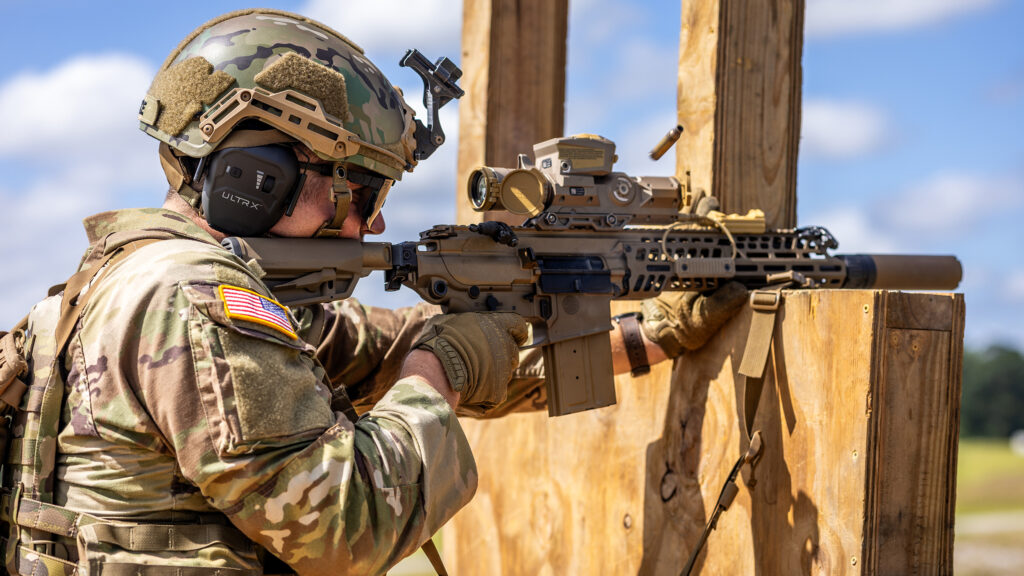
We fall back to Long-Term Potentiation (LTP), often referred to as muscle memory, but more adequately described as motor memory. All that training, dry fire, and reload drills build up this LTP. Because of your practice, you can engage quickly and efficiently, allowing your brain to focus on other survival tasks.
Condition Black: The Unofficial One
Colonel Cooper never mentioned a Condition Black; the tactical community added that later. Condition Black is where you are so overwhelmed by fear and stress that you do not react. You freeze.
Advertisement — Continue Reading Below
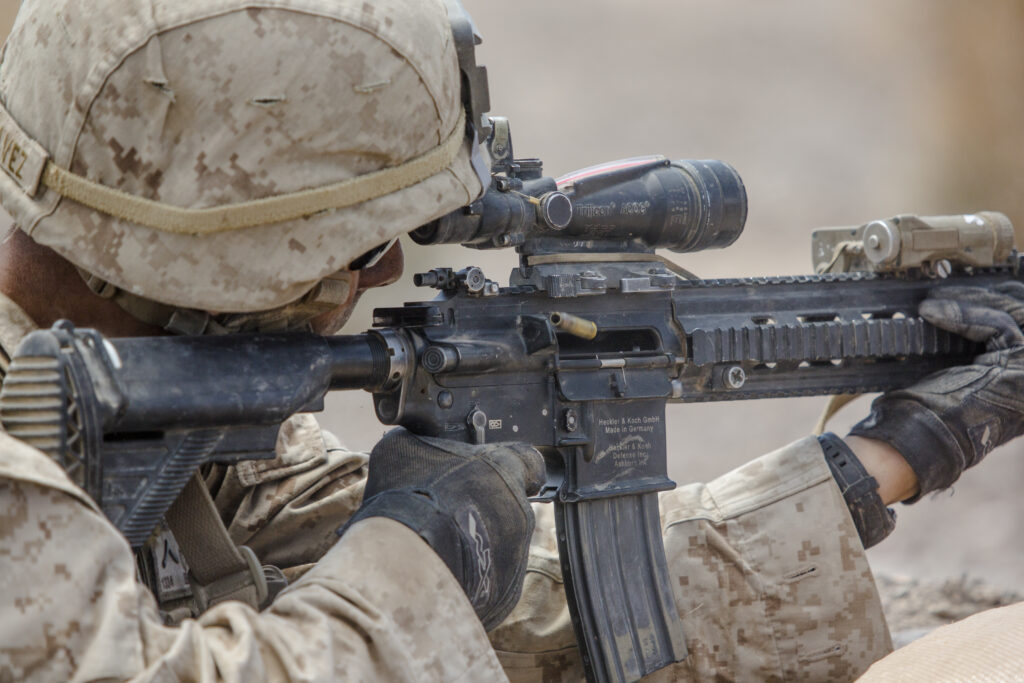
Hitting Condition Black can be due to a lack of training or being attacked while in Condition White. What happens here involves the Periaqueductal Gray, the midbrain structure that regulates defensive behavior. In Condition Black, this structure may trigger tonic immobility. You are overwhelmed, unable to respond, and frozen. We want to avoid Black by staying in Yellow, transitioning to Orange, and winning when things get Red.
The Brain Game
Will this information help you survive? The color code certainly can, but the neurological aspect is a little trickier. Does knowing what your brain is doing help you survive a fight? Probably not, but there is value in knowing that what is happening has a basis in science. Hopefully, it inspires you to stay in Condition Yellow and build that long-term potentiation.
Advertisement — Continue Reading Below